China's E-cigarette Exports to the UAE in November 2023

Industry Insight by Mincy Jiang
Jan.10.2024
China's E-cigarette Exports to the UAE in November 2023
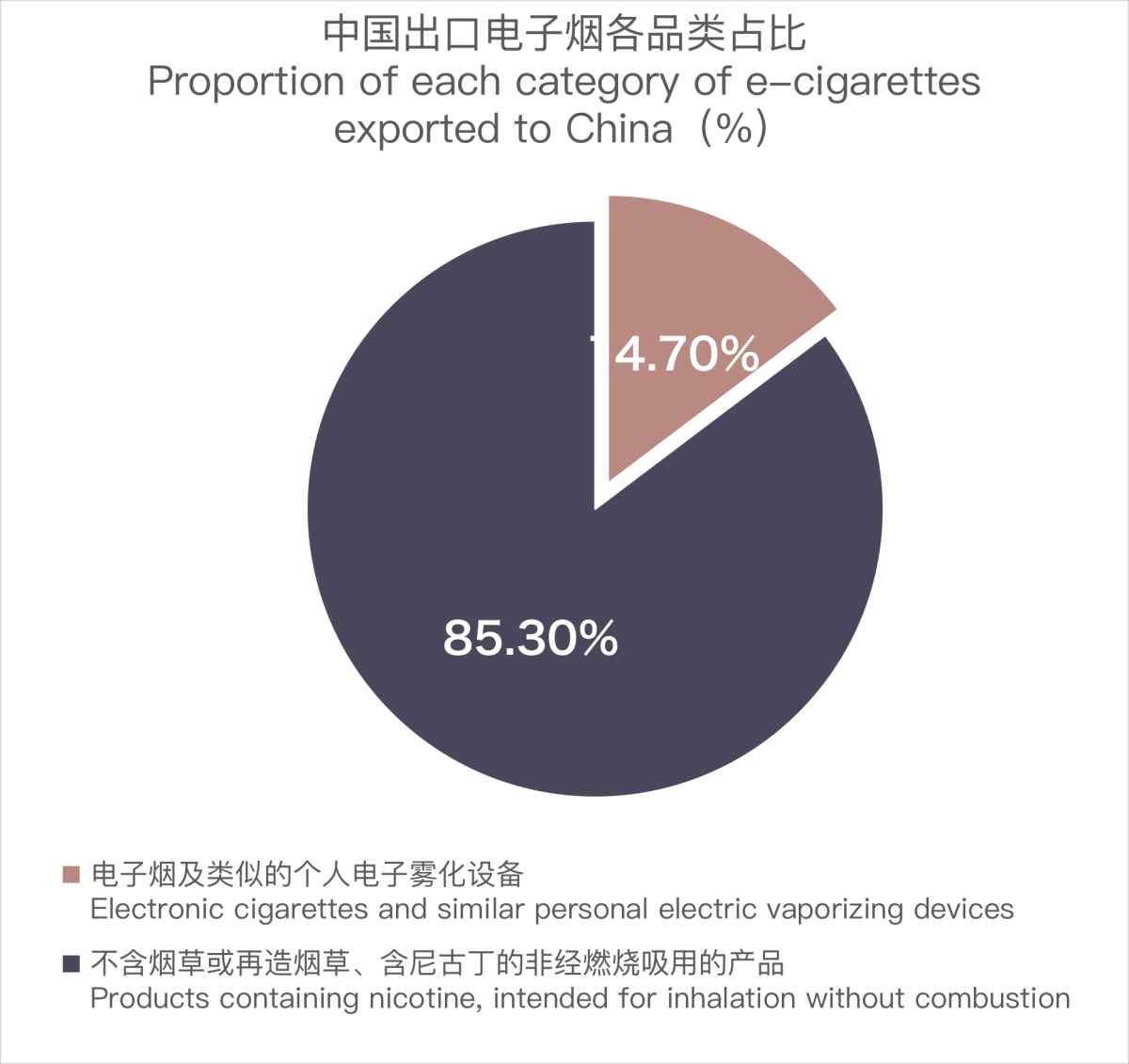
China's e-cigarette exports to the UAE in November 2023 rose by 24.13% compared to the previous month, reaching $16.55 million.

According to the updated trade data from the General Administration of Customs of the People's Republic of China, 2FIRSTS has compiled the e-cigarette export data to the United Arab Emirates in November 2023 as follows:
11月中国出口阿联酋电子烟约1655万美元 环比增长24%
Image source: 2FIRSTS (Graphic by Mincy)

The export amount reached approximately 16.55 million US dollars, showing a month-on-month growth of 24.13% and a year-on-year growth of 4.59%.
 

China's E-cigarette Exports to the UAE in November 2023
Image source: 2FIRSTS (Graphic by Mincy)


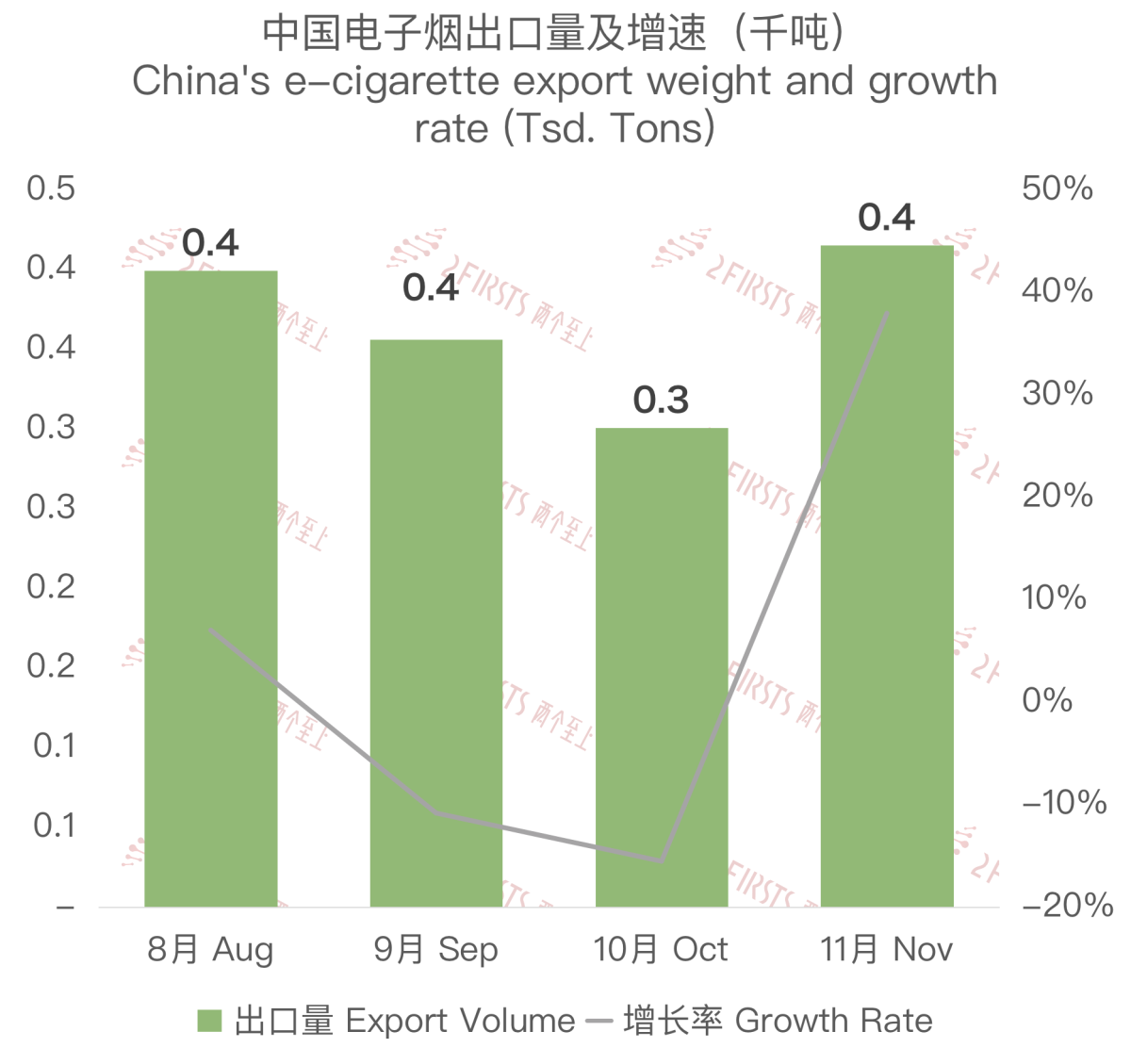
The export volume is approximately 415 tons, with a month-on-month increase of 37.99% and a year-on-year increase of 24.10%.
 

11月中国出口阿联酋电子烟约1655万美元 环比增长24%
Image source: 2FIRSTS (Mincy Graphic)


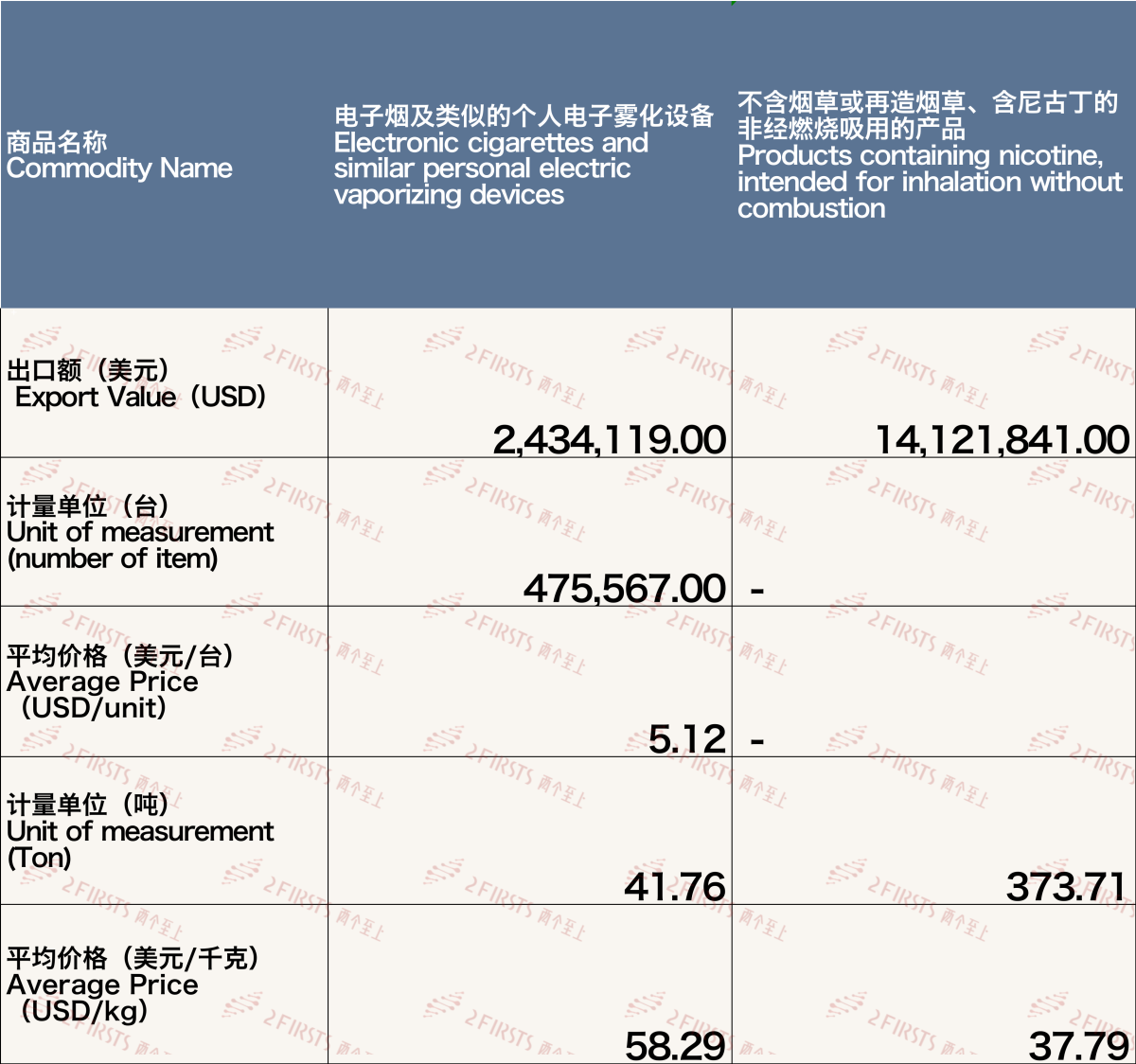
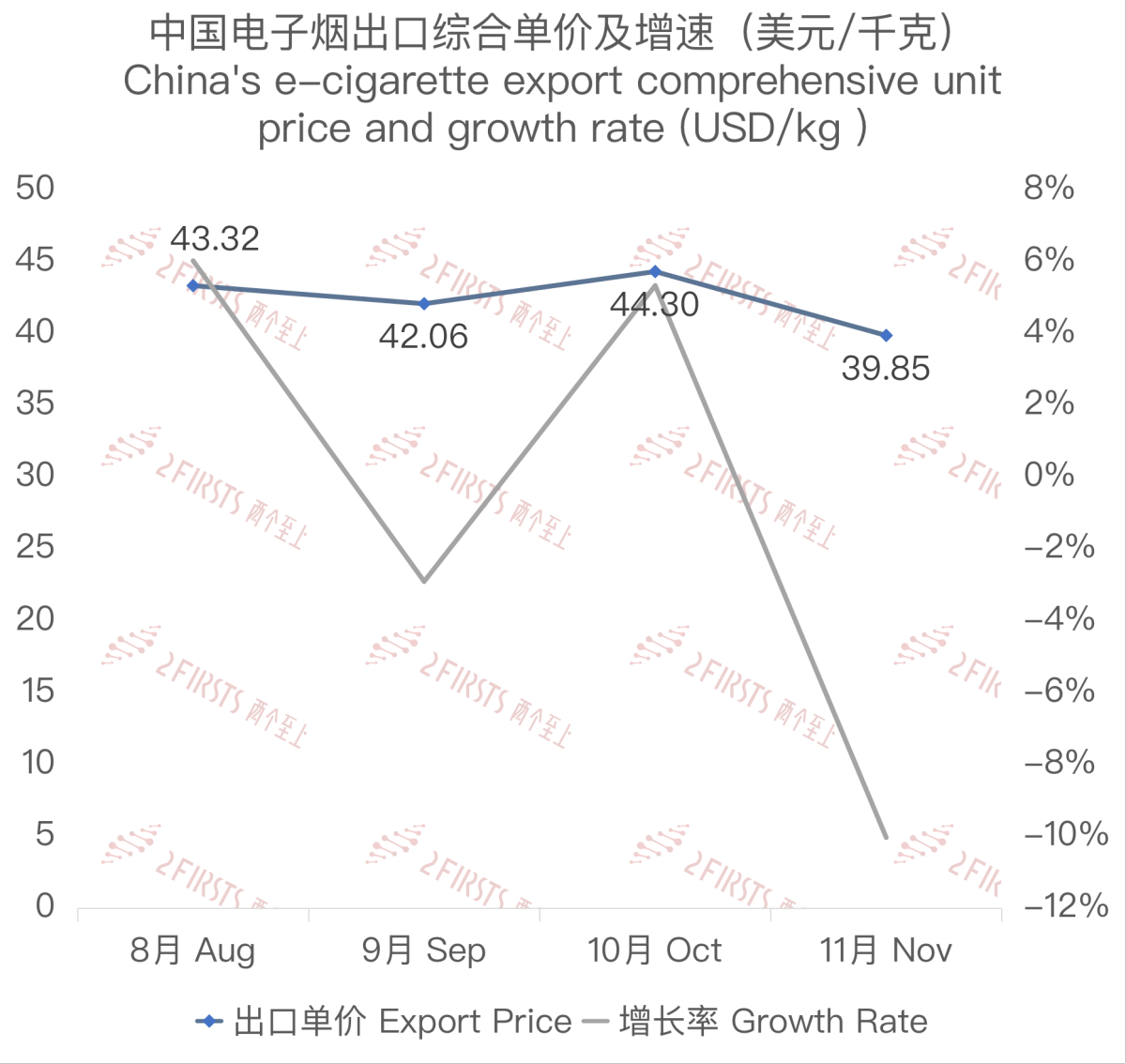
The export unit price decreased by 10.04% compared to the previous period and dropped by 15.72% compared to the same period last year, standing at $39.85 per kilogram. The average price of "e-cigarettes and similar personal electronic vaporizers" is $5.12 per unit.
 

11月中国出口阿联酋电子烟约1655万美元 环比增长24%
Image source: 2FIRSTS (Created by Mincy)


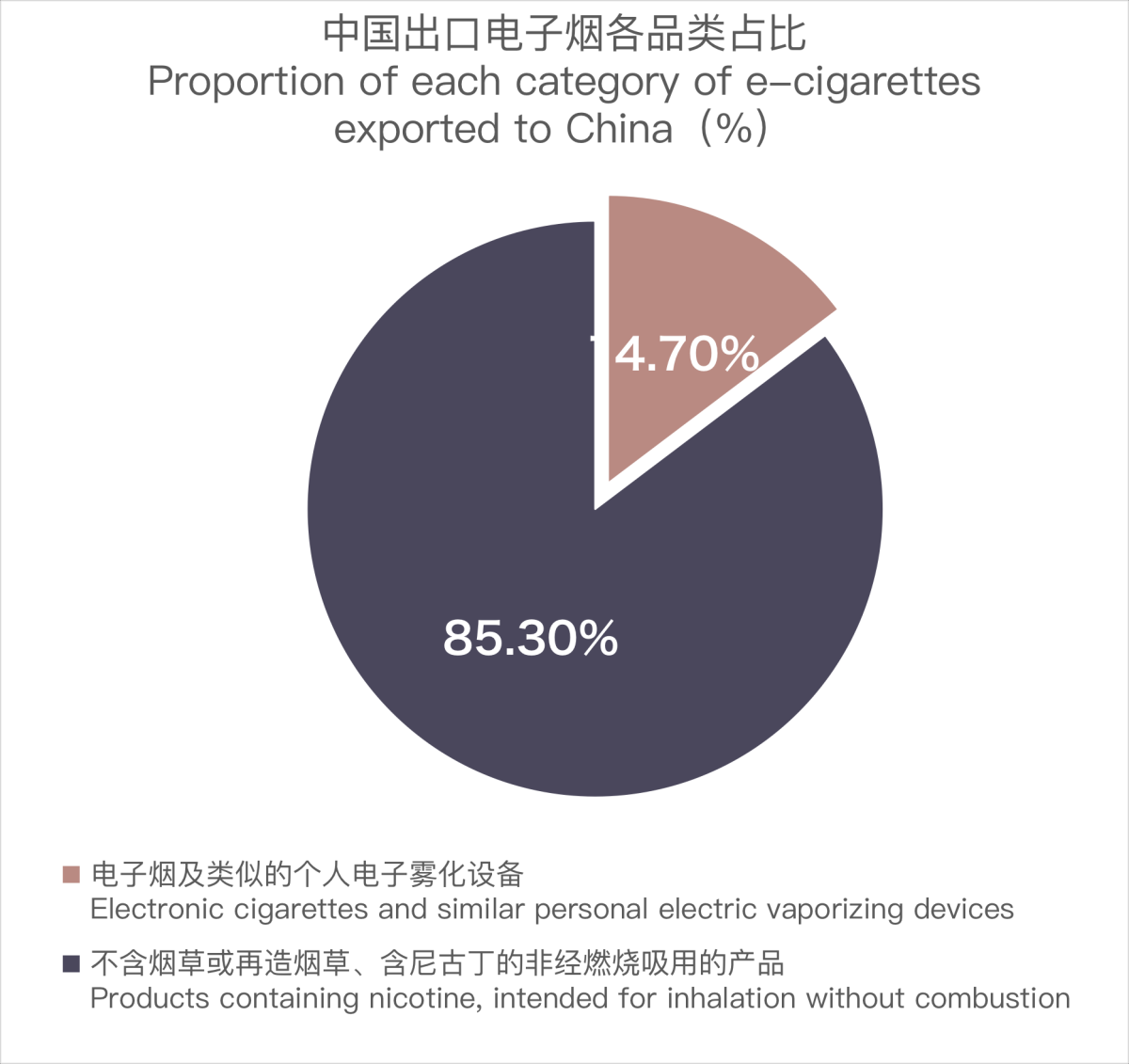
According to the data, "e-cigarettes and similar personal electronic vaporizers" account for 4.70% of the export category, while "products that do not contain tobacco or reconstituted tobacco but contain nicotine and are non-combustible for inhalation" make up 85.30% of the total.
 

11月中国出口阿联酋电子烟约1655万美元 环比增长24%
Image source: 2FIRSTS (graphic by Mincy)


We welcome news tips, article submissions, interview requests, or comments on this piece.

Please contact us at info@2firsts.com, or reach out to Alan Zhao, CEO of 2Firsts, on LinkedIn


Notice

1.  This article is intended solely for professional research purposes related to industry, technology, and policy. Any references to brands or products are made purely for objective description and do not constitute any form of endorsement, recommendation, or promotion by 2Firsts.

2.  The use of nicotine-containing products — including, but not limited to, cigarettes, e-cigarettes, nicotine pouchand heated tobacco products — carries significant health risks. Users are responsible for complying with all applicable laws and regulations in their respective jurisdictions.

3.  This article is not intended to serve as the basis for any investment decisions or financial advice. 2Firsts assumes no direct or indirect liability for any inaccuracies or errors in the content.

4.  Access to this article is strictly prohibited for individuals below the legal age in their jurisdiction.


Copyright


This article is either an original work created by 2Firsts or a reproduction from third-party sources with proper attribution. All copyrights and usage rights belong to 2Firsts or the original content provider. Unauthorized reproduction, distribution, or any other form of unauthorized use by any individual or organization is strictly prohibited. Violators will be held legally accountable.

For copyright-related inquiries, please contact: info@2firsts.com


AI Assistance Disclaimer


This article may have been enhanced using AI tools to improve translation and editorial efficiency. However, due to technical limitations, inaccuracies may occur. Readers are encouraged to refer to the cited sources for the most accurate information.

We welcome any corrections or feedback. Please contact us at: info@2firsts.com

Russian Strikes Destroy JTI and Imperial Brands Ukraine Warehouses, With Losses Reaching Tens of Millions of Hryvnias
According to Ukrainska Pravda, Russian strikes on the Kyiv region during the night of Aug. 4-5, 2026, damaged warehouses storing products of Japan Tobacco International (JTI) and Imperial Brands Ukraine. JTI said a finished goods warehouse in Kyiv Oblast was destroyed, with no employees injured, and that it did not expect disruptions to retail supplies. Imperial Brands Ukraine said products stored at warehouses of distributors and retail partners were affected and estimated losses from the strikes at “tens of millions of Ukrainian hryvnias” (roughly hundreds of thousands of U.S. dollars).
JTI
Aug.07
China’s Shanghai Tobacco Group Launches CNY 10.98 Million (Approximately US$1.53 Million) Procurement for Heated Tobacco Production Utility Equipment
Shanghai Tobacco Group Co., Ltd., a tobacco manufacturing company under China National Tobacco Corporation (CNTC), has launched a public tender for heated tobacco products (HTPs) production utility equipment at its Shanghai Cigarette Factory. The project is valued at CNY 10.98 million and covers six combined air-conditioning units, electrical cabinets and control systems for production facilities. The procurement includes equipment design, supply, installation, commissioning and related training services.
Aug.07
Science | International Experts Propose a New Smoking Cessation Pathway, Citing Higher Quit Rates With E-Cigarettes Than Nicotine Replacement Therapy
A new expert paper in JAMA urges U.S. clinicians to include nicotine e-cigarettes in smoking-cessation discussions, citing higher quit rates than nicotine replacement therapy. It also stresses that products must deliver enough nicotine to replace cigarettes, dual use should be brief, and complete switching is the goal. 2Firsts argues the recommendations matter beyond clinics: public-health professionals should reassess relative risk, regulators should preserve sufficient product appeal for adult smokers, and manufacturers should focus on helping users quit cigarettes more sustainably.
SCIENCE
Aug.03 by 2Firsts Perspectives
China’s Jiangsu Tobacco Monopoly Bureau and Drug Regulator Target Illegal Vape Sales Disguised as Medical Devices, Define Six Violations
China’s Jiangsu Tobacco Monopoly Bureau and Jiangsu Provincial Medical Products Administration have issued a joint notice targeting illegal production and sales of vape products disguised as medical devices. The notice identifies six categories of violations, including obtaining medical licenses through false materials, misusing medical device credentials, expanding production beyond approved scopes, and using medical device-related online platforms to promote or sell vape products. The action is based on China’s tobacco and medical device regulations and aims to strengthen vape oversight and consumer protection.
Aug.04
Special Report | Russia, Ukraine and Belarus Launch Fresh Push to Rein in Vaping
Russia, Ukraine and Belarus are tightening vape regulation through different tools, from Ukraine’s stronger enforcement push and Belarus’s proposed advertising restrictions to Russia’s new GOST standard and regional sales-ban mechanism. As black-market concerns persist, some Russian experts argue that China’s tightly controlled but legalised model — built around licensing, traceability and taxation — may offer a more effective alternative to blanket prohibition.
Jul.15
Japan’s Heated Tobacco Tax Changes Reshape Consumer Choices, Survey Reveals Impact of Price and Income
A consumer survey by Japanese heated tobacco information platform RELAZO found that rising tobacco prices and planned heated tobacco tax changes may influence smoking decisions among Japanese consumers. The survey covered 49,879 men and women aged 20 to 69 nationwide. It found that around 40% of respondents cumulatively indicated they may consider quitting when a pack reaches ¥600 (approximately US$4.1), while nearly 90% expressed potential quitting intentions at a ¥1,000 (approximately US$6.8) price level. The survey also found significant differences by income level, with lower-income respondents showing greater sensitivity to price increases.
Jul.24