Chinese E-Cigarettes: A Major Concern for US Youth

Regulations by 2FIRSTS.ai
Nov.27.2023
Chinese E-Cigarettes: A Major Concern for US Youth
Over 89% of American middle school students admit to using e-cigarettes, with China suspected as the main source, according to a CDC report.

According to a report released by the Centers for Disease Control and Prevention (CDC), over 89% of American middle school students have admitted to using e-cigarettes, with China being suspected as the primary source of these devices.


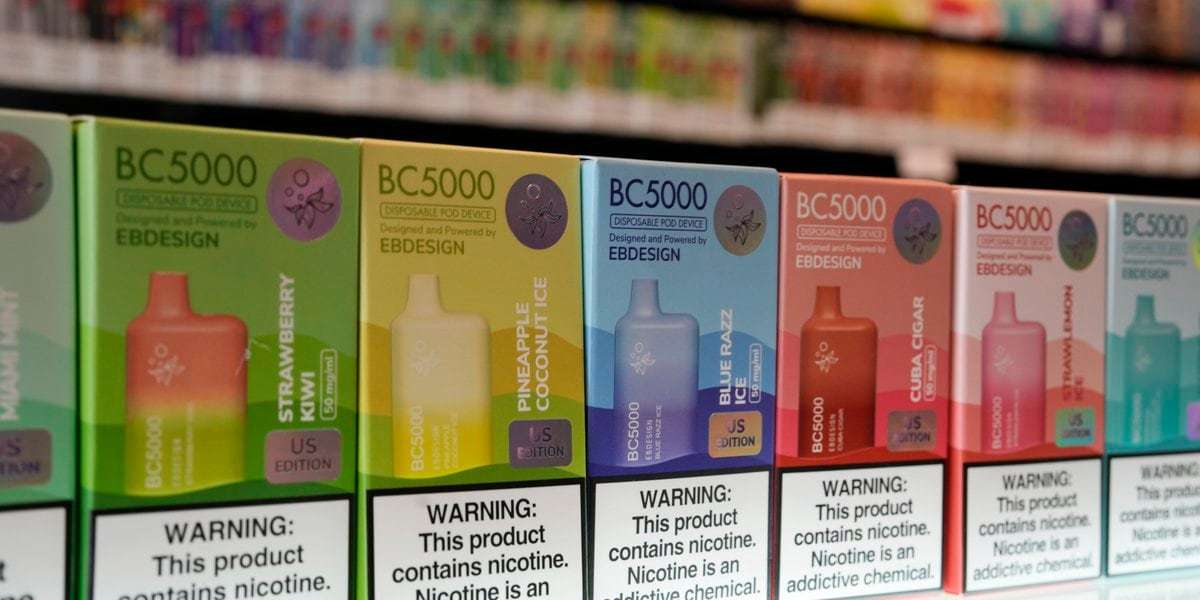
The report further indicates that despite the US FDA's ban on the sale of fruit-flavored e-cigarettes in February 2020, the prevalence of youth using disposable flavored e-cigarettes remains alarming.


According to the report, teenagers are the heaviest users of disposable flavored e-cigarettes. In February 2020, the FDA banned the sale of fruit-flavored e-cigarettes like blueberry or cotton candy. It is now believed that many of these e-cigarettes are originating from China, indicating limited capabilities of the FDA to combat this issue.


However, there is some good news as the CDC reports that by 2023, 10% of teenagers are projected to use e-cigarettes on a daily basis, a decrease from the 14.1% recorded in 2022.


We welcome news tips, article submissions, interview requests, or comments on this piece.

Please contact us at info@2firsts.com, or reach out to Alan Zhao, CEO of 2Firsts, on LinkedIn


Notice

1.  This article is intended solely for professional research purposes related to industry, technology, and policy. Any references to brands or products are made purely for objective description and do not constitute any form of endorsement, recommendation, or promotion by 2Firsts.

2.  The use of nicotine-containing products — including, but not limited to, cigarettes, e-cigarettes, nicotine pouchand heated tobacco products — carries significant health risks. Users are responsible for complying with all applicable laws and regulations in their respective jurisdictions.

3.  This article is not intended to serve as the basis for any investment decisions or financial advice. 2Firsts assumes no direct or indirect liability for any inaccuracies or errors in the content.

4.  Access to this article is strictly prohibited for individuals below the legal age in their jurisdiction.


Copyright


This article is either an original work created by 2Firsts or a reproduction from third-party sources with proper attribution. All copyrights and usage rights belong to 2Firsts or the original content provider. Unauthorized reproduction, distribution, or any other form of unauthorized use by any individual or organization is strictly prohibited. Violators will be held legally accountable.

For copyright-related inquiries, please contact: info@2firsts.com


AI Assistance Disclaimer


This article may have been enhanced using AI tools to improve translation and editorial efficiency. However, due to technical limitations, inaccuracies may occur. Readers are encouraged to refer to the cited sources for the most accurate information.

We welcome any corrections or feedback. Please contact us at: info@2firsts.com

Luxembourg Passes Bill 8333: Heated Tobacco and Nicotine Pouches Regulated
Luxembourg’s Chamber of Deputies adopted Bill No. 8333, transposing EU Directive 2022/2100 and extending tobacco controls to heated tobacco, e-cigarettes and nicotine pouches. The law bans flavourings, restricts sales to minors, and caps nicotine content at 0.048 mg per pouch. CBD and caffeine additives are prohibited.
Nov.03 by 2FIRSTS.ai
Denmark Proposes Sharper Tax Hike: Heated Tobacco Up 132%, Nicotine Pouches Facing 1,000% Increase
According to foreign media, the European Union will examine a strengthened Danish proposal to amend the Tobacco Excise Directive. The plan introduces sharper tax increases on heated tobacco, nicotine pouches and other products. Despite overwhelming public opposition in earlier consultations, the revision continues to move forward, raising concerns about supply chain impacts and potential growth in illicit trade.
Dec.04
BAT expands facial age-estimation checks: over 600 stores covered in Europe, targeting 1,000 by year-end
BAT has partnered with the Channel Islands Co-operative Society and Yoti to pilot facial age estimation in 10 Coop stores across Jersey. Customers scan a QR code and take a selfie; the system instantly deletes the image and returns only a yes/no against a minimum age threshold (set at 20) for the pilot. BAT already uses Yoti in 600+ stores across Europe and plans to reach 1,000 by year-end.
Oct.22 by 2FIRSTS.ai
2025 China Shenzhen Top 500 Enterprises List: 13 E-cigarette Companies Include
Shenzhen e-commerce companies dominate 2025 Top 500 list, including 13 e-cigarette businesses. Shenzhen FirstUnion Tech climbs 57 spots.
Oct.30 by 2FIRSTS.ai
Philip Morris International Fails to Invalidate British American Tobacco Unit’s Vape Patent
The European Patent Office’s Board of Appeal upheld British American Tobacco’s Nicoventures Trading Ltd. vape patent, rejecting Philip Morris International’s objections. The board ruled that the patent’s use of predefined heater activation parameters not based on user puffs was novel and valid.
Nov.10
Canada’s B.C. Passes First Vaping Cost-Recovery Framework, Allowing Government to Sue Manufacturers Over Health Expenses
According to the Nelson Star, British Columbia has passed the Vaping Product Damages and Health Care Costs Recovery Act by a 49–42 vote. The legislation enables the provincial government to seek recovery of future public health costs from vape manufacturers, following models used in opioid and tobacco litigation.
Dec.03