Cigarette Prices Continue to Rise in Turkey in May, Including PMI Products

Market by 2FIRSTS.ai
May.06.2024
Cigarette Prices Continue to Rise in Turkey in May, Including PMI Products
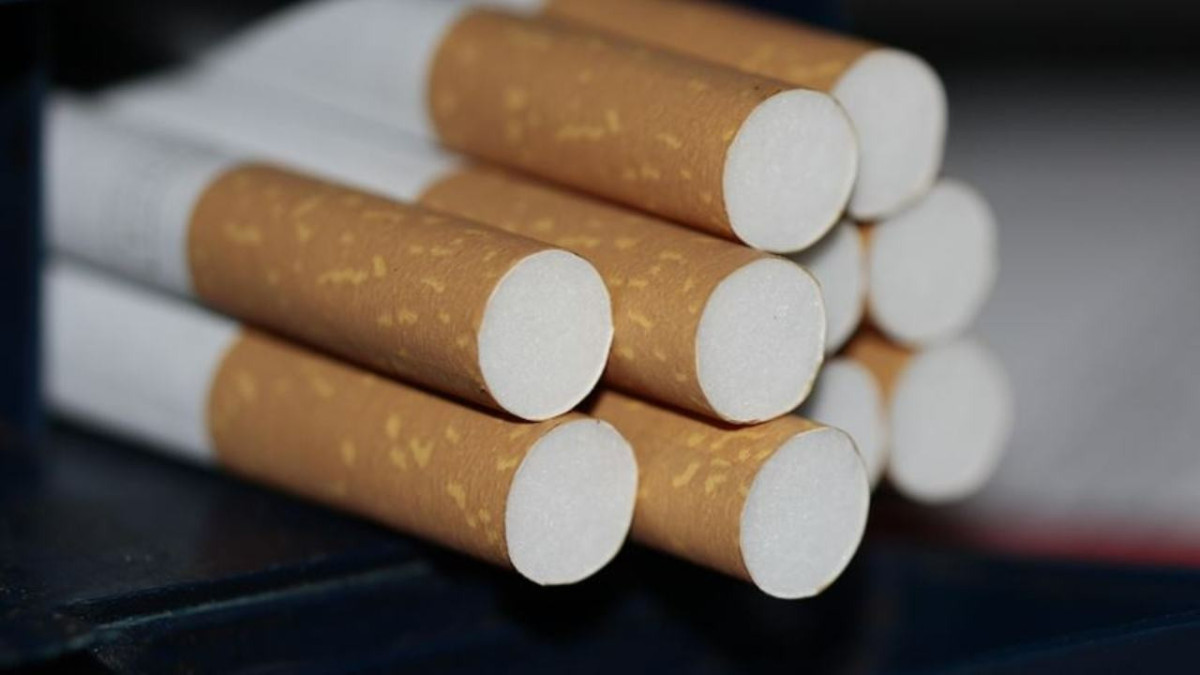
Cigarette prices continue to rise in Turkey, with consumers and dealers sharing new price lists on social media.

According to Turkish media Dunya News on May 4th, the increase in cigarette prices is still ongoing in mid-May. With the release of new price hike information, tobacco distributors and consumers have started sharing cigarette price lists on social media after the price increase. It was reported that the price of one brand of cigarettes has increased by 3 Turkish lira.


The President of the Special Dealers Mutual Aid Association, Erol Dündar, announced on social media the price increase information of Philip Morris (PM) cigarette group. The price increase will take effect starting from May 4th. Dündar wrote in a personal social media post, "Once again, tobacco prices are rising... Prices continue to soar. PM group's products have increased in price."


When asked about the prices of the most expensive and cheapest cigarettes following the price increase, the most expensive brand from the Philip Morris Group is now priced at 70 Turkish Lira, while the cheapest is priced at 63 Turkish Lira.


In April of last year, many varieties of cigarettes had already been raised in price. At that time, the highest price for cigarettes from the Philip Morris (PM) Group was 67 Turkish Lira, the lowest price was 60 Turkish Lira; cigarettes from the British American Tobacco (BAT) Group had a highest price of 72 Turkish Lira and a lowest price of 56 Turkish Lira; cigarettes from the TT Tobacco Group had a highest price of 62 Turkish Lira and a lowest price of 50 Turkish Lira.


Despite the general increase in cigarette prices, some brands, such as Japan Tobacco International Group (JTI), have implemented a 1 Turkish Lira discount after adjusting their prices. In April of last year, the highest price for JTI cigarettes was 67 Turkish Lira, while the lowest price was 56 Turkish Lira.


We welcome news tips, article submissions, interview requests, or comments on this piece.

Please contact us at info@2firsts.com, or reach out to Alan Zhao, CEO of 2Firsts, on LinkedIn


Notice

1.  This article is intended solely for professional research purposes related to industry, technology, and policy. Any references to brands or products are made purely for objective description and do not constitute any form of endorsement, recommendation, or promotion by 2Firsts.

2.  The use of nicotine-containing products — including, but not limited to, cigarettes, e-cigarettes, nicotine pouchand heated tobacco products — carries significant health risks. Users are responsible for complying with all applicable laws and regulations in their respective jurisdictions.

3.  This article is not intended to serve as the basis for any investment decisions or financial advice. 2Firsts assumes no direct or indirect liability for any inaccuracies or errors in the content.

4.  Access to this article is strictly prohibited for individuals below the legal age in their jurisdiction.


Copyright


This article is either an original work created by 2Firsts or a reproduction from third-party sources with proper attribution. All copyrights and usage rights belong to 2Firsts or the original content provider. Unauthorized reproduction, distribution, or any other form of unauthorized use by any individual or organization is strictly prohibited. Violators will be held legally accountable.

For copyright-related inquiries, please contact: info@2firsts.com


AI Assistance Disclaimer


This article may have been enhanced using AI tools to improve translation and editorial efficiency. However, due to technical limitations, inaccuracies may occur. Readers are encouraged to refer to the cited sources for the most accurate information.

We welcome any corrections or feedback. Please contact us at: info@2firsts.com

Kaival Brands Explores Nicotine Pouches as Smaller Nicotine Companies Seek Smoke-Free Growth
U.S. nicotine company Kaival Brands Innovations Group is exploring opportunities in nicotine pouches and other modern nicotine products, reflecting a broader shift among smaller nicotine businesses beyond traditional vaping products.
Jul.17
Tobacco Companies Are Redesigning Nicotine Products. BAT Wins Three Red Dot Awards
According to BAT and the Red Dot Design Award website, BAT’s glo Hilo Plus, Vuse Pro One Box and Vuse Ultra x McLaren F1 Team Limited Edition received Red Dot recognition in the Product Design 2026 competition.BAT said the awards reflect not only the design quality of the individual products but also the development of design as a core internal capability across industrial design, user experience and sustainability. Red Dot’s product pages describe glo Hilo Plus as a two-part tobacco heater with a pen and charging case, plus a touch-sensitive AMOLED display. Vuse Pro One Box is described as a rechargeable e-cigarette with replaceable pods, USB-C charging and a switchable VapourBoost mode. Vuse Ultra x McLaren F1 Team Limited Edition brings motorsport-inspired design elements into a compact e-cigarette device and includes exchangeable batteries.
Jul.17
PMI Q2 Revenue Rises 10.4% as IQOS and VEEV Expand, U.S. ZYN Growth Slows
Philip Morris International’s second-quarter net revenues rose 10.4% to a record $11.19 billion, as heated tobacco and e-vapor expanded across international markets. IQOS remained the main smoke-free growth engine, while VEEV shipments jumped 55.1%. In the United States, however, ZYN shipments increased just 1.8% and consumer offtake was broadly flat to slightly higher. Cigarette volumes also rose, showing that PMI’s transformation is advancing, but growth is becoming increasingly uneven across categories and markets.
PMI
Jul.22
Philippines Weighs Unified Vape Tax as Lawmakers Back Risk-Based Rates and Government Seeks to Fill ₱66 Billion Revenue Gap
Philippine lawmakers are considering an overhaul of the country's vape excise-tax regime to eliminate the wide gap between taxes on nicotine salt and freebase nicotine liquids and reduce incentives for misdeclaration. House Bill 5364, filed by Rep. Rufus Rodriguez and Rep. Maximo Rodriguez Jr., would impose a unified ₱10-per-milliliter tax on vapor products, with 5% annual increases beginning in 2027. Rodriguez says the proposal could generate an average ₱6 billion in annual collections from 2027 through 2030. The debate comes as the Philippine government considers tobacco, vape and other health-tax reforms to help offset around ₱66 billion in revenue expected to be forgone under a proposed tax-relief package.
Aug.18
Scotland Plans to Remove Business Rates Relief From Vape Shops From 2027
The Scottish Government plans to remove business rates relief from vape shops from April 1, 2027, saying the measure is intended to ensure vape retailers contribute to the high street and align rates relief with public health commitments, while the impact on convenience stores that sell vaping products remains unclear.
News
Jun.26 by 2Firsts Perspectives
China’s HTP Exports Fell 14.3% in H1 2026 as Russia and Belarus Accounted for 76% Lead
In H1 2026, China’s HS 24041100 exports stood at $1.32 million, down 14.3% YoY, with volume falling 17.2% to 55.33 tons. Market distribution shifted drastically amid overall export drops. Exports to Russia and Belarus totaled $1 million, taking 76.0% of all shipments versus 29.5% in H1 2025. Belarus became the top destination with export value jumping 177.5%, while the Philippines, Singapore and Indonesia’s combined share slumped from 49.3% to 11.2%.Domestically, Yunnan led exporter registrations; Jiangsu and Shanghai were key suppliers, yet Anhui and Sichuan had no exports. Heavy concentration means order or declaration changes for Russia/Belarus greatly affect national aggregate data. The data shows customs entry points (not end markets), covering tobacco consumables only, excluding heating equipment and the complete HTP supply chain.
Aug.11