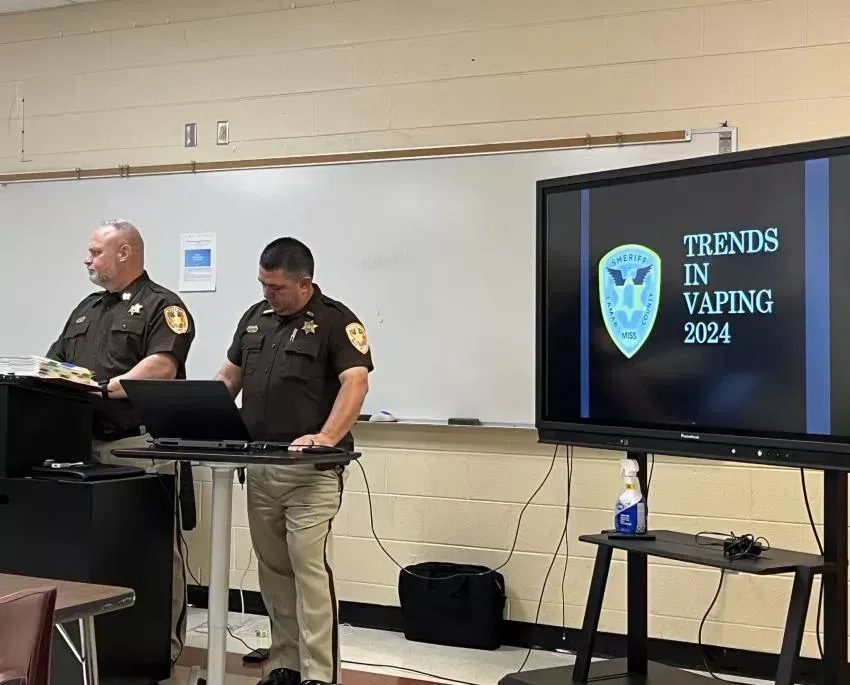
According to The Pine Belt News on April 29th, officials from the Lamar County Sheriff's Office and Lamar County School District are working together to combat the dangers of e-cigarettes, especially in convenience stores and tobacco shops, which may pose health risks to underage users of the devices.
Sheriff Danny Rigel of Lamar County stated that his department is working closely with school districts and other officials to combat the use of e-cigarettes, particularly after recent cases of students in middle and high schools experiencing symptoms of overdose from using these products.
Rigell emphasized, "We are making every effort to combat this issue, as we are seeing an increasing number of e-cigarette use cases. While some may argue that it is not illegal, it is akin to selling alcohol products to minors, as purchasing these products also requires one to be at least 21 years old."
In an effort to combat e-cigarette use, police officers are covertly searching for any establishments that may be selling e-cigarette products to minors without checking for identification beforehand. Additionally, officers are also conducting education sessions at local schools to inform students and parents about the dangers of e-cigarettes.
Sheriff Rigels pointed out that, in addition to e-cigarettes containing nicotine, they also discovered some vaporizers with high THC content, which is the active ingredient in marijuana that produces the "high." He noted that many parents may not fully understand what e-cigarettes actually contain and emphasized that if they knew this information and what substances their children are actually ingesting, they would have a different perspective on the issue.
Since January of this year, students in the Lamar County school district who are found to be in possession of any type of e-cigarette device, including but not limited to e-cigarette pens, disposable e-cigarettes, e-cigarette kits, and vaporizer systems, will face more severe penalties.
This measure was voted on and decided at the December meeting of the school district board. During the meeting, school district Superintendent Steven Hampton stated that vaping e-cigarettes has become a problem not only in Lamar County, but also nationwide.
According to the new regulations, any student found with e-cigarette devices in any school or school-sponsored activity will be immediately sent to the sixth step of the school district's disciplinary process. This includes recommendations to the district's disciplinary committee for placement in an alternative school for a minimum of 45 instructional days, as well as charges filed with the juvenile court. Additionally, students will be required to complete a course on e-cigarette/substance abuse during their time at the alternative school.
Before the board makes a decision, attitudes towards the use of e-cigarette devices may vary. Typically, the situation will be addressed according to the district's tobacco regulations.
We welcome news tips, article submissions, interview requests, or comments on this piece.
Please contact us at info@2firsts.com, or reach out to Alan Zhao, CEO of 2Firsts, on LinkedIn
Notice
1. This article is intended solely for professional research purposes related to industry, technology, and policy. Any references to brands or products are made purely for objective description and do not constitute any form of endorsement, recommendation, or promotion by 2Firsts.
2. The use of nicotine-containing products — including, but not limited to, cigarettes, e-cigarettes, nicotine pouchand heated tobacco products — carries significant health risks. Users are responsible for complying with all applicable laws and regulations in their respective jurisdictions.
3. This article is not intended to serve as the basis for any investment decisions or financial advice. 2Firsts assumes no direct or indirect liability for any inaccuracies or errors in the content.
4. Access to this article is strictly prohibited for individuals below the legal age in their jurisdiction.
Copyright
This article is either an original work created by 2Firsts or a reproduction from third-party sources with proper attribution. All copyrights and usage rights belong to 2Firsts or the original content provider. Unauthorized reproduction, distribution, or any other form of unauthorized use by any individual or organization is strictly prohibited. Violators will be held legally accountable.
For copyright-related inquiries, please contact: info@2firsts.com
AI Assistance Disclaimer
This article may have been enhanced using AI tools to improve translation and editorial efficiency. However, due to technical limitations, inaccuracies may occur. Readers are encouraged to refer to the cited sources for the most accurate information.
We welcome any corrections or feedback. Please contact us at: info@2firsts.com