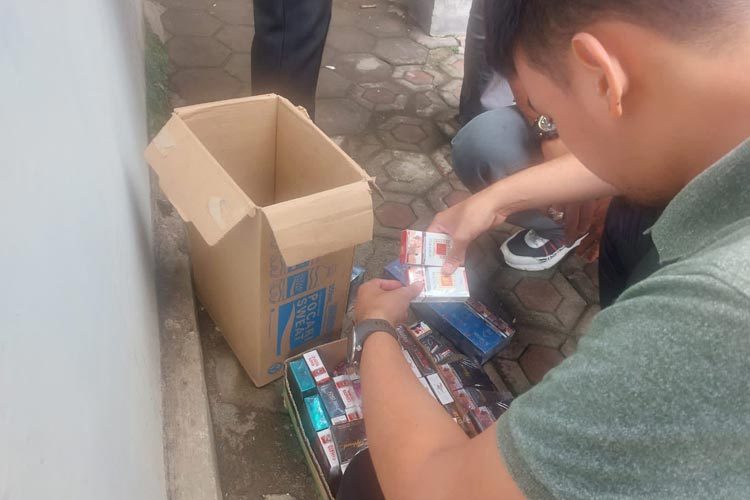
Cracking down on Illegal Cigarette Market in Marang County, Indonesia

Regulations by 2FIRSTS.ai
Dec.05.2023
Cracking down on Illegal Cigarette Market in Marang County, Indonesia
Indonesian authorities launch joint operation to combat illegal cigarette market, using X-ray inspection at logistics providers to reduce damaged packaging.

According to a report by Times Indonesia, the health, police, and customs departments in Marang County, Indonesia have recently launched a joint operation to combat the illegal cigarette market and the distribution of illicit cigarettes.


This operation not only aims to crackdown on the market, but also includes inspections using X-ray technology at logistics service providers to minimize damage to packaging. The introduction of X-ray equipment will help to significantly reduce the losses incurred by the country due to the circulation of illegally imported cigarettes.


In the future, Marang County Customs hopes to eradicate the smuggling of illegal cigarettes, with the police department standing shoulder to shoulder as their ally and supporter in this endeavor.


The joint operation in Marang County has been ongoing since 2019 and, according to regulations set by the Indonesian Ministry of Finance, it will continue until the end of 2023.


We welcome news tips, article submissions, interview requests, or comments on this piece.

Please contact us at info@2firsts.com, or reach out to Alan Zhao, CEO of 2Firsts, on LinkedIn


Notice

1.  This article is intended solely for professional research purposes related to industry, technology, and policy. Any references to brands or products are made purely for objective description and do not constitute any form of endorsement, recommendation, or promotion by 2Firsts.

2.  The use of nicotine-containing products — including, but not limited to, cigarettes, e-cigarettes, nicotine pouchand heated tobacco products — carries significant health risks. Users are responsible for complying with all applicable laws and regulations in their respective jurisdictions.

3.  This article is not intended to serve as the basis for any investment decisions or financial advice. 2Firsts assumes no direct or indirect liability for any inaccuracies or errors in the content.

4.  Access to this article is strictly prohibited for individuals below the legal age in their jurisdiction.


Copyright


This article is either an original work created by 2Firsts or a reproduction from third-party sources with proper attribution. All copyrights and usage rights belong to 2Firsts or the original content provider. Unauthorized reproduction, distribution, or any other form of unauthorized use by any individual or organization is strictly prohibited. Violators will be held legally accountable.

For copyright-related inquiries, please contact: info@2firsts.com


AI Assistance Disclaimer


This article may have been enhanced using AI tools to improve translation and editorial efficiency. However, due to technical limitations, inaccuracies may occur. Readers are encouraged to refer to the cited sources for the most accurate information.

We welcome any corrections or feedback. Please contact us at: info@2firsts.com

South Korea’s New Vape Rules Raise Bar for E-Liquid Makers and China-Linked Supply Chains, Expert Says
South Korea’s new vape regulations are reshaping the e-liquid market, raising compliance requirements for manufacturers, retailers and overseas suppliers. In an interview with 2Firsts, Korean nicotine products specialist Sam Kim discusses licensing barriers, inventory impacts, China-linked supply chains, and emerging regulatory challenges around nicotine analogues, nicotine-free products and DIY mixing. The Korean case may offer broader insights as governments worldwide adapt to rapidly evolving nicotine products.
Jul.16
  South Korea Reopens Cigarette Tax Debate as 63% Back Higher Tobacco Taxes
South Korea Reopens Cigarette Tax Debate as 63% Back Higher Tobacco Taxes
South Korea’s cigarette tax debate has resurfaced after the Ministry of Health and Welfare said tobacco price policy needed review, with a poll showing 63% of respondents support higher tobacco taxes.
Regulations
Jun.22
South Korea Brings Synthetic-Nicotine E-Cigarettes Under Tobacco Rules From June 24, Targeting Online Sales and Evasion
South Korea began full enforcement of tobacco-style rules for synthetic-nicotine e-cigarettes on June 24, 2026, with fines of up to 100,000 won for use in non-smoking areas and enforcement focus on online sales, raw nicotine liquids and products falsely marketed as nicotine-free.
MarketNews
Jun.25 by 2Firsts Perspectives
South Korea’s Cigarette Smoking Rate Falls to 17.9%, E-Cigarette Use Continues to Rise
Data released by the Korea Disease Control and Prevention Agency (KDCA) showed South Korea’s conventional cigarette smoking rate fell to 17.9% in 2025, while heated tobacco and liquid e-cigarette use continued to rise, particularly among young adults and women.
Jun.01
Michael Olise’s World Cup Locker-Room Photo Puts Nicotine Pouches in the Sports Business Spotlight
Several European sports outlets have reported on a suspected nicotine pouch seen in French footballer Michael Olise’s locker photo, bringing football’s long-running “snus” culture back into public view and highlighting brand visibility, product classification and public-health debate around nicotine pouches in sports settings.
News
Jun.25 by 2Firsts Perspectives
Data|China’s May Vape Exports Fall 10.3%; January–May Shipments Slip 0.9%
China’s vape-related exports fell 10.25% year on year in May 2026, marking a second consecutive monthly decline, although exports recovered modestly from April. January-May exports totaled US$4.018 billion, down 0.86% from a year earlier and broadly in line with 2025 levels.
Special Report
Jun.29