Crime ring busted for selling counterfeit e-cigarettes in Ukraine

Aug.29.2024
Crime ring busted for selling counterfeit e-cigarettes in Ukraine
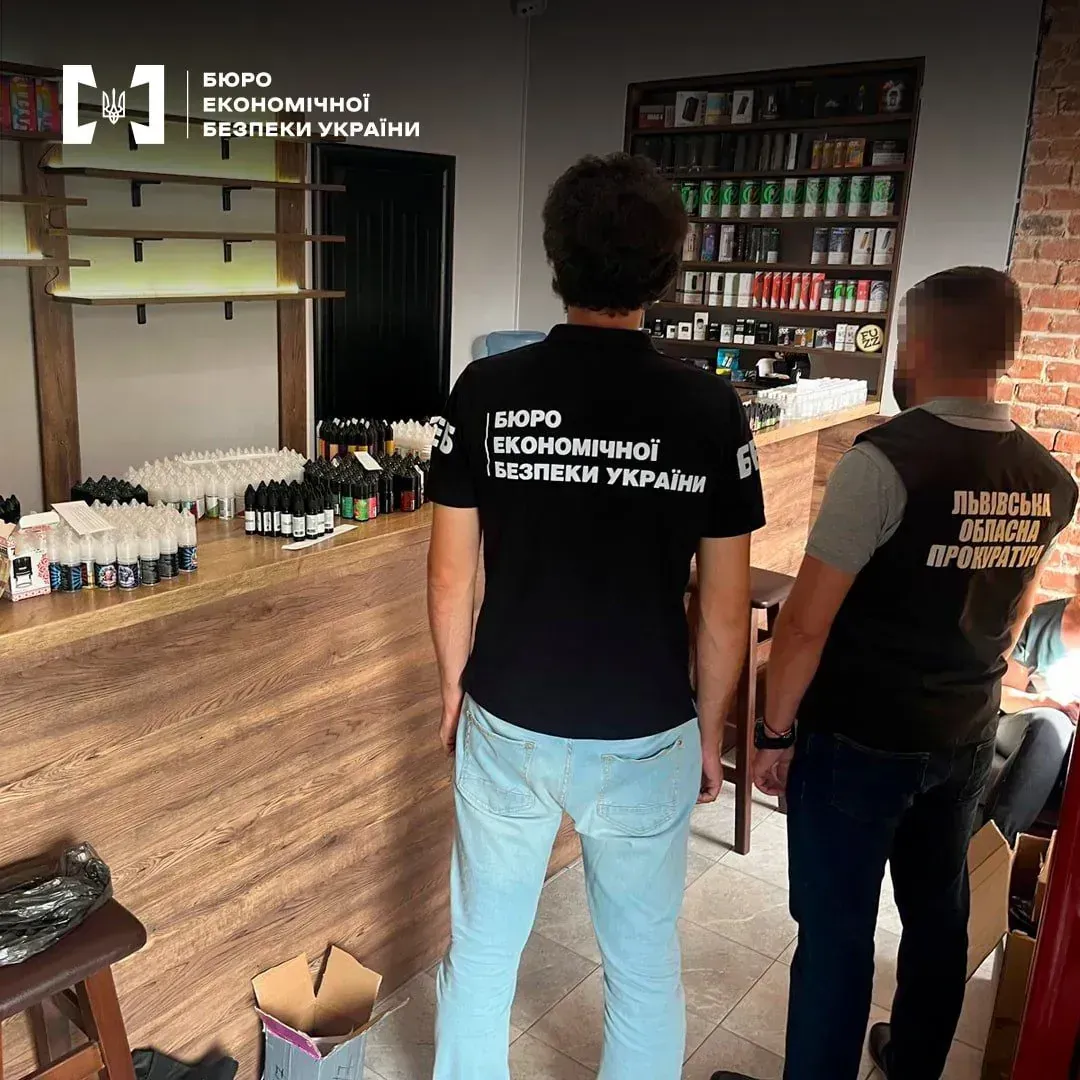
A criminal gang selling counterfeit e-cigarettes worth over $120,000 was busted in Lviv, Ukraine, by the Security Bureau.

According to a report by UNN on August 27, a criminal group suspected of selling counterfeit e-cigarettes was recently busted in the Lviv region of Ukraine.


The Economic Security Bureau of Ukraine (Bureau of Economic Security, BES) seized counterfeit e-cigarettes worth over 5 million hryvnias (approximately 120,000 USD) in a raid operation.


According to reports, the group was selling e-cigarettes without proper consumer tax labels, or using counterfeit tax labels, and did not have the necessary tobacco product wholesale or retail licenses. These illegal sales points were widespread in Lviv and its surrounding areas.


According to reports, law enforcement officers seized over 8000 polymer containers filled with e-cigarette liquid, as well as other related items such as packaging barrels, labels, ledgers, and computer equipment. The Economic Security Bureau stated that the counterfeit goods seized have a total value exceeding 5 million grivnas (approximately $120,000).


In addition, Alexander Rubin, director of the Kyiv Research Institute, pointed out that with the increasing popularity of e-cigarettes and electronic heated tobacco products, the institute's research on related products is becoming more frequent.


Since the beginning of this year, the research institute has been continuously receiving tasks to study classic tobacco products, electronic heated tobacco products (TVEN), and e-cigarette e-liquids. Each research task includes 150 to 200 samples, each of which requires detailed inspection and analysis. Recently, the popularity of e-cigarettes and their associated risks have even surpassed traditional cigarettes. This has presented us with new challenges and tasks.


We welcome news tips, article submissions, interview requests, or comments on this piece.

Please contact us at info@2firsts.com, or reach out to Alan Zhao, CEO of 2Firsts, on LinkedIn


Notice

1.  This article is intended solely for professional research purposes related to industry, technology, and policy. Any references to brands or products are made purely for objective description and do not constitute any form of endorsement, recommendation, or promotion by 2Firsts.

2.  The use of nicotine-containing products — including, but not limited to, cigarettes, e-cigarettes, nicotine pouchand heated tobacco products — carries significant health risks. Users are responsible for complying with all applicable laws and regulations in their respective jurisdictions.

3.  This article is not intended to serve as the basis for any investment decisions or financial advice. 2Firsts assumes no direct or indirect liability for any inaccuracies or errors in the content.

4.  Access to this article is strictly prohibited for individuals below the legal age in their jurisdiction.


Copyright


This article is either an original work created by 2Firsts or a reproduction from third-party sources with proper attribution. All copyrights and usage rights belong to 2Firsts or the original content provider. Unauthorized reproduction, distribution, or any other form of unauthorized use by any individual or organization is strictly prohibited. Violators will be held legally accountable.

For copyright-related inquiries, please contact: info@2firsts.com


AI Assistance Disclaimer


This article may have been enhanced using AI tools to improve translation and editorial efficiency. However, due to technical limitations, inaccuracies may occur. Readers are encouraged to refer to the cited sources for the most accurate information.

We welcome any corrections or feedback. Please contact us at: info@2firsts.com

South Korea Vape Strategies Diverge as BAT Reconsiders Exit and PMI Takes VEEV to About 14,000 Stores
BAT Rothmans says it previously considered exiting South Korea's vaping market because of competitive pressure from unregulated products, but is now reassessing conditions following changes to the country's nicotine regulatory framework. Vuse and other BAT vaping products remain available through existing distribution channels. The statement followed a South Korean media report that interpreted BAT's broader withdrawal from selected Vapour markets as a full exit from South Korea. Meanwhile, Philip Morris International launched VEEV inPRIME in the country in June and began expanding distribution to around 14,000 convenience stores and other retail channels in July. The contrasting moves highlight differing investment strategies as South Korea's regulated vaping market evolves.
Aug.14
Canadian Court Allows Juul and Altria Vape Class Action to Move Forward Over Youth Marketing Claims
A Quebec Superior Court has allowed a class action lawsuit against Juul Labs and Altria Group related to vaping products to proceed, involving allegations concerning marketing practices, youth exposure and corporate responsibility. The ruling only allows the case to move forward and does not represent a finding that Juul or Altria are legally liable. The case highlights continued legal risks facing vape companies regarding product marketing, youth protection and corporate accountability.
Jul.28
China’s Zhengzhou Tobacco Research Institute develops end-to-end heated tobacco analysis to trace aerosol compound origins
The Zhengzhou Tobacco Research Institute of China National Tobacco Corporation has filed a patent application for an end-to-end method to analyze the migration and transformation of chemical compounds in heated tobacco products. Using GC-Orbitrap/MS non-targeted analysis, the method compares tobacco substrate and aerosol samples to distinguish compounds transferred directly from the substrate from those newly formed during heating, while also calculating transfer rates. In an example involving nine heated tobacco products, the patent identified 17 newly formed thermal decomposition compounds and 38 transferred compounds.
Aug.13
JT Plans ¥800 Billion Investment in Heated Tobacco Over Three Years, Betting on Ploom as Second Growth Engine
Japan Tobacco Inc. (JT) CEO Takehiko Tsutsui said the company plans to invest about ¥800 billion (approximately US$5.4 billion) in heated tobacco products over three years through 2028, aiming to establish Ploom as a second growth engine after combustible cigarettes. Tsutsui said Ploom AURA helped JT increase its share of Japan’s heated tobacco market to 15.8% in the first quarter of 2026. Ploom products are now available in 29 markets, with Ploom AURA sold in 25 markets including Japan. JT also plans to continue its cigarette business while positioning its food operations, particularly frozen noodle products in North America, as another growth opportunity.
Jul.23
Philip Morris Italia Invests €1 Million to Upgrade Retail Network, Supporting 45,000 Tobacco Shops in Smoke-Free Shift
Philip Morris Italia has launched the Trade Academy program, investing €1 million to provide training and development support for approximately 45,000 tobacco retailers in Italy. The initiative aims to strengthen retailers’ capabilities in heated tobacco products, digital tools and consumer services. The move reflects how nicotine companies are increasingly investing in retail networks and frontline capabilities as new nicotine products become more important in the market.
Jul.28
FDA Foreign Tobacco Registration Proposal Could Strengthen ENDS Import Oversight, Azim Chowdhury Says
FDA’s proposed rule requiring foreign tobacco manufacturers to register establishments and list products is more than routine paperwork, Keller and Heckman LLP partner Azim Chowdhury told 2Firsts. He said it could strengthen FDA’s import enforcement, inspections and market surveillance. Chinese e-cigarette OEM/ODM manufacturers, specification developers, brand owners and component suppliers may need to review their roles, product data and U.S. market authorization status.
Special Report
Jun.29