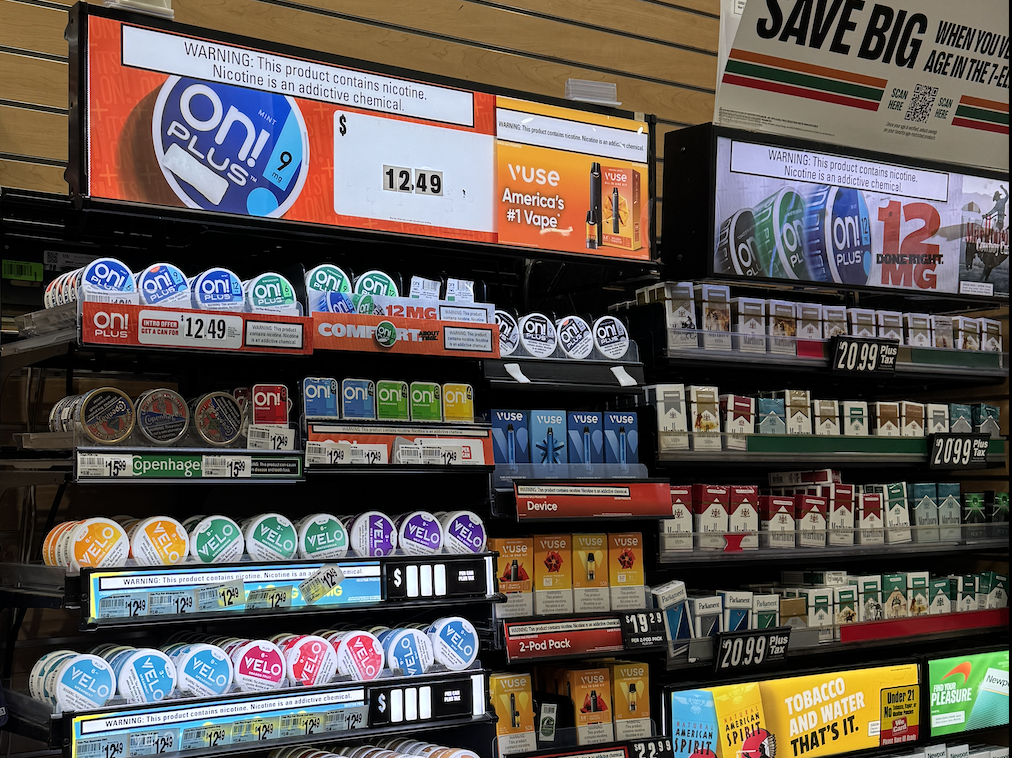
Due to a change in the mentality of local leaders, the Czech Republic will be implementing a strategy aimed at reducing the harm caused by tobacco, which includes the use of nicotine pouches. According to Ondřej Jakob, a spokesperson for the Czech Ministry of Health, a new action plan is currently being discussed and is expected to be implemented in the near future.
This issue has yet to be resolved. A new law is being prepared for nicotine pouches to define their composition, appearance, quality, characteristics, and other parameters, in order to minimize their adverse effects on human health." Jakob explained. The new law is expected to consider various factors that need to be taken into account. He said, "At this point, we anticipate debating a new action plan that should set the direction for the next three years, including tobacco addiction.
According to ECigIntelligence, successfully implementing harm reduction in the country's next three-year action plan could also promote other safer alternatives, such as electronic cigarettes and nasal snuff. Jakob discussed these products, stating that "electronic cigarettes and heated tobacco products are both controversial.
We believe that, in the future, new products should be designed with flavors that mask the unpleasant taste of nicotine while still adhering to harm reduction principles. However, they should be limited as much as possible to attract as few people as possible, especially young people, to avoid creating another batch of nicotine addicts.
The threat to teenagers, including risks to their health and the emergence of new addictions, has yet to be resolved and this may also apply to current non-smokers. For this reason, the Czech Republic is currently discussing this issue," he added.
The European Union is still spreading the "debunked theory".
Meanwhile, the EU Health and Food Safety Commissioner, Stella Kyriakides, questioned the effectiveness of e-cigarettes as a smoking cessation aid and even claimed that they are a gateway to smoking in another statement spreading misinformation about e-cigarettes.
Michael Landl, Director of the World Vapers' Alliance (WVA), expressed concern that the European Commission is still disregarding scientific evidence on e-cigarettes. He stated that it is alarming that the Commission continues to promote outdated and debunked theories on e-cigarettes, and systematically ignores vast amounts of scientific evidence that demonstrates their benefits, not to mention the firsthand experiences of millions of e-cigarette users. Compared to traditional therapies like gum or patches, e-cigarettes are 95% less harmful than smoking and a more effective method for quitting. The Commission's approach to e-cigarettes will only result in loss of life.
“Overall, it is known that both smokeless and novel tobacco and related products contain nicotine, a toxic and highly addictive substance known to be harmful to health - enhancing nicotine addiction. This is why these products are regulated and, as far as oral tobacco is concerned, banned by the European Union,” the statement concluded.
This article is compiled from third-party information sources, and the copyright of the compiled information belongs to the original media and author.
Disclaimer
This article is provided solely for professional research, industry discussion, and informational purposes. Any references to brands, companies, products, technologies, or policies are made for factual reporting and analytical purposes only, and do not constitute endorsement, recommendation, promotion, or advertising by 2Firsts.
Nicotine-containing products, including but not limited to cigarettes, e-cigarettes, heated tobacco products, and nicotine pouches, carry significant health risks. Readers are responsible for complying with all applicable laws and regulations in their respective jurisdictions, including age restrictions and access limitations.
The information contained in this article should not be regarded as investment, legal, medical, regulatory, or commercial advice. While 2Firsts strives to ensure the accuracy and reliability of its content, it does not assume liability for any direct or indirect loss arising from errors, omissions, inaccuracies, or reliance on the information contained herein.
This article is not intended for individuals below the legal age for accessing tobacco or nicotine-related information in their jurisdiction.
Copyright Notice
This article is either original content produced by 2Firsts or content reproduced, translated, summarized, or adapted from third-party sources with attribution where applicable. The intellectual property rights of the original content remain with 2Firsts or the respective original rights holders.
No individual or organization may copy, reproduce, distribute, republish, modify, translate, or otherwise use this content without prior authorization. Any unauthorized use may result in legal action.
For copyright-related inquiries, corrections, or removal requests, please contact: info@2firsts.com.
AI-Assisted Translation and Editing Notice
Portions of this article may have been translated, edited, or reviewed with the assistance of artificial intelligence tools to improve efficiency and readability. Due to the limitations of AI-assisted translation and editing, discrepancies, omissions, or inaccuracies may exist when compared with the original source.
Where applicable, readers are advised to refer to the original source for the most complete and accurate information. If you identify any errors or believe that any content infringes upon your rights, please contact us at info@2firsts.com, and we will review and address the matter promptly.