Delay Expected in Enactment of South Korean Synthetic Nicotine Tobacco Regulations

Jan.10.2025
Delay Expected in Enactment of South Korean Synthetic Nicotine Tobacco Regulations
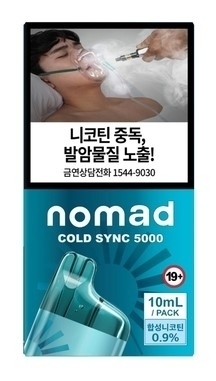
Korean regulation on synthetic nicotine tobacco faces delay, as government under special presidential system may postpone discussions.

According to a report by Etnews on January 9th, the expected implementation of new regulations on synthetic nicotine tobacco in South Korea is likely to be delayed. Despite an agreement between the ruling party and opposition parties in the National Assembly on regulating such products, the discussion may be postponed due to the current special status of the government under the acting presidency system.


According to industry sources, the regulation of synthetic nicotine may be included in the revision of the Tobacco Business Act by the first half of 2025 at the earliest. However, due to the Planning and Finance Ministry, which is responsible for this law, being too busy to address this issue, the update process may be delayed. This is because Choi Sang-mok, the current Deputy Prime Minister and Minister of Planning and Finance, is also serving as acting President and Prime Minister, leading to a heavy workload.


In addition, concerns from the planning finance department about bottlenecks in handling tax issues related to synthetic nicotine tobacco have made quick legislation difficult.


An industry insider stated, "Since both the ruling party and the opposition have no objections to the new regulations on synthetic nicotine regulation, it is imperative to amend the Tobacco Industry Law. However, if the specific implementation methods and practical examination, such as tobacco taxes, are delayed by the Ministry of Planning and Finance, it may be postponed until the regular session of the National Assembly in September.


The crux of the revision bill lies in whether to include synthetic nicotine in the legal definition of tobacco. Currently classified as an industrial product, synthetic nicotine is not subject to the current Tobacco Industry Law restrictions, allowing it to be sold through various channels such as online stores, unmanned vending machines, internet cafes, and even in the form of cosmetics and watches.


We welcome news tips, article submissions, interview requests, or comments on this piece.

Please contact us at info@2firsts.com, or reach out to Alan Zhao, CEO of 2Firsts, on LinkedIn


Notice

1.  This article is intended solely for professional research purposes related to industry, technology, and policy. Any references to brands or products are made purely for objective description and do not constitute any form of endorsement, recommendation, or promotion by 2Firsts.

2.  The use of nicotine-containing products — including, but not limited to, cigarettes, e-cigarettes, nicotine pouchand heated tobacco products — carries significant health risks. Users are responsible for complying with all applicable laws and regulations in their respective jurisdictions.

3.  This article is not intended to serve as the basis for any investment decisions or financial advice. 2Firsts assumes no direct or indirect liability for any inaccuracies or errors in the content.

4.  Access to this article is strictly prohibited for individuals below the legal age in their jurisdiction.


Copyright


This article is either an original work created by 2Firsts or a reproduction from third-party sources with proper attribution. All copyrights and usage rights belong to 2Firsts or the original content provider. Unauthorized reproduction, distribution, or any other form of unauthorized use by any individual or organization is strictly prohibited. Violators will be held legally accountable.

For copyright-related inquiries, please contact: info@2firsts.com


AI Assistance Disclaimer


This article may have been enhanced using AI tools to improve translation and editorial efficiency. However, due to technical limitations, inaccuracies may occur. Readers are encouraged to refer to the cited sources for the most accurate information.

We welcome any corrections or feedback. Please contact us at: info@2firsts.com

China Tobacco International HK Warns First-Half Revenue May Fall 25%-30%, Tobacco Leaf and Duty-Free Exposure Highlight Reliance on Traditional Tobacco
CTIHK expects first-half 2026 revenue to fall 25%-30%, mainly due to lower tobacco leaf imports and delayed cigarette shipments to China’s domestic duty-free market. Its 2025 revenue mix—nearly 90% from tobacco leaf-related businesses and less than 1% from new tobacco products—shows continued exposure to traditional supply chains and trade variables.
Jun.18
Tobacco Companies Are Redesigning Nicotine Products. BAT Wins Three Red Dot Awards
According to BAT and the Red Dot Design Award website, BAT’s glo Hilo Plus, Vuse Pro One Box and Vuse Ultra x McLaren F1 Team Limited Edition received Red Dot recognition in the Product Design 2026 competition.BAT said the awards reflect not only the design quality of the individual products but also the development of design as a core internal capability across industrial design, user experience and sustainability. Red Dot’s product pages describe glo Hilo Plus as a two-part tobacco heater with a pen and charging case, plus a touch-sensitive AMOLED display. Vuse Pro One Box is described as a rechargeable e-cigarette with replaceable pods, USB-C charging and a switchable VapourBoost mode. Vuse Ultra x McLaren F1 Team Limited Edition brings motorsport-inspired design elements into a compact e-cigarette device and includes exchangeable batteries.
Jul.17
Multi-State Coalition Urges F1 to End Nicotine Sponsorships, Citing Zyn and Velo
Hawaii Attorney General Anne Lopez is co-leading a coalition of 19 states and jurisdictions urging the Fédération Internationale de l’Automobile (FIA) and Formula 1 to end sponsorships involving tobacco and nicotine products, including nicotine pouch brands such as Zyn and Velo.
News
Jun.09
Changing Assumptions in U.S. Cigar Consumption: 2Firsts Interviews Cigar Educator Mechelle Merkerson
U.S. premium cigar culture is shifting toward education, broader choice and deeper links to craftsmanship and origin, cigar educator Mechelle Merkerson told 2Firsts. She sees boutique brands, women consumers and production-region experiences making knowledge central to cigar participation. For global brands, retailers and emerging markets such as China, education may help turn curiosity into sustained engagement.
Special Report
Jul.06
Haypp Report Shows Nicotine Pouches Gaining Ground as a Vape Alternative in the UK
According to Haypp’s 2026 UK Nicotine Report, nicotine pouches are increasingly replacing both cigarettes and vaping. The UK market grew sharply, with Haypp and Northerner reporting a 60% year‑on‑year sales increase in 2025. Notably, 40% of users adopted pouches to quit vaping, nearly matching the 43% who used them to stop smoking. This indicates pouches are expanding beyond traditional smoking cessation and gaining traction among adults seeking non‑inhalable nicotine alternatives.
Jul.01
Global Tobacco Control Faces Regional Adaptation Test as Nicotine Markets Evolve, Asian Specialist Says
As e-cigarettes, heated tobacco products and nicotine pouches expand across global markets, a central question is gaining urgency: can tobacco control rely on a universal policy model? In an interview with 2Firsts, Asian public health and addiction medicine specialist Dr. Rashidi Mohamed bin Pakri Mohamed says Western experience remains relevant, but policies must be adapted to local culture, healthcare systems, enforcement capacity, illicit markets and clinical evidence.
Jul.08