E-cigarette maker Juul to explore options including financing

Business
Jul.18.2022

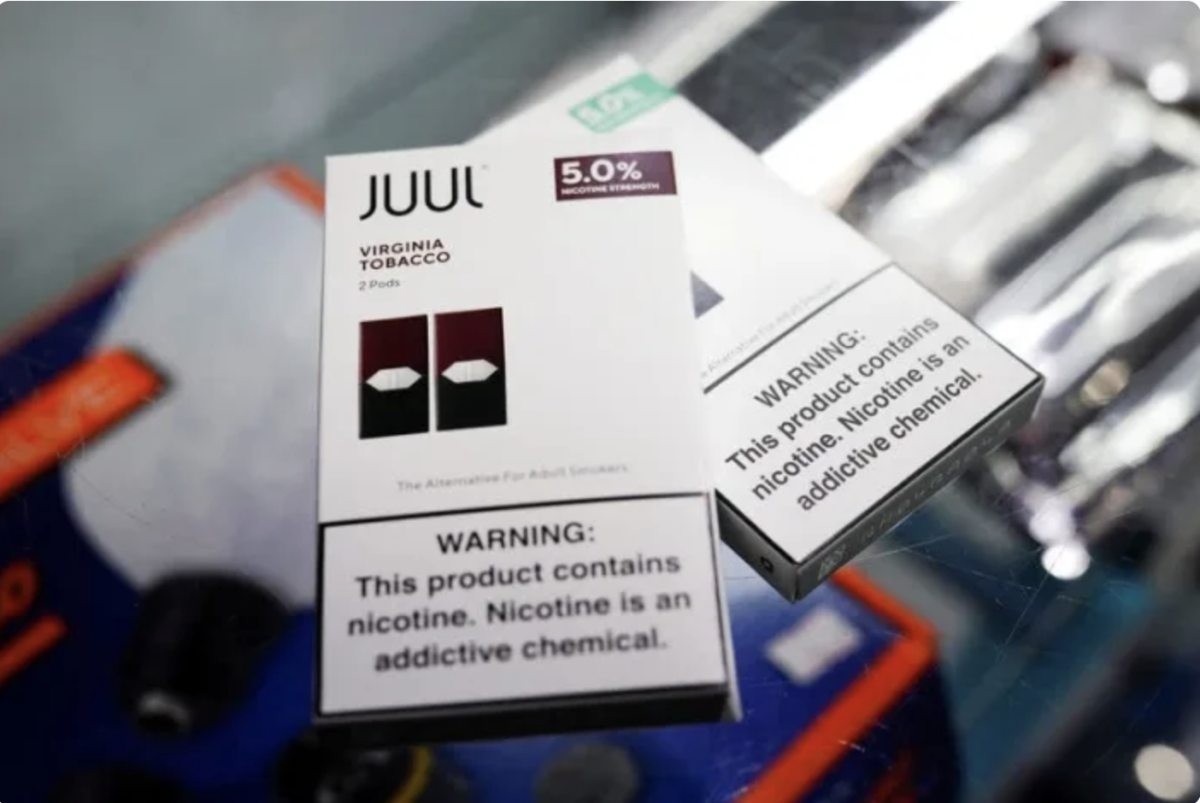
(Reuters) -Juul Labs Inc said on Friday it is in the early stages of exploring several options including financing alternatives, as the company deals with lawsuits and a probable ban on sales of its e-cigarettes by U.S. health regulators.
 

E-cigarette maker Juul to explore options including financing

Bloomberg News earlier reported, citing sources, that Juul's bankers at Centerview Partners are sounding out investors for a possible $400 million first-lien term loan due August 2023. (https://bloom.bg/3O9qStl)

The proceeds would help refinance an existing term loan, which has around $394 million outstanding and matures on the same date, the report added.

A spokesperson for Juul told Reuters that the company is looking at options to protect its business and to address the "impact of the FDA's now stayed order so we can continue offering our products to adult consumers who have or are looking to transition away from traditional cigarettes."


Centerview Partners declined to comment when contacted by Reuters.


Bloomberg News in its report said Juul was also considering a new $150 million second-lien term loan, which may have an August 2024 maturity, to help pay down some of the first-lien term loan and to increase liquidity, the report said.


Financing proposals for either loan are due July 21, according to the report.


Last month, the Food and Drug Administration (FDA) blocked sales of Juul e-cigarettes and said the applications "lacked sufficient evidence" to show that sale of the products would be appropriate for public health.


However, Juul appealed the agency's order and earlier this month FDA put on hold its ban saying it would do an additional review of the company's marketing application.


(Reporting by Ananya Mariam Rajesh in Bengaluru; Editing by Shailesh Kuber)


The content excerpted or reproduced in this article comes from a third-party, and the copyright belongs to the original media and author. If any infringement is found, please contact us to delete it. Any entity or individual wishing to forward the information, please contact the author and refrain from forwarding directly from here.


Chinese Disposable Brands OXBAR, LYCO Challenge Vuse and JUUL: Pennsylvania’s Pending List Offers a Glimpse of the Future Legal Vape Market
Pennsylvania’s June 26 ENDS Pending Certifications list previews the state’s future legal vape market, placing Vuse, JUUL and Logic alongside Chinese-linked disposable brands OXBAR and LYCO. Shaped by PMTA eligibility and state rules, the list shows competition shifting from market share to market access.
Special Report
Jul.06
UK Parliament Briefing Puts Vape Hardware Design and Materials in Regulatory Focus
The UK Parliament’s Parliamentary Office of Science and Technology (POST) has published a scientific briefing reviewing current evidence on the health effects of vape device components, including heating elements, power settings, metals, plastics, batteries and e-liquid ingredients, signalling growing regulatory attention to device design and whole-product systems beyond e-liquids, flavours and packaging.
Special Report
Jun.29
Philippine Customs Seizes $2.22 Million in Misdeclared Vape Products From China
The Philippine Bureau of Customs said it intercepted nine containers of misdeclared vape and vape-related products from China at the Manila International Container Port, with an estimated value of about ₱137 millionor, about $2.22 million.
Jul.10
South Korea Vape Strategies Diverge as BAT Reconsiders Exit and PMI Takes VEEV to About 14,000 Stores
BAT Rothmans says it previously considered exiting South Korea's vaping market because of competitive pressure from unregulated products, but is now reassessing conditions following changes to the country's nicotine regulatory framework. Vuse and other BAT vaping products remain available through existing distribution channels. The statement followed a South Korean media report that interpreted BAT's broader withdrawal from selected Vapour markets as a full exit from South Korea. Meanwhile, Philip Morris International launched VEEV inPRIME in the country in June and began expanding distribution to around 14,000 convenience stores and other retail channels in July. The contrasting moves highlight differing investment strategies as South Korea's regulated vaping market evolves.
Aug.14
French Anti-Tobacco Group Questions PMI’s IQOS “Curiosity” Campaign Over Potential Youth Appeal
According to French anti-tobacco group Générations Sans Tabac, Philip Morris International’s (PMI) IQOS “Curiosity” campaign has drawn attention from public health advocates. The group argues that the campaign uses themes including curiosity, exploration and lifestyle branding that could increase interest among younger audiences. PMI has positioned IQOS as a key part of its smoke-free product strategy, while France maintains strict restrictions on tobacco and nicotine product marketing. The debate highlights ongoing tensions between heated tobacco branding strategies and public health concerns in Europe.
Jul.24
WIRED Investigation: Chinese-Made Vapes Turn to 6-Methyl-Nicotine and Other Analogs, Challenging U.S. Regulation
U.S. technology and investigative publication WIRED has examined how nicotine analogs are emerging as a new challenge for the country’s vape regulatory framework. The article argues that after the U.S. expanded federal oversight of nicotine products in 2022, some manufacturers began using nicotine-like compounds such as 6-methyl-nicotine that may fall outside existing definitions. Researchers cited by WIRED said some nicotine analogs could be more potent than traditional nicotine, although human health impacts remain unclear. U.S. policymakers are considering broader definitions of nicotine to bring these compounds under federal oversight.
Jul.27