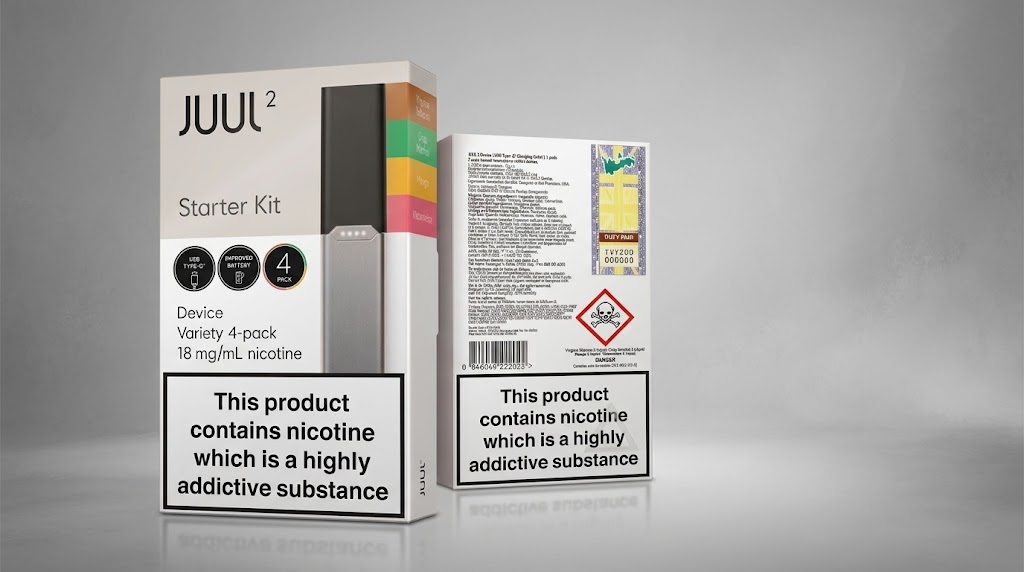
Over the past six months, sales and advertisement of e-cigarettes and heated tobacco products (HTP) in Cambodia have tripled, despite efforts by authorities to curb their usage.
The latest data was released on June 12 during a Cambodia e-cigarette conference held at the Phnom Penh city hall.
Dr. Mom Kong, executive director of Cambodia Movement for Health, stated during the meeting that promotion of e-cigarettes continues to grow on social media platforms such as Facebook, Tik Tok and Telegram. Promoters are using attractive pictures and videos to appeal to the targeted demographic of youths and students.
Dr. Kong further stated that in research conducted on the use and distribution of e-cigarettes in schools, it was found that a majority of young people purchase or use them through social media platforms.
"I believe that advertising and promoting e-cigarettes on social media platforms like Facebook, Tik Tok, and Telegram has had a devastating impact on young people, and is damaging their future," he said.
Dr. Kong suggests that authorities should use additional legal mechanisms to punish e-cigarette vendors and intervene in prohibiting the import of these products into Cambodia in order to prevent young people from using them. He argues that if e-cigarettes are not imported, people will not be able to use them.
Im Ron Hassan, Deputy Mayor of Phnom Penh, announced that the authorities have been actively cracking down on the use, sale, and distribution of e-cigarettes and heated tobacco products over the past few months.
"However, recently we have observed a concerning trend of electronic cigarettes and heated tobacco products being sold and distributed on social media platforms such as Facebook, Telegram, and Tik Tok," he announced.
He demanded that the 104 district chiefs of Phnom Penh and other authorities to enforce the ban on the sale, distribution, and usage of e-cigarettes and heated tobacco products.
Major General Lim Tong Huot, head of the legislative, educational, and rehab department of the National Authority for Combating Drugs (NACD), stated yesterday that he observed numerous students and individuals secretly using e-cigarettes and heated tobacco products in Phnom Penh.
He added that in order to stop the sale and distribution of e-cigarettes, the police chiefs of the districts and communities in Phnom Penh must work with other authorities to identify those responsible for selling e-cigarettes and make them face legal action.
Major General Tong Huot also stated that most sellers of e-cigarettes and heated tobacco products operate near schools, but the district and community police chiefs have not taken any action.
Reference:
The use of electronic cigarettes is on the rise.
Disclaimer
This article is provided solely for professional research, industry discussion, and informational purposes. Any references to brands, companies, products, technologies, or policies are made for factual reporting and analytical purposes only, and do not constitute endorsement, recommendation, promotion, or advertising by 2Firsts.
Nicotine-containing products, including but not limited to cigarettes, e-cigarettes, heated tobacco products, and nicotine pouches, carry significant health risks. Readers are responsible for complying with all applicable laws and regulations in their respective jurisdictions, including age restrictions and access limitations.
The information contained in this article should not be regarded as investment, legal, medical, regulatory, or commercial advice. While 2Firsts strives to ensure the accuracy and reliability of its content, it does not assume liability for any direct or indirect loss arising from errors, omissions, inaccuracies, or reliance on the information contained herein.
This article is not intended for individuals below the legal age for accessing tobacco or nicotine-related information in their jurisdiction.
Copyright Notice
This article is either original content produced by 2Firsts or content reproduced, translated, summarized, or adapted from third-party sources with attribution where applicable. The intellectual property rights of the original content remain with 2Firsts or the respective original rights holders.
No individual or organization may copy, reproduce, distribute, republish, modify, translate, or otherwise use this content without prior authorization. Any unauthorized use may result in legal action.
For copyright-related inquiries, corrections, or removal requests, please contact: info@2firsts.com.
AI-Assisted Translation and Editing Notice
Portions of this article may have been translated, edited, or reviewed with the assistance of artificial intelligence tools to improve efficiency and readability. Due to the limitations of AI-assisted translation and editing, discrepancies, omissions, or inaccuracies may exist when compared with the original source.
Where applicable, readers are advised to refer to the original source for the most complete and accurate information. If you identify any errors or believe that any content infringes upon your rights, please contact us at info@2firsts.com, and we will review and address the matter promptly.