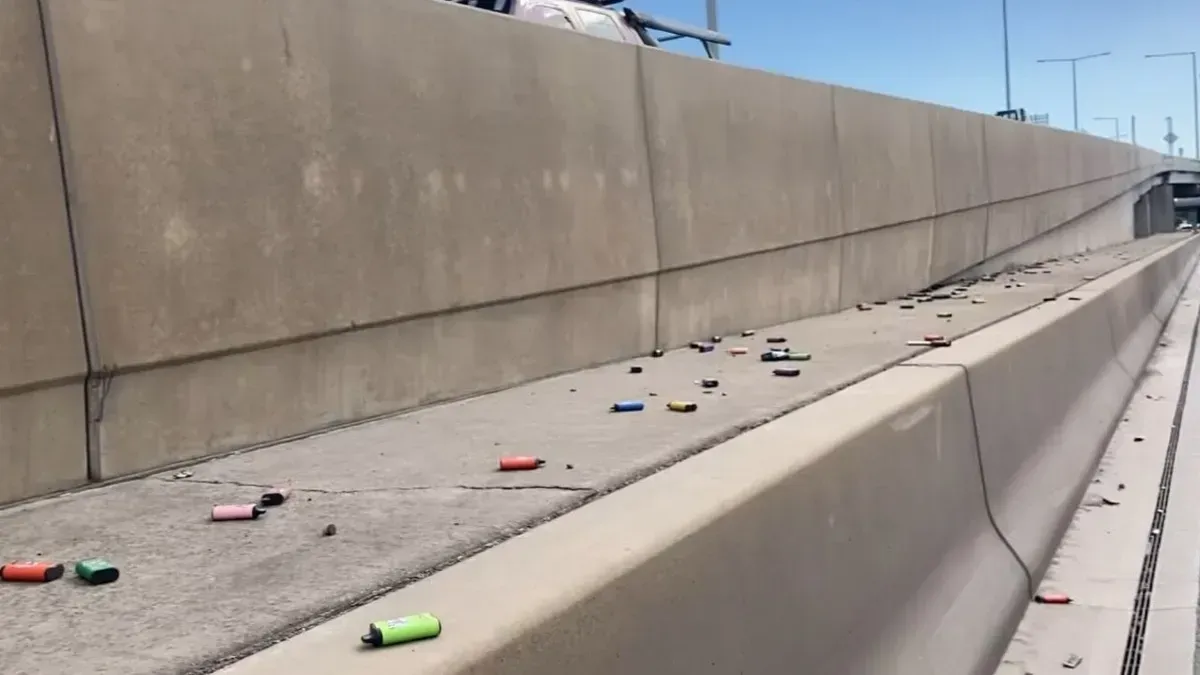
Recently, a photo of a "e-cigarette wall" that was posted online has caused a lot of attention in Australia. In the photo, dozens of discarded plastic e-cigarette devices are scattered on the roadside barrier of a highway in Melbourne. This behavior, which has been deemed disgusting, has angered many people. They have condemned the actions of the litterers, calling the behavior "barbaric" and "disappointing." One internet user wrote, "They are truly a disgusting bunch of hooligans." Another netizen expressed, "People really have no respect for anything. They are happy to live in their own filth."
Some citizens are concerned about the environmental risks posed by the disposal of e-cigarettes, as the plastic shells and lithium batteries of these e-cigarettes have an immeasurable impact on the environment. A netizen wrote, "Disposable e-cigarettes are like the worst side of human nature. A whole piece of plastic, with an acidic battery, allows you to inhale nicotine smoke for a few days, then just throw it directly into the environment, causing battery acid leakage."
Industry experts are warning that improperly disposing of e-cigarettes has led to fires in waste disposal facilities. According to Rick Ralph, CEO of the Waste and Recycling Industry Council, at least 35 fires break out in recycling facilities across the country every day. "The direct cause is lithium-ion batteries, because we don't have an effective or simple way to deal with these batteries," he said. Ralph noted that e-cigarettes contain a fixed battery, with over 1.8 million being thrown into general waste each week.
According to research conducted by Roy Morgan, in the past three months, over 90,000 Australians have started using e-cigarettes, bringing the total number of adult smokers to over 1.7 million. The study by Roy Morgan also found that the number of adult smokers in Victoria has increased by 355% in the past five years, with New South Wales experiencing the largest increase of 470%.
In response, as of January 1st of this year, the Australian Federal Government announced a ban on the import of disposable e-cigarettes from overseas. According to the new regulations, only medication prescribed by a doctor and provided by a pharmacy to help people quit smoking can legally enter Australia. The packaging and flavors of medicinal e-cigarettes are also subject to strict restrictions under the new rules.
However, some industry professionals are concerned that regulations on authenticity will drive the prosperity of black market sales. The new regulations state, "There is concern about excessive regulations that may stimulate the growth of black market e-cigarette sales... This is a legitimate risk, as stricter regulations often increase the risk of black market sales."
Federal Health Minister Mark Butler has stated that the new regulations are crucial in reducing the national smoking rate to 5% by 2030. "The government is determined to support Australians in their fight against nicotine addiction, and will put an end to any forms of temptation."
We welcome news tips, article submissions, interview requests, or comments on this piece.
Please contact us at info@2firsts.com, or reach out to Alan Zhao, CEO of 2Firsts, on LinkedIn
Notice
1. This article is intended solely for professional research purposes related to industry, technology, and policy. Any references to brands or products are made purely for objective description and do not constitute any form of endorsement, recommendation, or promotion by 2Firsts.
2. The use of nicotine-containing products — including, but not limited to, cigarettes, e-cigarettes, nicotine pouchand heated tobacco products — carries significant health risks. Users are responsible for complying with all applicable laws and regulations in their respective jurisdictions.
3. This article is not intended to serve as the basis for any investment decisions or financial advice. 2Firsts assumes no direct or indirect liability for any inaccuracies or errors in the content.
4. Access to this article is strictly prohibited for individuals below the legal age in their jurisdiction.
Copyright
This article is either an original work created by 2Firsts or a reproduction from third-party sources with proper attribution. All copyrights and usage rights belong to 2Firsts or the original content provider. Unauthorized reproduction, distribution, or any other form of unauthorized use by any individual or organization is strictly prohibited. Violators will be held legally accountable.
For copyright-related inquiries, please contact: info@2firsts.com
AI Assistance Disclaimer
This article may have been enhanced using AI tools to improve translation and editorial efficiency. However, due to technical limitations, inaccuracies may occur. Readers are encouraged to refer to the cited sources for the most accurate information.
We welcome any corrections or feedback. Please contact us at: info@2firsts.com