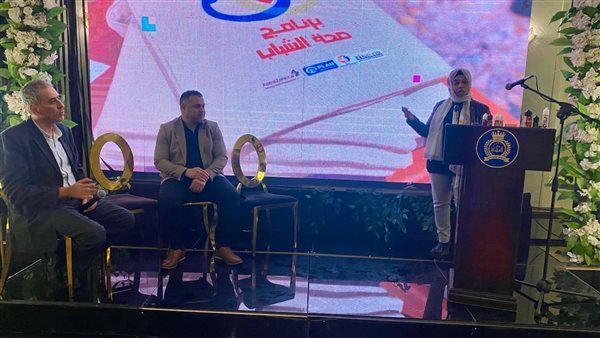
According to Egyptian media outlet Alwafd, the Egyptian Fund for International Health Youth Health Program and the Egyptian Non-Communicable Diseases Association collaborated to organize a conference titled "Creating a Health-Friendly Environment for Young People and Girls" at the Faculty of Pharmacy at Ain Shams University in Cairo. The conference invited doctors, pharmacists, researchers, representatives from the central laboratory, and anti-smoking activists with the aim of presenting the results of testing e-cigarette liquid samples to understand the ingredients and flavors of these products, and to clarify the extent of harm they pose to the health of our youth and society.
By collaborating with the International Planned Parenthood Federation Youth Health Project, the Non-Communicable Diseases Association, and the Faculty of Pharmacy at Ain Shams University in Cairo, these tests were conducted with the aim of supporting the health of young people and girls in Egypt.
Test results show that all e-cigarette liquids contain nicotine, which poses serious dangers to the nervous system, circulatory system, and heart. They also contain propylene glycol and glycerin, substances that can produce toxic chemicals when heated or burned in e-cigarettes. Additionally, these liquids contain oils and flavorings that can introduce various toxic and potentially fatal substances into the body, depending on their type and purity.
The results confirm that various types and brands of e-cigarettes pose health risks, all of which are sold on the market in Egypt.
The participants reached agreement on the following points:
All stakeholders should collaborate, including health department agencies, consumer protection agencies, research centers, associations, and media, to detect and educate society, especially young people, about the risks of smoking and e-cigarettes. Communication with stakeholders is essential to ensure that all smoking-related laws are enforced, including a ban on smoking advertisements and promotions, especially those targeting young people. It is also imperative to stop disseminating misleading information that encourages false assumptions about these products, such as their minimal health risks or their ability to aid in smoking cessation, both of which are incorrect. Efforts should be made to eliminate attractive packaging and misleading labeling, and to restrict additives that not only contribute to nicotine and tobacco product dependence but also create a addictive flavor. We hope that through organized cooperation and coordinated initiatives, ongoing collaboration and efforts will continue.
We welcome news tips, article submissions, interview requests, or comments on this piece.
Please contact us at info@2firsts.com, or reach out to Alan Zhao, CEO of 2Firsts, on LinkedIn
Notice
1. This article is intended solely for professional research purposes related to industry, technology, and policy. Any references to brands or products are made purely for objective description and do not constitute any form of endorsement, recommendation, or promotion by 2Firsts.
2. The use of nicotine-containing products — including, but not limited to, cigarettes, e-cigarettes, nicotine pouchand heated tobacco products — carries significant health risks. Users are responsible for complying with all applicable laws and regulations in their respective jurisdictions.
3. This article is not intended to serve as the basis for any investment decisions or financial advice. 2Firsts assumes no direct or indirect liability for any inaccuracies or errors in the content.
4. Access to this article is strictly prohibited for individuals below the legal age in their jurisdiction.
Copyright
This article is either an original work created by 2Firsts or a reproduction from third-party sources with proper attribution. All copyrights and usage rights belong to 2Firsts or the original content provider. Unauthorized reproduction, distribution, or any other form of unauthorized use by any individual or organization is strictly prohibited. Violators will be held legally accountable.
For copyright-related inquiries, please contact: info@2firsts.com
AI Assistance Disclaimer
This article may have been enhanced using AI tools to improve translation and editorial efficiency. However, due to technical limitations, inaccuracies may occur. Readers are encouraged to refer to the cited sources for the most accurate information.
We welcome any corrections or feedback. Please contact us at: info@2firsts.com