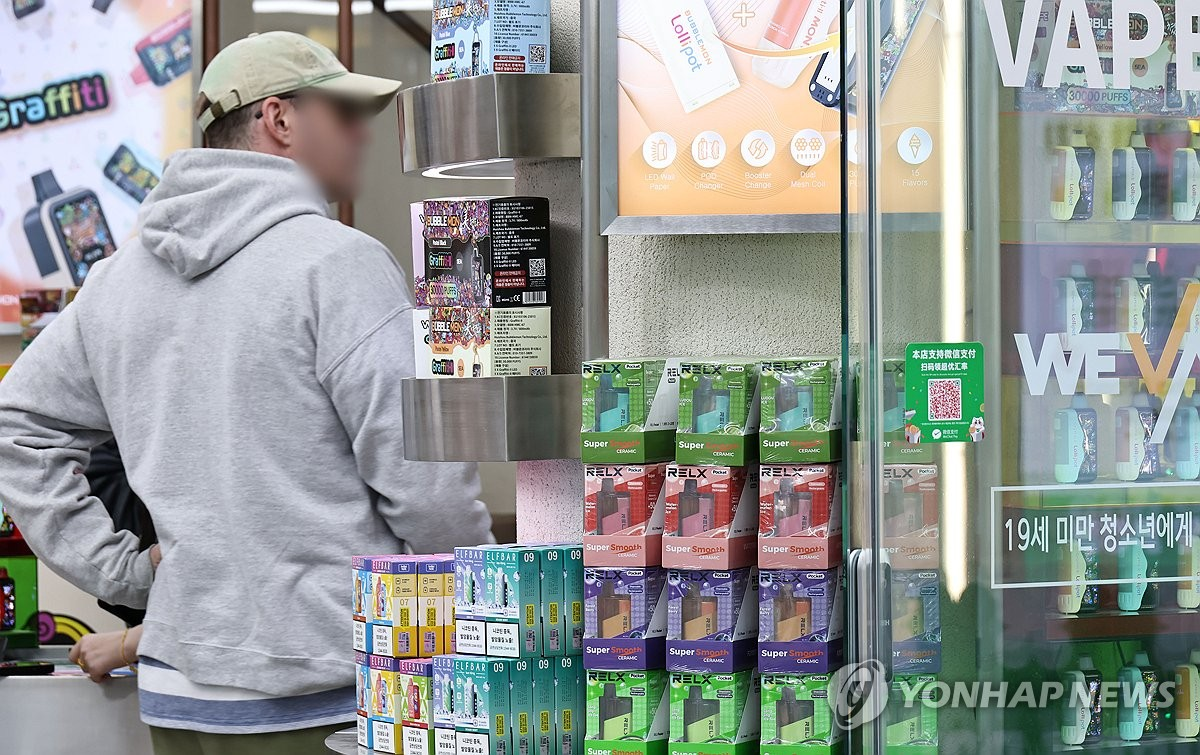
Starting this October, the "Electronic Cigarette Management Regulations" (hereinafter referred to as the "Regulations") will be officially implemented, and it will explicitly prohibit the sale of flavored electronic cigarettes other than tobacco flavor and electronic cigarettes that can self-add atomizers. This undoubtedly brings huge turmoil to the electronic cigarette industry.
Halfway through the five-month buffer period, an investigation by the China Times has revealed that electronic cigarette companies are expanding into new business areas. YUEKU has launched its own coffee brand "XINGKE ON," with its second store opening in Chengdu on July 15th. Meanwhile, MOTI has introduced "RIKAYO JIUYAO," the first joint store in Shenzhen's Longhua district to offer a combination of coffee, craft beer, and electronic cigarettes. YOOZ has taken a different approach, selling betel nut-flavored gum under the brand "LIDANGJIA," with flagship stores on Taobao and JD.
Coffee, tea and alcoholic beverages are all hotly contested markets today, targeting urban white-collar workers and young people. This market demographic also significantly overlaps with the e-cigarette consumer group.
According to Zhang Dexin, an expert from the National Culture and Trade Innovation Development Think Tank, the electronic cigarette industry will require a longer-term outlook due to the fact that tobacco is a controlled substance and e-cigarettes have only recently been incorporated into regulatory frameworks. Furthermore, both tobacco and e-cigarettes pose health risks, making it challenging for companies to promote their products aggressively. As public awareness of e-cigarettes becomes more rationalized, companies in this industry will need to ensure sustainable expansion of their core business while exploring opportunities for cross-border integration under strict regulatory measures.
Unorthodox Practices" by MOTI Mozhi.
On July 27, a journalist from the Huaxia Times visited the first joint store of MOJO that combines "coffee, craft beer, and e-cigarettes". From the exterior, the store has a container style and is located on the street outside a commercial plaza. The storefront has many elements including a large sign reading "MOTI MOJO E-Cigarettes", awnings on the side featuring their proprietary coffee brand "℃ CUP HUB", and a lit sign for "craft beer" in the glass display window.
At this joint store, our reporter observed a variety of coffee options including Americano, Flat White, and Coconut Latte, priced between 18 to 25 yuan, which is considered middle-range compared to other similar coffee shops nearby. Their alcohol choices included freshly tapped beer and bottled craft brews. Our reporter also noted an e-cigarette shelf near the counter, displaying various flavored electronic pods. According to a staff member named Aisen (a pseudonym), the new store has been open for a while, and the concept of a "coffee, beer, and e-cigarette" joint store is still in the experimental phase.
According to Eisen, currently the highest profits in the shop come from electronic cigarettes, followed by beer. Coffee, on the other hand, has almost no profit margin. "There are many competitors in the area, such as Xixi Books and Starbucks in the shopping mall across the street, which have good environments and have been rooted there for a long time. Coffee consumers with office needs will choose them," Eisen said. "However, the rent in the mall is also high, and we need to consider the cost issue when selecting the location. There will be some limitations. The monthly rent for this store, including utilities, is currently around 40,000.
To ensure the quality of our coffee, we use higher-quality beans. Currently, the cost of coffee beans has not decreased, resulting in minimal profits. However, in the evenings, many young people come over, especially during the summer, which has led to good sales for beer and also boosted e-cigarette sales," said Eisen to our reporter.
When asked about the impact of the new regulations, Eisen stated that it is currently impossible to achieve the same level of income as during the industry's prime period. The industry is currently waiting for the new regulations to be implemented and needs to see how the market develops afterwards. For now, all that can be done is to prepare and make plans, and then evaluate the next steps to take.
Zeng Huabin, Vice President of Domestic Operations for MOTI, stated to a reporter from Huaxia Times that MOTI's focus on the electronic cigarette industry will not change. The exploration of consumer goods such as coffee and craft beer is being conducted by Shenzhen Ray Technology Co., Ltd. (MOTI's parent company) as part of its business expansion efforts, and more exploration is expected in the future.
A reporter from the Huaxia Times interviewed Dong Cuiling, the Vice Secretary-General and Senior Researcher of the Co-Found think tank, about the "smoking and alcohol culture" cooperative store model. She stated that the electronic cigarette industry is facing regulatory pressures, leading e-cigarette companies to seek breakthroughs and explore various scenarios to incorporate new consumer businesses and products, catering to the preferences of the younger generation.
Young people enjoy trying new things and innovative experiences. In this new type of physical space, which combines electronic cigarettes with alcohol and coffee, it can drive emotional socializing and product consumption among the younger generation, opening up new pathways for the development of electronic cigarette companies. This demand can also cultivate brand loyalty among young people. However, while focusing on creating rich and personalized product designs, attention must also be paid to avoiding certain industry regulatory policies, according to Dong Cuiling.
Is Joy Capital pivoting to sell coffee?
Yueke, a popular e-cigarette brand in China, has followed the trend by launching its own coffee brand, called "Xingke ON". On the 15th of this month, they opened their second store in Chengdu. However, unlike rival brand MOD, Xingke coffee shops do not feature many elements of the Yueke brand and do not sell e-cigarettes. The menu includes nine coffee options, priced between 15 and 28 yuan, with similar pricing to MOD.
As a consumer, the journalist called the "Xingke ON" store in Renhe Xincheng, Chengdu. The staff member stated that the store is currently running a promotion in partnership with Yueke. Customers can show their purchase receipt from Yueke to receive any coffee for free at "Xingke ON," or they can enjoy the discounted price of 10 yuan to purchase a membership card (originally priced at 20 yuan).
The event is currently ongoing and according to the staff, Yuek
Industry insiders speculate that this move aims to attract more members to Yuedou's platform by incentivizing them to use their Yuedou vouchers and products at participating coffee shops. In turn, customers at Yuedou stores will be able to use coffee shop coupons, creating a mutually beneficial flow of traffic. By continuing to solidify and maintain its market position, Yuedou can mitigate uncertainty surrounding its quotas in the future.
According to publicly available information, the "Waking Moment ON" Chengdu store is owned by Chengdu Waking Moment Catering Management Co., Ltd., which was recently established on May 16, 2022 and is fully owned by Ningbo JinzheYue Technology Co., Ltd. The executive director of Ningbo JinzheYue Technology Co., Ltd. is Wang Tao and the supervisor is Gao Yang, both of whom have affiliations with several other companies related to Waking Moment.
It is worth noting that at the end of June this year, "Shenzhen Xingke Catering Management Co., Ltd." was established. The reporter also noticed that on a certain recruitment website, Yuelke also recruited coffee baristas for the "Xingke" brand in Bao'an District, Shenzhen. On the recruitment requirement page, it was emphasized that employees should be trained to become brand image ambassadors and endorse the brand. The reporter contacted Yuelke officials regarding "Xingke ON", and Yuelke stated that there is currently no further information to disclose.
In May of this year, the "Electronic Cigarette Management Regulations" officially came into effect, which prohibits the sale of flavored electronic cigarettes that are not tobacco flavored and electronic cigarettes that can self-add atomizers. This marks the possible end of the "sugarcoated" electronic cigarette industry. However, due to some supporting policies not yet being implemented, the national tobacco department has set a five-month transition period. Starting from October 1st, electronic cigarette products that do not contain nicotine cannot be sold on the market. What will happen to the electronic cigarette industry after the transition period ends remains to be seen.
In response to this, Zhang Dexin stated to our reporter, "It is very necessary to conduct relevant exploration. Firstly, it can mine the existing customer base, and secondly, it can provide these customers with more choices. During this process, we can also attempt to see if there are opportunities for new business breakthroughs. Currently, it is difficult for companies to have a good future by solely focusing on the e-cigarette business.
This article contains excerpts or reprints from third-party sources. The copyright belongs to the original media and author. If there is any infringement, please contact us for deletion. Any organization or individual who wants to reprint it should contact the author and should not reprint it directly.
Disclaimer
This article is provided solely for professional research, industry discussion, and informational purposes. Any references to brands, companies, products, technologies, or policies are made for factual reporting and analytical purposes only, and do not constitute endorsement, recommendation, promotion, or advertising by 2Firsts.
Nicotine-containing products, including but not limited to cigarettes, e-cigarettes, heated tobacco products, and nicotine pouches, carry significant health risks. Readers are responsible for complying with all applicable laws and regulations in their respective jurisdictions, including age restrictions and access limitations.
The information contained in this article should not be regarded as investment, legal, medical, regulatory, or commercial advice. While 2Firsts strives to ensure the accuracy and reliability of its content, it does not assume liability for any direct or indirect loss arising from errors, omissions, inaccuracies, or reliance on the information contained herein.
This article is not intended for individuals below the legal age for accessing tobacco or nicotine-related information in their jurisdiction.
Copyright Notice
This article is either original content produced by 2Firsts or content reproduced, translated, summarized, or adapted from third-party sources with attribution where applicable. The intellectual property rights of the original content remain with 2Firsts or the respective original rights holders.
No individual or organization may copy, reproduce, distribute, republish, modify, translate, or otherwise use this content without prior authorization. Any unauthorized use may result in legal action.
For copyright-related inquiries, corrections, or removal requests, please contact: info@2firsts.com.
AI-Assisted Translation and Editing Notice
Portions of this article may have been translated, edited, or reviewed with the assistance of artificial intelligence tools to improve efficiency and readability. Due to the limitations of AI-assisted translation and editing, discrepancies, omissions, or inaccuracies may exist when compared with the original source.
Where applicable, readers are advised to refer to the original source for the most complete and accurate information. If you identify any errors or believe that any content infringes upon your rights, please contact us at info@2firsts.com, and we will review and address the matter promptly.