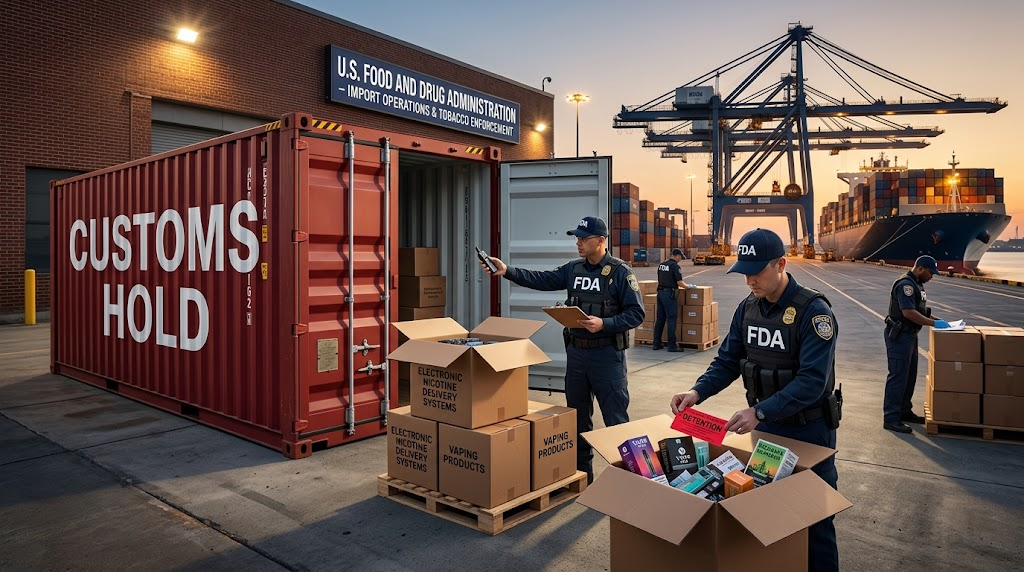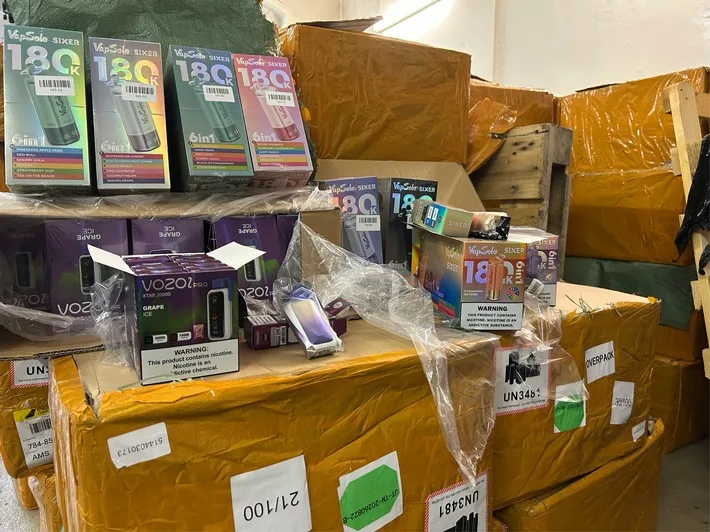
On December 14th, the U.S. Food and Drug Administration (FDA) and the U.S. Customs and Border Protection (CBP) announced the seizure of approximately 1.4 million unauthorized e-cigarette products, including brands like ELFBAR. According to the 2023 National Youth Tobacco Survey, ELFBAR is the most widely used brand among teenage e-cigarette users. The retail value of these seized products exceeds $18 million. This operation was part of a three-day joint action, resulting in the seizure of 41 shipments containing illegal e-cigarettes.
Dr. Robert M. Califf, Director of the FDA, states, "The FDA is committed to continuing efforts to curb the illegal influx of e-cigarettes into the United States. Unscrupulous companies will go to any lengths to bring unauthorized tobacco products that appeal to young people into the country. The FDA will remain vigilant and work with our federal partners to halt these products before they reach the hands of our youth.
The FDA and CBP conducted a joint operation at a cargo inspection site in Los Angeles International Airport, where the team inspected imported goods for potential violations.
During the preparation for this three-day operation, the team spent several months reviewing shipping invoices, identifying potentially non-compliant imported goods, and conducting other investigations, ultimately achieving the successful outcome of this operation. Once the goods are confiscated and in the possession of the government, they will be disposed of in accordance with the law. For unauthorized new tobacco products, it generally implies that they will be destroyed.
The head of CBP, Troy A. Miller, stated, "This law enforcement operation is an exemplification of CBP's commitment to protecting our communities and combating the illegal importation of goods. The growing trend of illicit e-commerce demands that our agency remains vigilant in intercepting goods that pose serious risks to the health of the public, particularly youth, and dismantling the supply chains that transport them to our borders.
During the inspection of these goods, the team discovered various brands of illegal flavored disposable e-cigarette products, all originating from China. According to the recent National Youth Tobacco Survey (NYTS) data for 2023, disposable e-cigarettes are the most widely used type among American teenagers, with 89.4% of current e-cigarette users opting for flavored e-cigarettes. Fruit flavors are the most popular, followed by candy, desserts, or other sweet flavors, as well as menthol and mint flavors.
In addition to ELFBAR, the confiscated e-cigarettes also include EB Create products; earlier this year, the manufacturer of ELFBAR started promoting the product under the names "EB Design" and "EB Create". Other brands that were seized include Lost Mary, Funky Republic, RELX Pod, and IPLAY Max, among others.
In order to evade taxes and detection, many of these unauthorized e-cigarettes are deliberately declared as various items, such as toys or shoes, and are listed at incorrect values.
Dr. Brian King, Director of the FDA's Center for Tobacco Products, has issued a warning to individuals who unlawfully smuggle e-cigarettes, particularly those targeting youth, into the country. Federal agencies are aware of their tactics and will not hesitate to take action. The significant value of the seized products serves as a reminder to these criminals that their time and money are better spent abiding by the law.
The FDA adopts a comprehensive approach to ensure compliance and enforcement of tobacco products, taking action against relevant parties in the supply chain who violate the law, including manufacturers, importers, distributors, and retailers, as described in today's announcement. The FDA also regularly addresses the issue of illegal e-cigarette imports by placing certain companies on its Import Alert Red List, allowing for the detention of products upon entry without full inspections.
For example, in May, the FDA will add certain companies, including those associated with the ELFBAR brand, to a blacklist due to their unauthorized e-cigarette products that appeal to minors.
As of December 2023, the FDA has authorized the sale of 23 e-cigarette products and devices with various tobacco flavors, making them legally available in the United States. The distribution and/or sale of unauthorized new tobacco products are subject to compliance and enforcement actions.
As of December 2023, the FDA has issued over 650 warning letters to companies involved in the production, sale, and/or distribution of unauthorized new tobacco products, including flavored disposable e-cigarettes and popular brands among young people.
The FDA has also filed civil penalty complaints against 38 e-cigarette manufacturers and 67 retailers, and has initiated permanent injunction lawsuits against 7 companies illegally selling e-cigarettes. The FDA will continue to take appropriate action to combat the manufacturing, distribution, importation, and/or sale of unauthorized e-cigarette products, particularly those that appeal to young people.
We welcome news tips, article submissions, interview requests, or comments on this piece.
Please contact us at info@2firsts.com, or reach out to Alan Zhao, CEO of 2Firsts, on LinkedIn
Notice
1. This article is intended solely for professional research purposes related to industry, technology, and policy. Any references to brands or products are made purely for objective description and do not constitute any form of endorsement, recommendation, or promotion by 2Firsts.
2. The use of nicotine-containing products — including, but not limited to, cigarettes, e-cigarettes, nicotine pouchand heated tobacco products — carries significant health risks. Users are responsible for complying with all applicable laws and regulations in their respective jurisdictions.
3. This article is not intended to serve as the basis for any investment decisions or financial advice. 2Firsts assumes no direct or indirect liability for any inaccuracies or errors in the content.
4. Access to this article is strictly prohibited for individuals below the legal age in their jurisdiction.
Copyright
This article is either an original work created by 2Firsts or a reproduction from third-party sources with proper attribution. All copyrights and usage rights belong to 2Firsts or the original content provider. Unauthorized reproduction, distribution, or any other form of unauthorized use by any individual or organization is strictly prohibited. Violators will be held legally accountable.
For copyright-related inquiries, please contact: info@2firsts.com
AI Assistance Disclaimer
This article may have been enhanced using AI tools to improve translation and editorial efficiency. However, due to technical limitations, inaccuracies may occur. Readers are encouraged to refer to the cited sources for the most accurate information.
We welcome any corrections or feedback. Please contact us at: info@2firsts.com