Key Points
- FDA begins VLN renewal review;
- VLN remains only combustible MRTP cigarette;
- Current authorization expires in 2026;
- Public comment process now open.
2Firsts
May 13, 2026
According to the U.S. Food and Drug Administration (FDA), the agency has formally accepted for scientific review renewal applications submitted by 22nd Century Group, Inc. (NASDAQ: XXII) for its VLN King and VLN Menthol King reduced-nicotine cigarettes under the Modified Risk Tobacco Product (MRTP) pathway.
VLN products were originally granted MRTP authorization in December 2021, becoming the first — and currently the only — combustible cigarettes authorized by the FDA as modified-risk tobacco products.
Under existing FDA orders, 22nd Century is authorized to market VLN products using claims including “95% less nicotine,” “Helps reduce your nicotine consumption,” “Greatly reduces your nicotine consumption,” and “Helps you smoke less.”
The current MRTP authorizations are scheduled to expire in December 2026 unless renewed by the FDA.
22nd Century CEO Larry Firestone said:
“The FDA’s acceptance of our VLN MRTP renewal applications for scientific review marks an important procedural step in the renewal process.”
He said the company remains committed to working through the FDA review process “responsibly, transparently and in full compliance.”
The FDA has released redacted application materials and opened a public comment docket, allowing stakeholders to submit data and feedback during the review process.
22nd Century said the process demonstrates the rigor of the FDA’s modified-risk regulatory framework and the importance of maintaining a robust scientific evidence base for VLN products.
The company said VLN remains uniquely positioned within the combustible tobacco category and described the renewal process as strategically important to its harm-reduction strategy.
Under the FDA’s MRTP framework, products must demonstrate that they reduce exposure risks compared with conventional tobacco products and benefit public health overall.
Public information shows VLN cigarettes contain approximately 95% less nicotine than conventional cigarettes. 22nd Century cited independent clinical studies indicating reduced-nicotine cigarettes may help lower smoking rates and increase quit attempts.
Industry observers say the renewal outcome could also influence future FDA policy related to reduced-nicotine cigarettes.
The FDA has previously proposed a nationwide low-nicotine cigarette standard, though the rule has not yet been finalized.
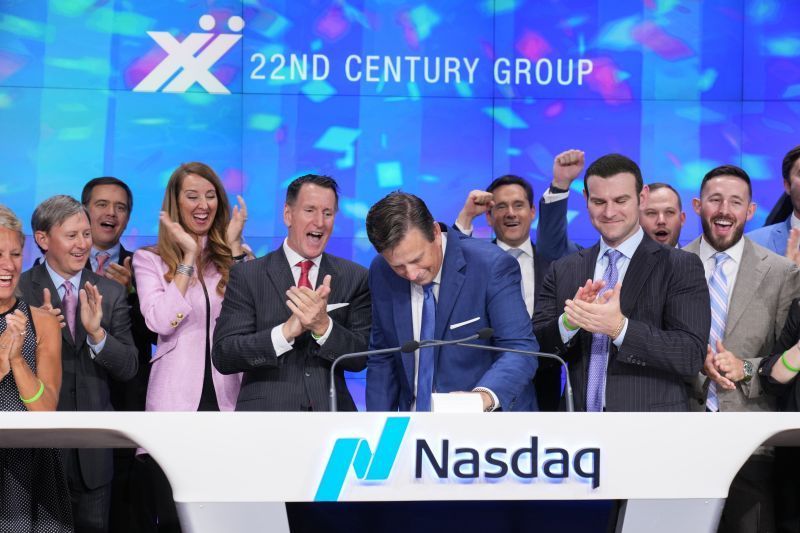
(Cover Image:22nd Century Group rings the Nasdaq Closing Bell on Aug 16, 2022, marking the successful launch of its reduced-nicotine tobacco products| Image source: Linkedin)
Disclaimer
This article is provided solely for professional research, industry discussion, and informational purposes. Any references to brands, companies, products, technologies, or policies are made for factual reporting and analytical purposes only, and do not constitute endorsement, recommendation, promotion, or advertising by 2Firsts.
Nicotine-containing products, including but not limited to cigarettes, e-cigarettes, heated tobacco products, and nicotine pouches, carry significant health risks. Readers are responsible for complying with all applicable laws and regulations in their respective jurisdictions, including age restrictions and access limitations.
The information contained in this article should not be regarded as investment, legal, medical, regulatory, or commercial advice. While 2Firsts strives to ensure the accuracy and reliability of its content, it does not assume liability for any direct or indirect loss arising from errors, omissions, inaccuracies, or reliance on the information contained herein.
This article is not intended for individuals below the legal age for accessing tobacco or nicotine-related information in their jurisdiction.
Copyright Notice
This article is either original content produced by 2Firsts or content reproduced, translated, summarized, or adapted from third-party sources with attribution where applicable. The intellectual property rights of the original content remain with 2Firsts or the respective original rights holders.
No individual or organization may copy, reproduce, distribute, republish, modify, translate, or otherwise use this content without prior authorization. Any unauthorized use may result in legal action.
For copyright-related inquiries, corrections, or removal requests, please contact: info@2firsts.com.
AI-Assisted Translation and Editing Notice
Portions of this article may have been translated, edited, or reviewed with the assistance of artificial intelligence tools to improve efficiency and readability. Due to the limitations of AI-assisted translation and editing, discrepancies, omissions, or inaccuracies may exist when compared with the original source.
Where applicable, readers are advised to refer to the original source for the most complete and accurate information. If you identify any errors or believe that any content infringes upon your rights, please contact us at info@2firsts.com, and we will review and address the matter promptly.