FDA to 2Firsts: STN isn't product approval, only 34 e-cigarettes authorized for U.S. sale

Oct.30.2024
FDA to 2Firsts: STN isn't product approval, only 34 e-cigarettes authorized for U.S. sale
Following FDA's Import Alert on a product manufactured by ZHUHAI QISITECH CO., LTD, 2Firsts initiated correspondence with FDA to seek clarification. FDA emphasized that a Submission Tracking Number (STN) does not constitute product authorization and reminded exporters that only 34 e-cigarette products are currently authorized for legal sale in the United States. 2Firsts has included the full list in this article.

On October 16, 2024, 2Firsts reported that a product from ZHUHAI QISITECH CO., LTD had been added to FDA's Import Alert 98-06 list, drawing significant attention across the supply chain and among market participants. The announcement raised concerns within the industry, as stakeholders sought clarity on the implications for regulatory compliance and market access.


To better understand the U.S. regulatory landscape for e-cigarettes, 2Firsts reached out to FDA, which provided key disclosures and insights into the agency's enforcement measures.


1. Reason for Listing on Import Alert 


FDA listed ZHUHAI QISITECH CO., LTD's RAZ DC25000 due to its status as a new tobacco product that do not have the required FDA marketing authorization.


2. Scope of Impact


A product included on an Import Alert may be detained without physical examination, and future shipments of the product may be detained without having to test or otherwise physically examine it. 


3. STN Assignment vs. Authorization Explained


FDA assigns a Submission Tracking Number (STN) to submissions that are received from an applicant, such as a premarket tobacco product application (PMTA). However, an STN does not mean that the product has received authorization from FDA. For a new tobacco product to be legally marketed, it must have FDA authorization.


4. FDA Product Code Classifications


FDA explained to 2Firsts that the product codes are part of its product coding system used during import entry. These codes help classify products by type, such as smokeless tobacco or components/parts of an e-cigarette. FDA decides whether to apply a broad industry code (like "98") or a more specific class code (like 98L or 98M). 


However, the classification does not affect the enforcement action. All products listed under Import Alert, including ZHUHAI QISITECH CO., LTD's RAZ DC25000, are subject to detention without physical examination regardless of the specific product code. 


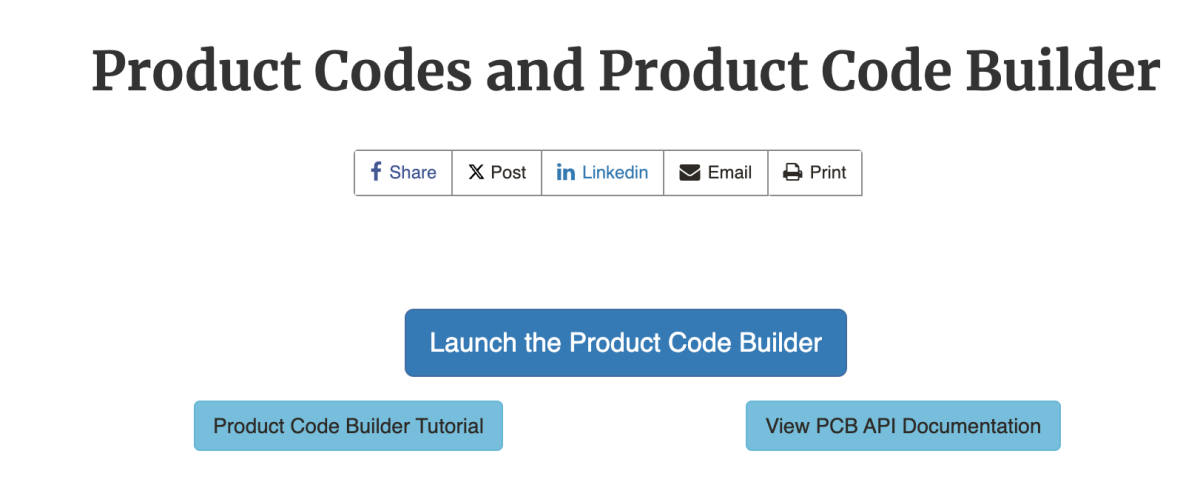
FDA also emphasized that it has a dedicated website offering tools and detailed information about its product code system. Detailed information on the different parts of the FDA Product Code can be found at this link: Product Codes and Product Code Builder | FDAThis underscores the importance of proper product code.
 

FDA to 2Firsts: STN isn't product approval, only 34 e-cigarettes authorized for U.S. sale
Homepage of FDA’s "Product Codes and Product Code Builder" site, offering tools and tutorials for generating product codes based on product type, use, and packaging. Image source: FDA 


FDA to 2Firsts: STN isn't product approval, only 34 e-cigarettes authorized for U.S. sale
After selecting "Product Code Builder," users can search for specific FDA product codes and selecting product categories. Image source: FDA


5. Three Pathways to Market for New Tobacco Products


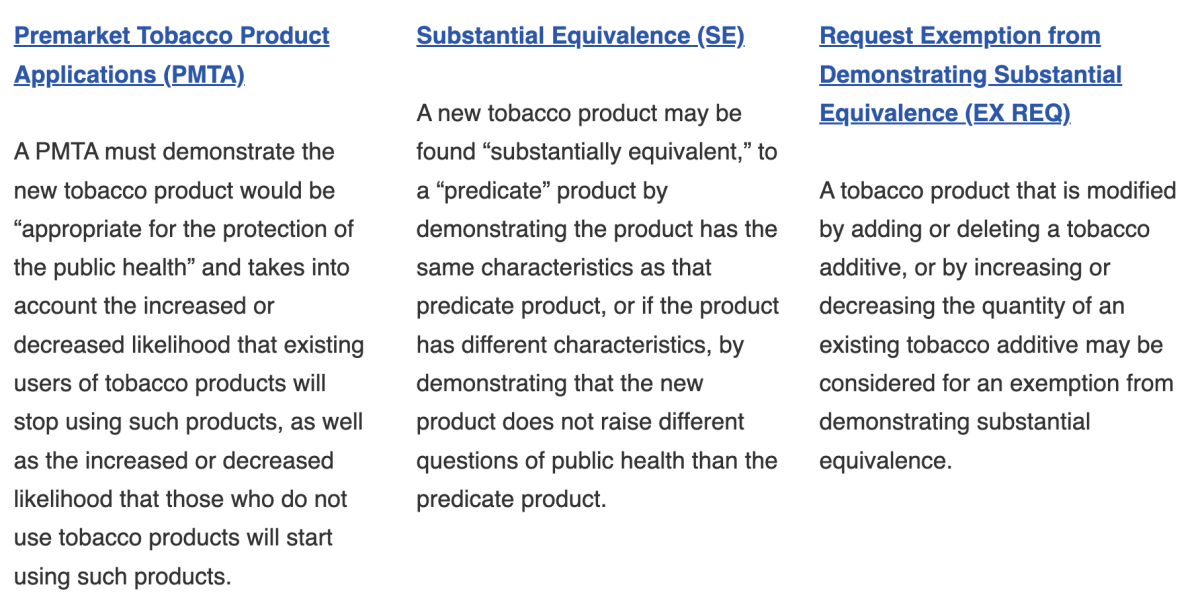
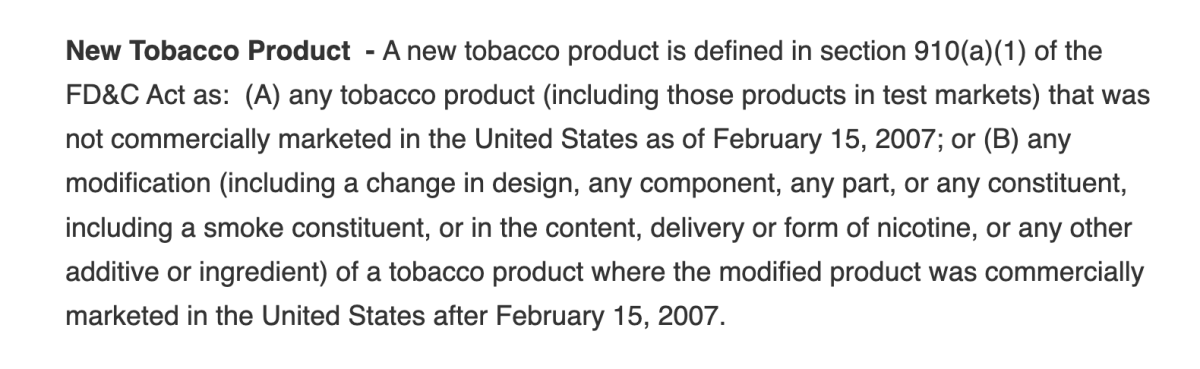
To legally market a new tobacco product in the United States, a company must receive a written marketing order from FDA. In addition, companies may receive marketing authorization through one of the three pathways. 
 

FDA to 2Firsts: STN isn't product approval, only 34 e-cigarettes authorized for U.S. sale
FDA's website defines "New Tobacco Product," specifying which new or modified products require authorization for legal sale. Image source: FDA


FDA to 2Firsts: STN isn't product approval, only 34 e-cigarettes authorized for U.S. sale
Three pathways to obtain U.S. market authorization for new tobacco products. Image source: FDA


6. Only 34 E-Cigarettes Authorized for U.S. Sale


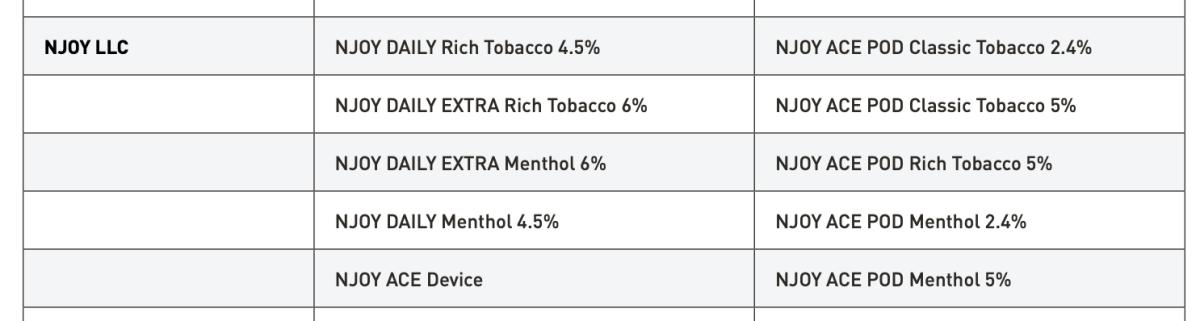
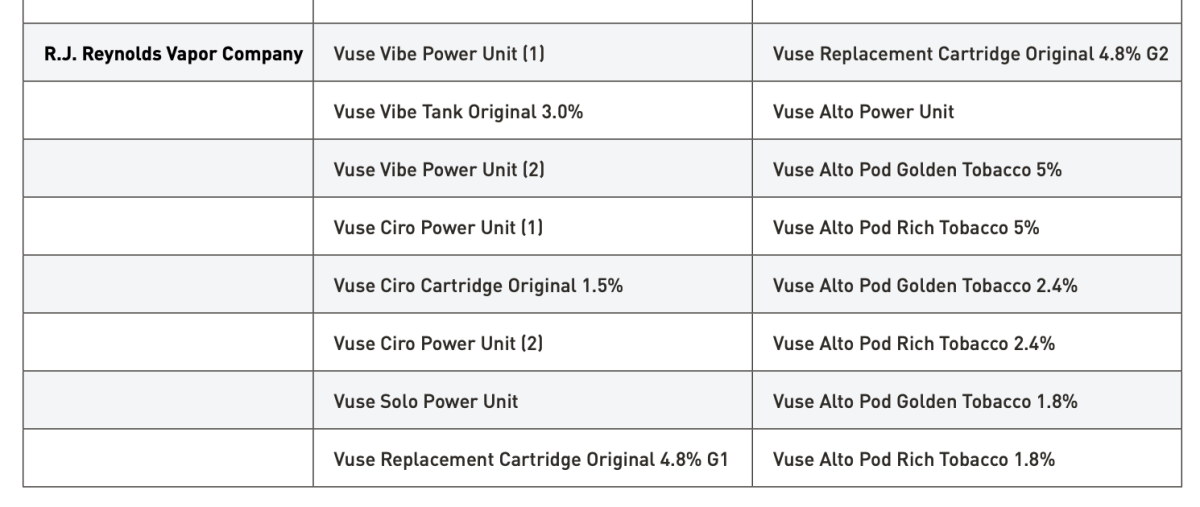
FDA also emphasized that, to date, it has authorized 34 tobacco- and menthol-flavored e-cigarette products and devices. These are the only e-cigarette products that currently may be lawfully sold in the United States.
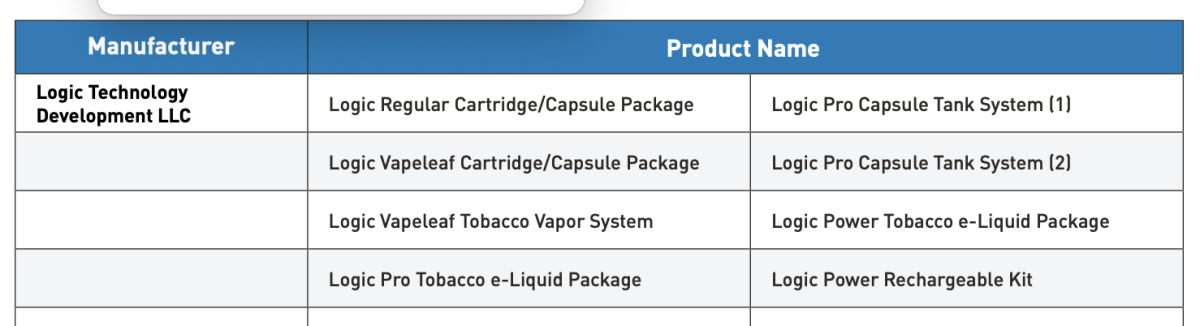
 

FDA to 2Firsts: STN isn't product approval, only 34 e-cigarettes authorized for U.S. sale
The list of 34 e-cigarette products legally authorized for sale in the U.S. (Page 1).  Image source: FDA


FDA to 2Firsts: STN isn't product approval, only 34 e-cigarettes authorized for U.S. sale
The list of 34 e-cigarette products legally authorized for sale in the U.S. (Page 2). Image source: FDA


FDA to 2Firsts: STN isn't product approval, only 34 e-cigarettes authorized for U.S. sale
The list of 34 e-cigarette products legally authorized for sale in the U.S. (Page 3). Image source: FDA


The above information has long been available on FDA's official website and remains available to the public. In its response to 2Firsts, FDA reiterated that these are the only e-cigarette products currently approved for lawful sale in the United States, which further underscores the importance of regulatory compliance for companies seeking to enter the U.S. market.


The e-cigarette industry has clearly felt the increased enforcement efforts of FDA. On October 22, FDA, in collaboration with U.S. Customs and Border Protection, seized 3 million unauthorized e-cigarette products, including GEEKBAR and other brands, with an estimated retail value of $76 million.


2Firsts will continue to follow up and provide the latest reports.

 

Research | Swedish Study Finds Oral Lesions in 79% of Examined Nicotine Pouch Users, With Distinct Tissue Responses
A new Swedish study found oral mucosal lesions in 79% of examined nicotine pouch users and 89% of tobacco-derived snus users, with different tissue-response patterns between the two categories. For manufacturers and regulators, the findings shift attention toward product formulation, flavouring, pouch materials and local oral exposure, not only whether a product contains tobacco. The study found no higher prevalence of caries or periodontal disease, but it could not establish causality, long-term outcomes or differences between individual products or designs.
Special Report
Jul.27
Australia’s One Nation Proposes 75% Tobacco Tax Cut, Says Lower Prices Could Hit Illicit Market
Australia’s One Nation party has proposed cutting tobacco excise by 75%, arguing that lower legal cigarette prices could narrow the gap with illicit tobacco and reduce demand for black-market products. The proposal comes as Australia continues expanding enforcement against illicit tobacco supply chains through border controls, retail inspections and organised-crime investigations. Supporters argue high taxes have contributed to illicit-market growth, while opponents warn that lower tobacco prices could undermine public-health goals. The proposal is a party policy position and has not been adopted by the Australian government.
Aug.18
South Korean Lawmaker Jeong Jin-wook Pushes Synthetic Nicotine Vape Probe, Highlighting Supply Chain and Tax Concerns
South Korean lawmaker Jeong Jin-wook has again called for stronger government action against liquid synthetic nicotine vape manufacturers and sellers, alleging that some businesses may have avoided regulation through product labeling changes and corporate restructuring. According to Newsworks, JNILBO and other Korean reports, Jeong has held his third press conference on the issue, calling for a government-wide investigation. The dispute involves whether synthetic nicotine products should fall under tobacco regulations, tax implications and supply-chain transparency. South Korean government agencies have previously said some estimates of potential tax losses cannot be verified due to limited sales data.
Jul.27
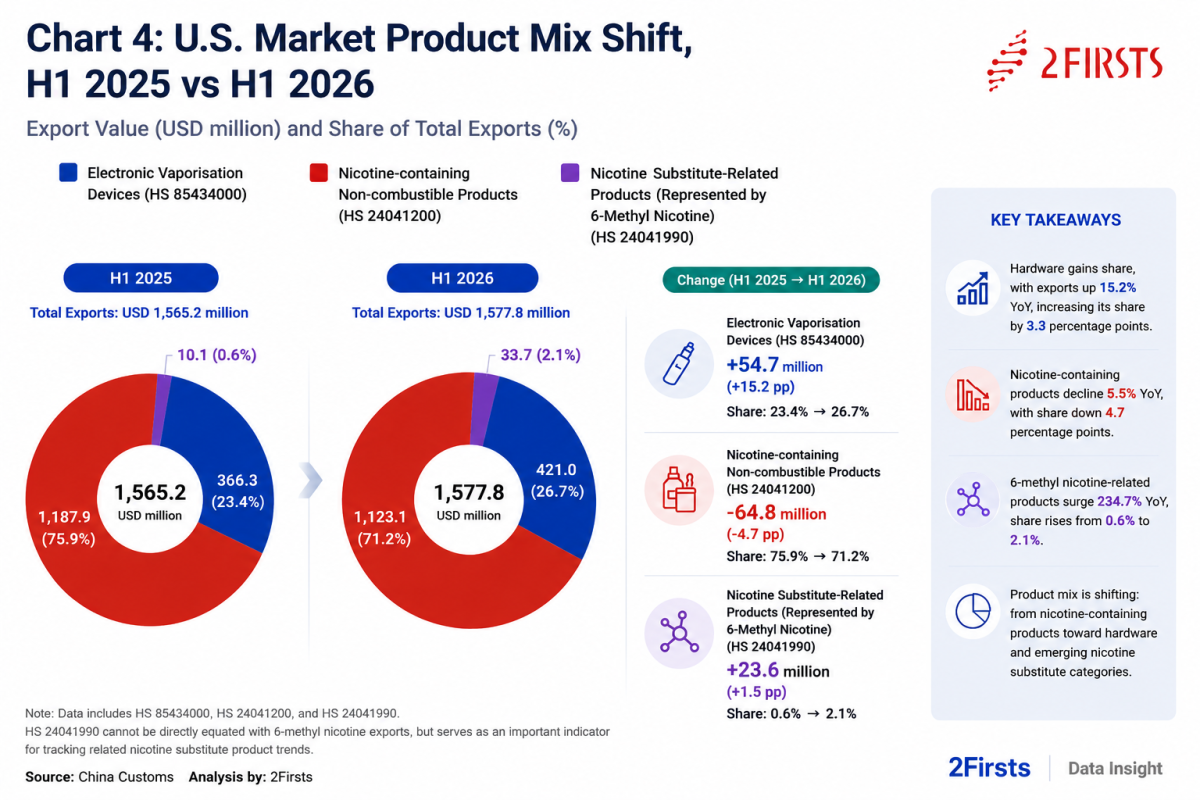
2Firsts Data | China’s U.S. Vape Exports Have Yet to Regain Previous Growth Momentum in H1 2026, but Hardware Grew 15.2% and 6-Methyl Nicotine-Related Products Rose 234.7%
China’s vape exports to the U.S. reached approximately $1.58 billion in the first half of 2026, remaining broadly stable from a year earlier but still below previous growth momentum. 2Firsts’ analysis of China Customs data shows that the U.S. market has not simply returned to its previous trajectory after the enforcement shock and inventory-driven swings of 2025. Instead, export momentum is shifting across product categories. Vaping devices and atomization hardware increased 15.2% year over year, while 6-methyl nicotine-related and other nicotine substitute products surged 234.7%. Meanwhile, traditional nicotine-containing vaping products continued to face pressure.
Jul.22
2FIRSTS EXCLUSIVE|China Breaks Up $6.8 Million Illegal Hookah Tobacco Operation as Market Expands
Chinese authorities have dismantled an illegal hookah tobacco operation worth more than 46 million yuan ($6.8 million), detaining five foreign suspects and seizing over 500,000 boxes of tobacco paste. The case comes as hookah expands across China’s nightlife sector and attracts overseas operators, including former vaping entrepreneurs. It also raises a central regulatory question: whether waterpipe tobacco will follow China’s private-sector e-cigarette licensing model or be reserved for the state tobacco system, as with nicotine pouches, in the years ahead.
Jul.31
Smoore Seeks to Toss CCELL Price-Fixing Claim as Court Weighs Vertical Distribution Versus Horizontal Conspiracy
Smoore and four authorized U.S. CCELL distributors are asking a California federal court to permanently dismiss a core antitrust claim brought by direct purchasers. Plaintiffs allege that Smoore coordinated minimum wholesale prices, customer allocation and limits on price competition among distributors, amounting to a per se unlawful horizontal conspiracy. The defendants say the alleged conduct reflects ordinary vertical relationships between a manufacturer and its distributors. The court previously dismissed a similar claim, and the latest dispute centers on whether the second amended complaint adds sufficient facts to establish a horizontal agreement.
Sep.14