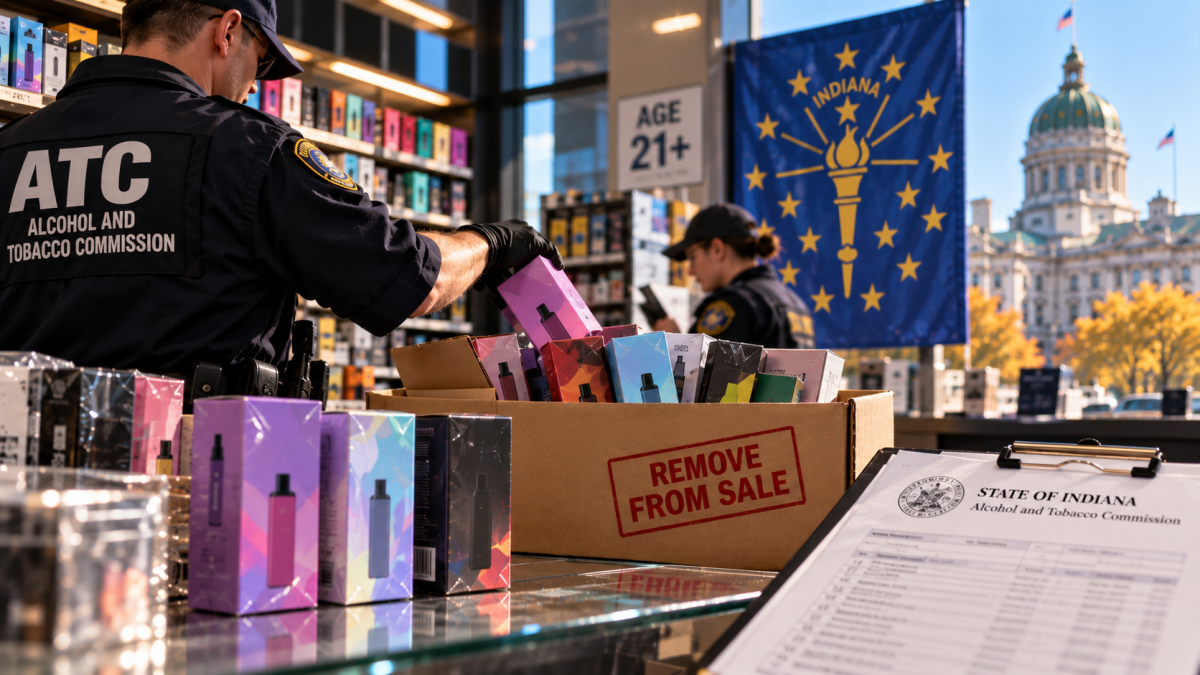
In December of last year, the United States filed a complaint against six companies and associated individuals, demanding that they cease the illegal manufacture and sale of unauthorized e-cigarette products. These charges were brought on behalf of the US Food and Drug Administration.
According to Bloomberglaw, two of the six companies, Seditious Vapors LLC and Vapor Craft LLC, which manufacture electronic cigarettes, must stop distribution and sales of their products based on two separate court orders that comply with the ban requested by the FDA.
Judge Douglas L. Rayes of the Arizona District Court has ruled in favor of the Food and Drug Administration's argument that Seditious Vapors failed to submit a pre-market application for their electronic cigarettes and subsequently illegally manufactured, sold, and distributed them. The order was submitted on Friday.
Two days ago, Judge Clay D. Land of the U.S. District Court for the Middle District of Georgia issued a permanent injunction against Vapor Craft.
The FDA has stated that the accused has continued to manufacture, sell, and distribute unauthorized electronic cigarettes to consumers despite receiving a warning letter from the agency. The previous warning from the FDA had indicated that further violations could lead to enforcement actions, including a ban.
These cases are an important step in stopping the illegal sale of unauthorized electronic nicotine delivery system products," said Brian M. Boynton, Chief of Staff and Senior Counselor of the Civil Division of the Department of Justice. "The Department of Justice will continue to work closely with the FDA to crack down on the distribution of illegal and unauthorized tobacco products.
When a company produces and sells unauthorized tobacco products, the FDA typically issues a warning letter first in an attempt to achieve voluntary compliance with the law. If the FDA documents continued noncompliance, the agency may request that the Department of Justice take enforcement actions, such as injunctions or seizures.
The six companies who initially proposed the ban were:
Morin Enterprises Inc. operates E-Cig Crib in the Minnesota region, Soul Vapor LLC located in the southern district of West Virginia, Super Vape'z LLC in the western district of Washington, Vapor Craft LLC in the central region of Georgia, Lucky's Convenience & Tobacco LLC d/b/a Lucky's Vape & Smoke Shop in the Kansas area, and Seditious Vapors LLC d/b/a in the Arizona region. Additionally, Seditious Vapors LLC has administrative and civil penalty authority over violations of the FD&C Act related to tobacco products in their jurisdiction, working closely with the FDA.
2FIRSTS will continue to report on this topic and further updates will be available on the '2FIRSTS APP'. Scan the QR code below to download the app.
Disclaimer
This article is provided solely for professional research, industry discussion, and informational purposes. Any references to brands, companies, products, technologies, or policies are made for factual reporting and analytical purposes only, and do not constitute endorsement, recommendation, promotion, or advertising by 2Firsts.
Nicotine-containing products, including but not limited to cigarettes, e-cigarettes, heated tobacco products, and nicotine pouches, carry significant health risks. Readers are responsible for complying with all applicable laws and regulations in their respective jurisdictions, including age restrictions and access limitations.
The information contained in this article should not be regarded as investment, legal, medical, regulatory, or commercial advice. While 2Firsts strives to ensure the accuracy and reliability of its content, it does not assume liability for any direct or indirect loss arising from errors, omissions, inaccuracies, or reliance on the information contained herein.
This article is not intended for individuals below the legal age for accessing tobacco or nicotine-related information in their jurisdiction.
Copyright Notice
This article is either original content produced by 2Firsts or content reproduced, translated, summarized, or adapted from third-party sources with attribution where applicable. The intellectual property rights of the original content remain with 2Firsts or the respective original rights holders.
No individual or organization may copy, reproduce, distribute, republish, modify, translate, or otherwise use this content without prior authorization. Any unauthorized use may result in legal action.
For copyright-related inquiries, corrections, or removal requests, please contact: info@2firsts.com.
AI-Assisted Translation and Editing Notice
Portions of this article may have been translated, edited, or reviewed with the assistance of artificial intelligence tools to improve efficiency and readability. Due to the limitations of AI-assisted translation and editing, discrepancies, omissions, or inaccuracies may exist when compared with the original source.
Where applicable, readers are advised to refer to the original source for the most complete and accurate information. If you identify any errors or believe that any content infringes upon your rights, please contact us at info@2firsts.com, and we will review and address the matter promptly.