FLAVA Vape Raid: OXVA & Romio may Suffer Heavy Losses as Philippines Market Sees Reshuffle

Business by 2FIRSTS, edited by Sophia
Mar.05.2024
FLAVA Vape Raid: OXVA & Romio may Suffer Heavy Losses as Philippines Market Sees Reshuffle
Philippine Customs seized unregistered, unauthorized e-cigarette products worth 4 billion pesos, impacting Chinese brands like Romio and OXVA.

On the evening of February 29th, the Philippine Bureau of Customs Intelligence and Investigation Services seized a shipment of e-cigarette products valued at 4 billion pesos (approximately 510 million RMB, 70 billion USD) that were not registered in the Philippines and lacked the necessary authorization certificates. The confiscated FLAVA vape products are believed to have originated from the Philippines. (Read more: Breaking: Philippines Authorities Seize $70 Million's Flava Products)


Against this backdrop, 2FIRSTS had discussions with several individuals who are familiar with the e-cigarette market in the Philippines to understand the current situation of the market.


FLAVA is the leading distribution brand in the Philippines. It is understood that the Philippines has three major distribution companies, namely FLAVA, DENKAT, and SHIFT. Any brand looking to enter the Philippine market through these channels needs to establish a co-branding partnership with them. For example, the e-cigarette brand OXBAR (from OXVA) sold in the Philippines market carries the FLAVA brand logo on its product packaging and promotional materials.

 

FLAVA Vape Raid: OXVA & Romio may Suffer Heavy Losses as Philippines Market Sees Reshuffle
OXBAR products sold in the Philippines market come with the FLAVA logo | Image source: OXBAR


According to sources, the recent seizure of goods by FLAVA has had a significant impact on the Chinese companies they were working with. FLAVA did not fully pay for the goods they were purchasing, with some orders only paying 30% to 50%, and even as low as 20%. 


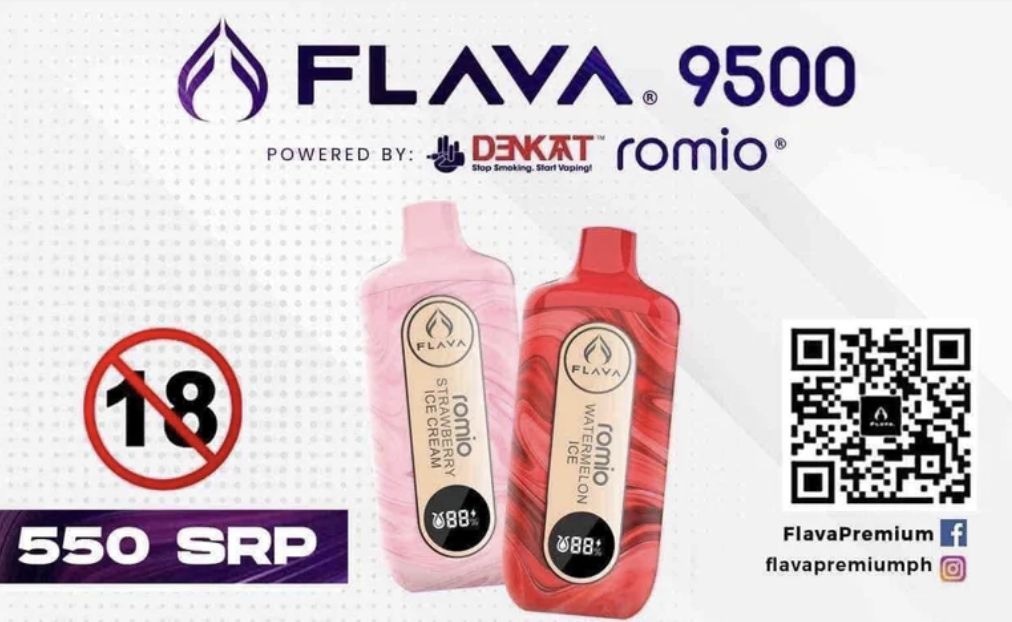
According to sources familiar with the e-cigarette market in the Philippines, Romio (from Shenzhen Maoanda Technology Co., Ltd. according to QCC) and OXVA (from Shenzhen Future Tech CO., Limited according to QCC), which have the closest cooperation with FLAVA, are considered the two Chinese brands most affected by this event. Among the products released on FLAVA's official social media platforms, Romio and OXBAR, a brand under OXVA, are the two brands with the highest frequency of appearance.
 

FLAVA Vape Raid: OXVA & Romio may Suffer Heavy Losses as Philippines Market Sees Reshuffle
Romio products in collaboration with FLAVA | Image source: Filipino distribution website


Judging from FLAVA's social media account, the brands that are also associated with them include GEEK BAR, FLONQ, and NIMMBOX.
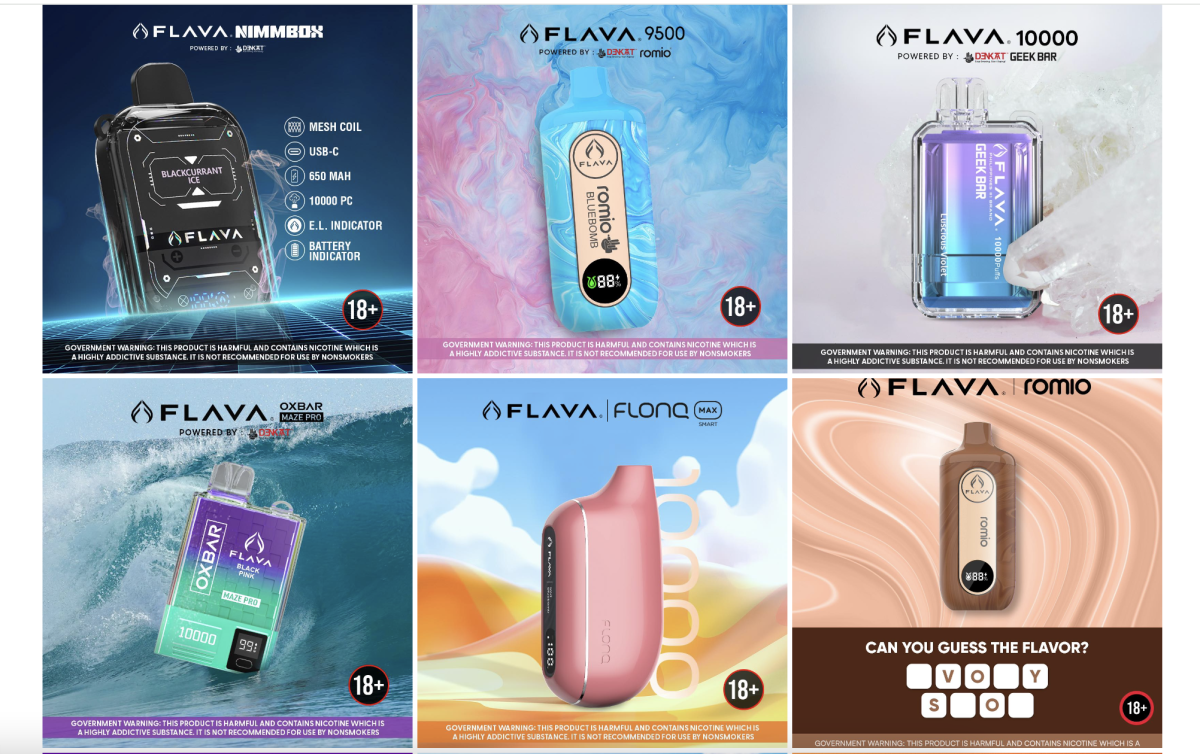
 

FLAVA Vape Raid: OXVA & Romio may Suffer Heavy Losses as Philippines Market Sees Reshuffle
Image source: FLAVA social media account


Sources revealed that the e-cigarette market in the Philippines is currently in a state of extreme chaos. Some brands planning to enter the market are feeling uneasy, as they are facing difficulties in collecting payments from distributors, who are refusing their requests. 


Furthermore, with FLAVA experiencing heavy losses, the e-cigarette market in the Philippines is currently undergoing a period of restructuring. Distributor SHIFT is seizing this opportunity to aggressively expand its channel business and has launched a promotion offering a free motorcycle with the purchase of an e-cigarette. As a result, many industry insiders speculate that after FLAVA's decline, SHIFT could become the "new king." According to insiders, SHIFT was founded by Filipino real estate and casino businessmen, with strong backing.


2FIRSTS will continue to monitor the dynamics of the e-cigarette market in the Philippines and will provide updates on the 2FIRSTS mobile app and www.2firsts.com in a timely manner. Stay tuned for more information.


We welcome news tips, article submissions, interview requests, or comments on this piece.

Please contact us at info@2firsts.com, or reach out to Alan Zhao, CEO of 2Firsts, on LinkedIn


Notice

1.  This article is intended solely for professional research purposes related to industry, technology, and policy. Any references to brands or products are made purely for objective description and do not constitute any form of endorsement, recommendation, or promotion by 2Firsts.

2.  The use of nicotine-containing products — including, but not limited to, cigarettes, e-cigarettes, nicotine pouchand heated tobacco products — carries significant health risks. Users are responsible for complying with all applicable laws and regulations in their respective jurisdictions.

3.  This article is not intended to serve as the basis for any investment decisions or financial advice. 2Firsts assumes no direct or indirect liability for any inaccuracies or errors in the content.

4.  Access to this article is strictly prohibited for individuals below the legal age in their jurisdiction.


Copyright


This article is either an original work created by 2Firsts or a reproduction from third-party sources with proper attribution. All copyrights and usage rights belong to 2Firsts or the original content provider. Unauthorized reproduction, distribution, or any other form of unauthorized use by any individual or organization is strictly prohibited. Violators will be held legally accountable.

For copyright-related inquiries, please contact: info@2firsts.com


AI Assistance Disclaimer


This article may have been enhanced using AI tools to improve translation and editorial efficiency. However, due to technical limitations, inaccuracies may occur. Readers are encouraged to refer to the cited sources for the most accurate information.

We welcome any corrections or feedback. Please contact us at: info@2firsts.com

PMI Global R&D Chief Meets Chinese Tobacco Regulator as China Advances Heated Cigarette Standards
Philip Morris International’s global R&D chief Michele Cattoni met Liu Sanjiang, deputy director of China’s State Tobacco Monopoly Administration, in Beijing on Aug. 27. The meeting comes as China advances mandatory standards for heated cigarettes and nicotine pouches, laying groundwork for their domestic introduction. Cattoni has held senior roles in PMI’s heated tobacco development, while China’s draft standard covers multiple heating architectures, including systems similar in principle to PMI’s IQOS ILUMA technology.
Aug.27
Former ATF Official’s Claims on Chinese Vape Companies and 6-Methyl Nicotine Fuel US Regulatory Debate
Former ATF Deputy Director Edgar Domenech has warned that some Chinese vape companies may be using 6-methyl nicotine, a nicotine analogue, raising new questions over how US regulators should classify emerging nicotine compounds.
Jul.13
Altria Smokeable Profit Rises 2.4% as Marlboro Share Falls and U.S. Discounts Gain
Altria’s second-quarter results show a U.S. nicotine market splitting across price, product and regulation. Smokeable profit rose 2.4% as Marlboro pricing offset lower volumes, while discount brand Basic gained share among value-conscious smokers. In oral nicotine, on! PLUS expanded distribution but faced intensifying competition from ZYN and Velo. NJOY remained off the market as patent and regulatory hurdles delayed its return. The broader lesson: U.S. growth increasingly depends on price-tier strategy, retail execution, authorisation and enforcement readiness across the industry.
Special Report
Jul.31
Japan’s Heated Tobacco Tax Changes Reshape Consumer Choices, Survey Reveals Impact of Price and Income
A consumer survey by Japanese heated tobacco information platform RELAZO found that rising tobacco prices and planned heated tobacco tax changes may influence smoking decisions among Japanese consumers. The survey covered 49,879 men and women aged 20 to 69 nationwide. It found that around 40% of respondents cumulatively indicated they may consider quitting when a pack reaches ¥600 (approximately US$4.1), while nearly 90% expressed potential quitting intentions at a ¥1,000 (approximately US$6.8) price level. The survey also found significant differences by income level, with lower-income respondents showing greater sensitivity to price increases.
Jul.24
Florida Governor DeSantis Expands TANF Restrictions, Blocking Welfare Benefits From Buying Tobacco and Vapes
Florida Governor Ron DeSantis announced an expansion of Temporary Assistance for Needy Families (TANF) restrictions that would prohibit Electronic Benefit Transfer (EBT) funds from being used to purchase tobacco and vaping products. The state will amend its TANF State Plan and submit the changes for federal approval. Florida officials said the restrictions would not affect eligibility for temporary cash assistance or the amount of benefits received, but would change how funds can be spent.
Aug.25
Cochrane 2026 Update Adds Nine Trials, Keeps High-Certainty Finding That Nicotine E-Cigarettes Improve Quit Rates Over NRT
Cochrane’s 2026 update of its living review on electronic cigarettes for smoking cessation included 80 randomized controlled trials involving 29,861 adult smokers, with nine trials added in this update. The review retained its high-certainty conclusion that nicotine e-cigarettes increase smoking cessation rates compared with nicotine replacement therapy. In absolute terms, about 10 in 100 people using nicotine e-cigarettes may quit smoking for at least six months, compared with about 6 in 100 using NRT. The review found no clear difference in serious adverse event rates between the two groups, while longer-term safety and the relative effectiveness of newer device types remain less certain.
Sep.07