British American Tobacco France Survey: Nearly 70% Back Nicotine Pouch Sales

Apr.27.2025
British American Tobacco France Survey: Nearly 70% Back Nicotine Pouch Sales
According to a commissioned survey by British American Tobacco France, consumer awareness of nicotine pouches in France remains low, particularly among older demographics, with 39% of respondents saying they were unfamiliar with the product. While a majority supports stricter regulation — including higher fines and the introduction of licensing systems — 68% believe adults should be allowed to purchase nicotine pouches. Meanwhile, 86% agree that sales to minors should be prohibited.

Key Points:

1.A commissioned survey by British American Tobacco France revealed that nicotine pouches have low awareness in France, with about 40% of users stating they do not know the product and one-third unable to assess its health risks. 

2.86% of users support banning the sale of nicotine pouches to minors, while 68% support legal sales to adults.

3.Concerns about underage consumption are widespread, with most participants expressing a desire for stronger enforcement and penalties, especially fines for non-compliant retailers. 


According to a report by Harris-interactive on April 24, Toluna Harris Interactive conducted an online survey from March 20 to 24, 2025, of 1,096 French adults (aged 25 and older) who use nicotine products at least once a week, on behalf of British American Tobacco France (BAT France), to evaluate their awareness and opinions on tobacco alternatives, particularly nicotine pouches. The sample was selected from a representative group of 3,147 individuals, with quotas and weighting based on gender, age, socio-professional category, geographical region, and population size.


Nicotine pouch cognition is limited, with consumers holding differing views on it


Despite e-cigarettes, traditional tobacco, and nicotine replacement products sold in pharmacies (such as gum and patches) having a better recognition and image among nicotine consumers (the latter has a positive recognition rate of 55%), the awareness of nicotine pouches is significantly lower. 39% of consumers say they "don't know enough" about them, with this figure rising to 62% among those aged 65 and older. In the 25 to 34 age group, the proportion is 25%.


Among consumers who are familiar with the product, opinions are divided into two camps: some people believe that nicotine pouches are an effective alternative for quitting smoking or reducing harm; while others have reservations due to concerns about nicotine itself and the lack of long-term research data.


In comparison to traditional cigarettes, 24% of respondents believe that nicotine pouches are "less harmful," 30% believe they are "about the same," and 33% are unable to make a judgement on the health risks.


Regulatory enforcement issues become a focal point of attention


Regarding nicotine pouch products that are currently not regulated, 66% of respondents believe they should be prohibited from being sold to minors. At the same time, 50% of respondents believe that existing regulations are "sufficient in themselves," but are not effectively enforced.


55% of consumers are calling for stronger regulatory enforcement, particularly against businesses engaged in illegal sales. The current fine of 135 euros is considered too lenient by 46% of respondents, with half believing that fines should exceed 1000 euros to increase deterrent effect.


Furthermore, the restriction on flavored products (such as fruit or mint flavors) has not gained widespread support, with the majority of people holding a negative attitude towards it.


Nicotine pouches should be restricted to the adult market, with consumers supporting the introduction of a licensing system


In terms of allowing sales, 68% of respondents believe that nicotine pouches should be allowed to be sold to adults, while 86% believe that sales to minors should be prohibited.


In order to prevent minors from accessing it, 79% of participants support the establishment of a dedicated sales permit, similar to the current alcohol sales system.


Furthermore, 75% of respondents support increasing penalties for businesses that sell nicotine products to minors or adults who purchase them on their behalf. In comparison, only 57% support raising taxes on these products, and 49% support implementing plain packaging.


We welcome news tips, article submissions, interview requests, or comments on this piece.

Please contact us at info@2firsts.com, or reach out to Alan Zhao, CEO of 2Firsts, on LinkedIn


Notice

1.  This article is intended solely for professional research purposes related to industry, technology, and policy. Any references to brands or products are made purely for objective description and do not constitute any form of endorsement, recommendation, or promotion by 2Firsts.

2.  The use of nicotine-containing products — including, but not limited to, cigarettes, e-cigarettes, nicotine pouchand heated tobacco products — carries significant health risks. Users are responsible for complying with all applicable laws and regulations in their respective jurisdictions.

3.  This article is not intended to serve as the basis for any investment decisions or financial advice. 2Firsts assumes no direct or indirect liability for any inaccuracies or errors in the content.

4.  Access to this article is strictly prohibited for individuals below the legal age in their jurisdiction.


Copyright


This article is either an original work created by 2Firsts or a reproduction from third-party sources with proper attribution. All copyrights and usage rights belong to 2Firsts or the original content provider. Unauthorized reproduction, distribution, or any other form of unauthorized use by any individual or organization is strictly prohibited. Violators will be held legally accountable.

For copyright-related inquiries, please contact: info@2firsts.com


AI Assistance Disclaimer


This article may have been enhanced using AI tools to improve translation and editorial efficiency. However, due to technical limitations, inaccuracies may occur. Readers are encouraged to refer to the cited sources for the most accurate information.

We welcome any corrections or feedback. Please contact us at: info@2firsts.com

Ukraine Raises Excise Stamp Fees for Tobacco, Heated Tobacco and Vape Liquids by 30.5% as Parliament Backs E-Excise Delay to 2027
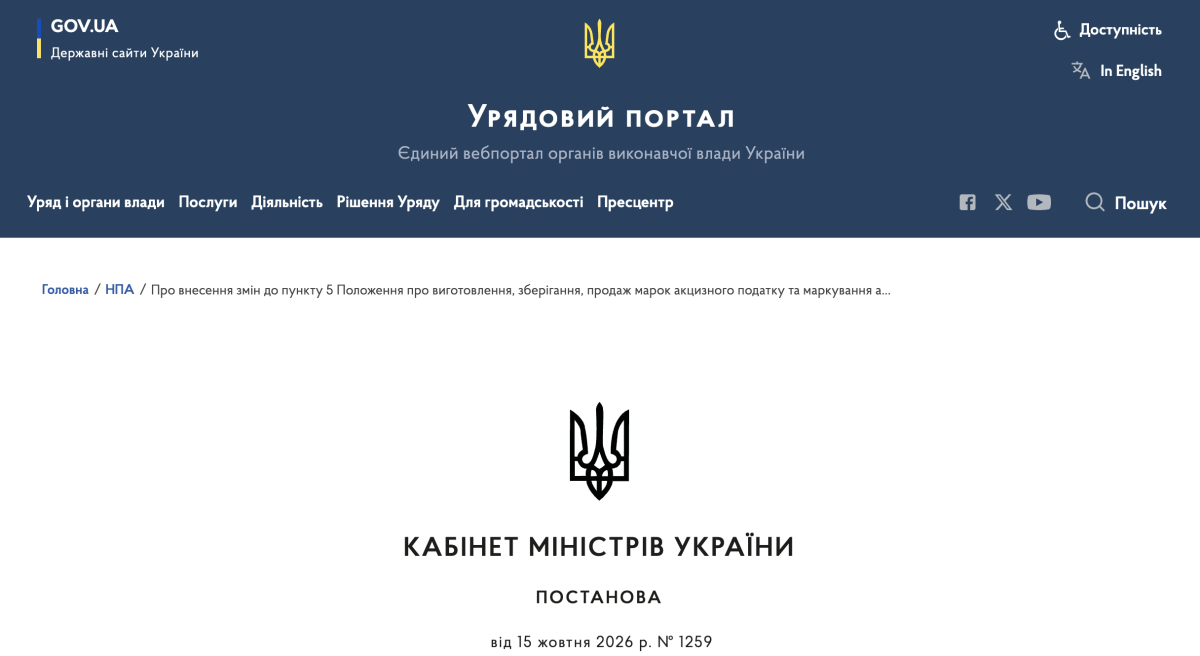
Ukraine's Cabinet of Ministers adopted Resolution No. 1259 on October 15, 2026, increasing excise stamp production fees for tobacco products and e-cigarette liquids by approximately 30.5%, from UAH 0.1643 to UAH 0.2144 per stamp. Fees for alcoholic beverages rose by about 30.2%. Separately, Ukraine's parliament passed Bill No. 15532 on October 13, proposing to postpone the full implementation of electronic excise stamps and traceability for alcohol, tobacco and e-cigarette liquids from November 1, 2026, to July 1, 2027. Parliament cited additional testing, configuration and integration requirements. The bill was sent to the president for signature on October 19.
Regulations
Oct.21
German Customs Seize 115,800 Vapes in €1.4 Million Tax Case
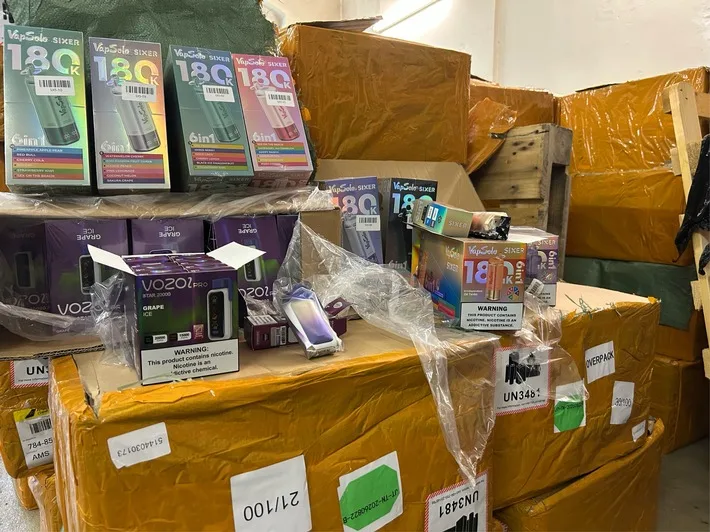
Germany's Magdeburg Main Customs Office seized 115,800 untaxed e-cigarettes containing a combined 4.366 million mL of e-liquid during four truck inspections between August 10 and September 4, 2026. The seizures prevented an estimated €1.397 million in tax losses and set a record for the customs office's jurisdiction. Criminal proceedings have been initiated against four truck drivers. The case follows a separate German investigation involving more than 7.6 million illicit vapes and an estimated €33.3 million in excise-tax losses.
Enforcement
Oct.13
As Regulators Focus on Nicotine Pouch Child Safety, Safeguard Pursues an External Packaging Route
As regulators pay closer attention to child safety in nicotine pouches, manufacturers face a practical challenge: how to strengthen child-resistant packaging without unnecessarily reworking products, production lines and regulatory submissions already in place. In a written interview with 2Firsts, Chemular detailed Safeguard’s external packaging approach, its customer-specific testing requirements and possible PMTA pathways. The model remains early-stage, but it offers a new way to think about an increasingly important regulatory and manufacturing issue.
Industry Insight
Sep.19
Special report|Indonesia's Vape Industry Has 200 Manufacturers and $1.7 Billion in Investment. Could a Regulatory Divide Derail Its Rise as the World's No. 2 Manufacturing Hub After Shenzhen?
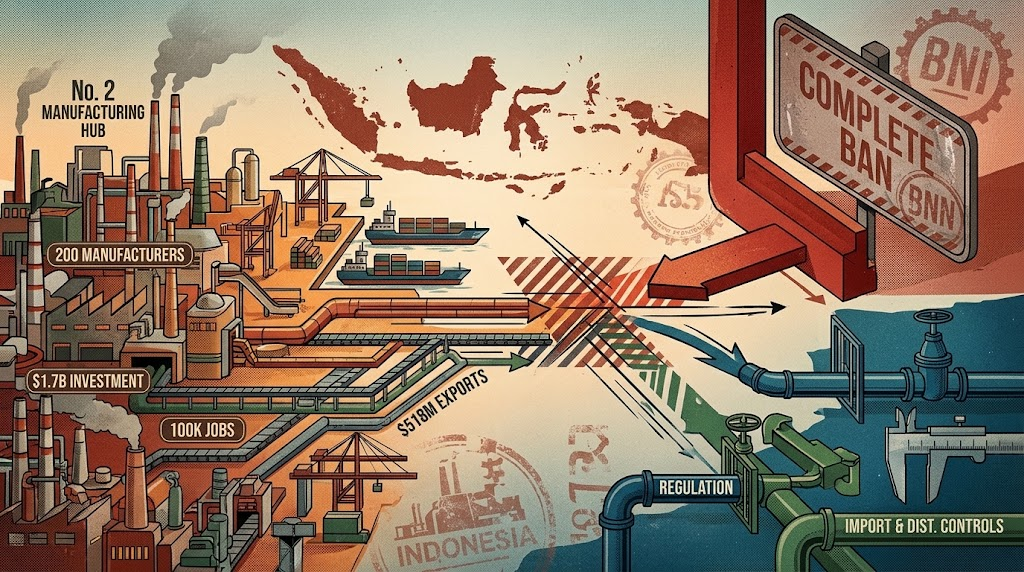
Indonesia's Ministry of Industry said at a November 3, 2026, policy forum that the country has about 200 electronic cigarette companies, Rp31 trillion (approximately $1.71 billion) in cumulative industry investment and around 100,000 jobs across the supply chain. The National Narcotics Agency is seeking a comprehensive ban on vape use and circulation, while the industry ministry favors tighter import, product-standard and distribution controls. Indonesia exported approximately $518 million in vaping products in 2025, and Chinese manufacturers including Smoore, GEEKVAPE and Jinjia Group have established local operations. An international logistics specialist interviewed by 2Firsts said more Chinese vape companies began production in Indonesia from the second half of 2025, accompanied by increased shipments of manufacturing equipment and investment in logistics facilities. The regulatory debate comes as Indonesia expands its role in international vaping manufacturing.
Special Report
Nov.05
RLX Technology Dropped From FTSE All-World as International Business Reaches 68.5% of Q2 Revenue
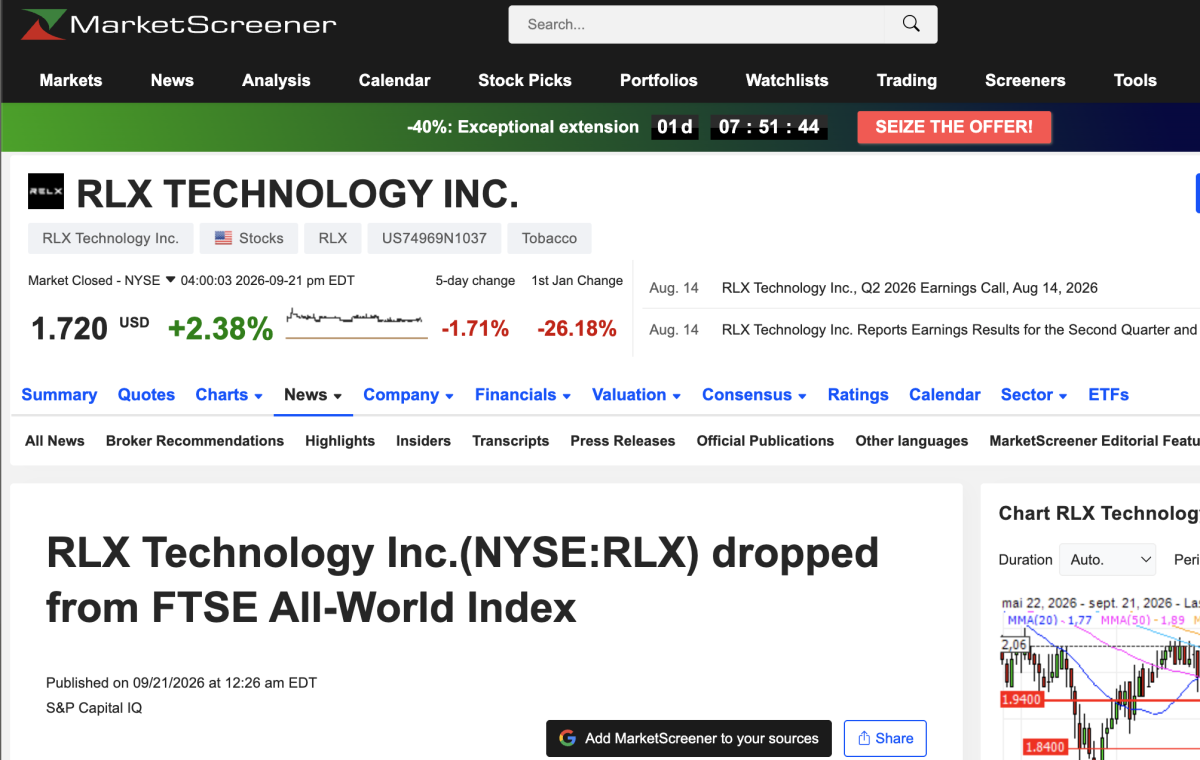
RLX Technology (NYSE: RLX) has been removed from the FTSE All-World Index, effective September 21. FTSE Russell records show RLX was already part of its global equity index universe by 2022, when its American depositary receipts were classified as China Large Cap securities. Trading volume rose to about 44.77 million shares on September 18, roughly 23 times the previous session's volume. RLX reported RMB1.0105 billion in second-quarter revenue, up 14.8% year over year, with international operations contributing 68.5%. The company also acquired a 51% stake in one of Western Europe's largest distributors of next-generation smoke-free and FMCG products in July.
Sep.22
Product | Japan Tobacco Expands Nordic Spirit Nicotine Pouch Range to Eight SKUs in Japan, Launches Melon Variant and Broadens Mint Retail Distribution
Japan Tobacco Inc. (JT) launched Nordic Spirit Rich Melon Medium through selected tobacco retailers in Japan on November 2, 2026, while expanding physical retail distribution for three existing mint products previously sold through the CLUB JT online store. The melon launch brings Nordic Spirit's Japanese portfolio to eight SKUs. All four products are manufactured in Sweden, contain a standard 14 pouches per can and retail for ¥500 including tax. Since introducing Nordic Spirit in Japan in March, JT has expanded the brand's product lineup and distribution through its online store, convenience stores and selected tobacco retailers.
product
Nov.04