Government struggles with loss of revenue from illegal e-cigarette sales

Jun.20.2024
Government struggles with loss of revenue from illegal e-cigarette sales
The Philippine government loses 5 billion pesos in tax revenue due to e-cigarette smuggling and illegal sales.

According to The Philippine Star on June 20th, the Philippine government has lost 5 billion pesos (85.07 million US dollars) in tax revenue due to the smuggling and illegal sale of e-cigarettes.


Consumer group Bantay Konsyumer, Kalsada, Kuryente (BK3) revealed that the current consumer spending in the e-cigarette market in the Philippines has reached 13 billion pesos (2.2 billion US dollars), suggesting that taxes should exceed 5 billion pesos (85.07 million US dollars). However, the Bureau of Internal Revenue's tax revenue is only 138 million pesos (2.34 million US dollars).


The convener of BK3, Karry Sison, stated, "This further indicates that e-cigarette products are able to enter the market without paying proper duties and taxes, causing harm to our economy.


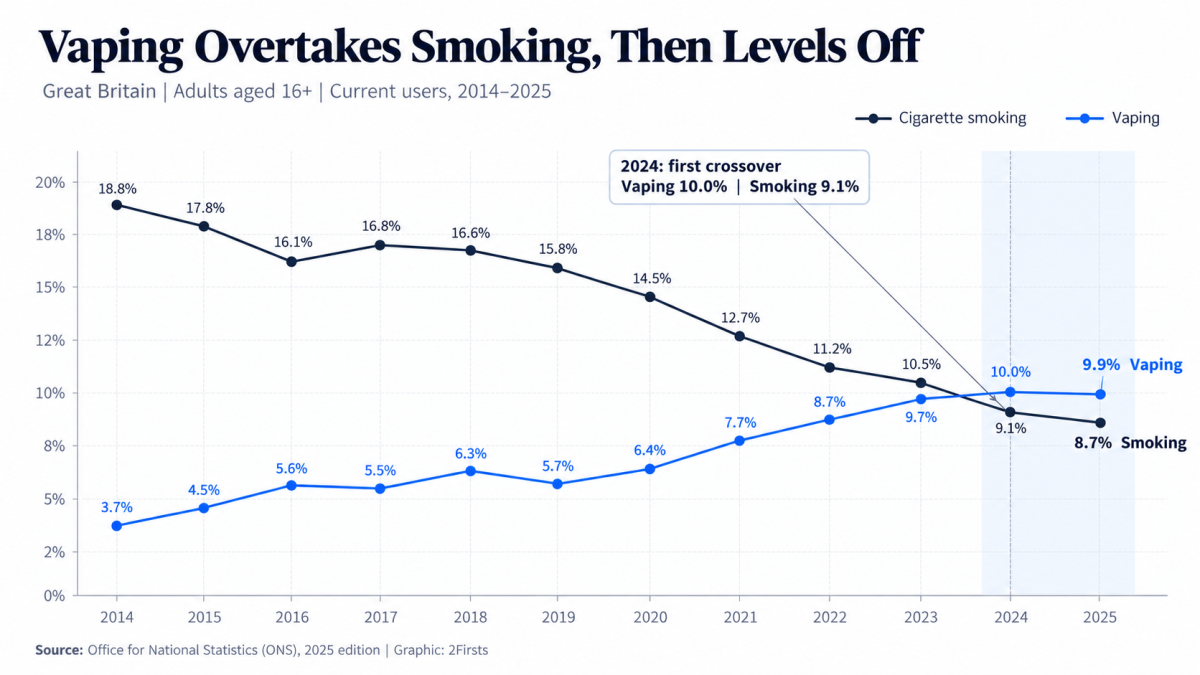
The Bureau of Internal Revenue (BIR) has acknowledged that the increasing use of e-cigarette products is one of the reasons for the decline in tobacco consumption tax revenue. In response to this issue, the government is cracking down on the illegal sale and smuggling of e-cigarette products through mandatory testing and registration, as well as enforcing tobacco taxes. However, despite the government's efforts to address the problem of the illegal e-cigarette market, the BIR faces difficulties in tracking down illegal e-cigarette products as production can be completed in home backyards.


At the same time, the Department of Trade and Industry (DTI) and the "Minimal Government Thinkers" believe that there is currently no need to raise tax rates.


The DTI pointed out that increasing taxes will not force non-taxpayers to pay taxes, but rather it will actually penalize those who are already compliant with tax laws.


We welcome news tips, article submissions, interview requests, or comments on this piece.

Please contact us at info@2firsts.com, or reach out to Alan Zhao, CEO of 2Firsts, on LinkedIn


Notice

1.  This article is intended solely for professional research purposes related to industry, technology, and policy. Any references to brands or products are made purely for objective description and do not constitute any form of endorsement, recommendation, or promotion by 2Firsts.

2.  The use of nicotine-containing products — including, but not limited to, cigarettes, e-cigarettes, nicotine pouchand heated tobacco products — carries significant health risks. Users are responsible for complying with all applicable laws and regulations in their respective jurisdictions.

3.  This article is not intended to serve as the basis for any investment decisions or financial advice. 2Firsts assumes no direct or indirect liability for any inaccuracies or errors in the content.

4.  Access to this article is strictly prohibited for individuals below the legal age in their jurisdiction.


Copyright


This article is either an original work created by 2Firsts or a reproduction from third-party sources with proper attribution. All copyrights and usage rights belong to 2Firsts or the original content provider. Unauthorized reproduction, distribution, or any other form of unauthorized use by any individual or organization is strictly prohibited. Violators will be held legally accountable.

For copyright-related inquiries, please contact: info@2firsts.com


AI Assistance Disclaimer


This article may have been enhanced using AI tools to improve translation and editorial efficiency. However, due to technical limitations, inaccuracies may occur. Readers are encouraged to refer to the cited sources for the most accurate information.

We welcome any corrections or feedback. Please contact us at: info@2firsts.com

Global Forum on Nicotine 2026 to explore why prohibition of safer nicotine products risks, and does not protect, public health
Mar.12
2Firsts Holds Second PMTA Compliance Training in Shenzhen, Highlighting U.S. Regulatory Framework and Corporate Compliance Capabilities
2Firsts held its second U.S. PMTA compliance training in Shenzhen, providing a systematic overview of the U.S. regulatory framework for e-cigarettes and corporate compliance strategies. Nearly 20 industry professionals from manufacturing, e-liquid and supply-chain companies attended. Participants who passed the exam received compliance certification. Registration for the third training session will open soon, alongside customized corporate training programs.
Mar.09
HB337 Moves Forward: Cigarette and Nicotine Taxes Set to Rise in Utah
Utah lawmakers are advancing HB337, a bill that would raise the state cigarette tax by $2 per pack and restructure taxes on other nicotine products. The proposal replaces weight-based taxes with percentage-based rates and removes reduced rates for certain modified risk products. Supporters say it will curb youth tobacco use, while opponents warn of cross-border shopping and harm to consumers seeking alternatives.
Feb.17
Special Report|FDA Revises Device Name in Glas Vape Authorization; Company Signals Optimism on Menthol, Flavored Pods
The FDA updated public records on the PMTA authorization of a Glas vape product, renaming “Glas G Device” to “Glas G² Device” and releasing the order letter detailing scientific review and marketing restrictions. Company disclosures suggest the platform may include age-verification technology. If confirmed, Glas G² could be the first vape with device-level age verification to receive an FDA MGO. Glas executives also said menthol and other flavored pods could gain authorization in the future.
Special Report
Mar.14
New York directs Tax and Finance to build “Vapor Products” registry; products not listed deemed illegal
New York Gov. Kathy Hochul says the state will crack down on illegal flavored vapes by creating a registry identifying which vapor products may be legally sold. The governor directed the state Department of Taxation and Finance to establish a “Vapor Products” registry, with products not on the list treated as illegal.
Jan.20 by 2FIRSTS.ai
South Africa health department agrees to exempt smokeless and non-combustible products from tobacco control bill
At a parliamentary committee meeting in South Africa, Health Minister Aaron Motsoaledi said the health department has agreed to exempt non-combustible and smokeless products — including chewing tobacco, snus, nicotine pouches and e-cigarettes — from the Tobacco Products and Electronic Delivery Systems Control Bill. The department is prepared, at this stage, to exempt them from packaging and labelling requirements except for misleading or false claims.
Mar.06 by 2FIRSTS.ai