Haverford Town Implements Measures to Control Tobacco and Vape Shops

Regulations by 2FIRSTS.ai
Apr.11.2024
Haverford Town Implements Measures to Control Tobacco and Vape Shops
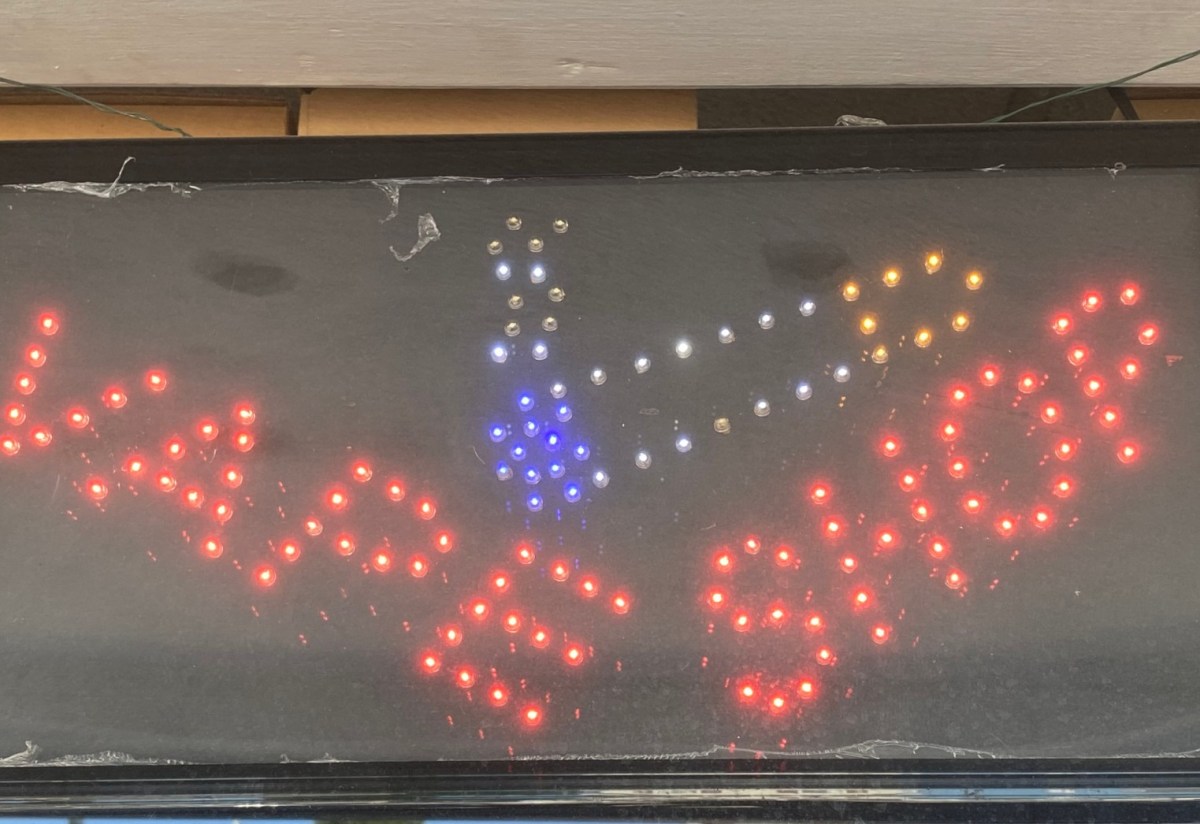
Haverford Town Council approves measures to control e-cigarette and tobacco shops from spreading in the town.

According to a report from delcotimes on April 11th, after receiving approval on the second reading, the committee of Haverford, Pennsylvania passed a measure aimed at controlling the spread of e-cigarette and tobacco shops in the town.


The committee has decided to amend the zoning regulations, stipulating that the sale of tobacco products and paraphernalia must be limited to less than 20% of the retail space in convenience stores. Any establishment exceeding this proportion will be considered a tobacco shop, and can only operate in C-5 level shopping centers after obtaining approval. The three areas within the C-5 zone are the Llanerch Shopping Center, Manoa Shopping Center, and the shopping district surrounding Kohl's and Quarry Center. The 20% calculation is based on floor area and display area.


The committee stated that the changes in zoning will not affect existing stores.


After the public hearing held on March 4, commissioners clarified some provisions in the new regulation and approved it for first reading at the meeting on March 11. During the meeting, Chairman Larry Holmes stated that selling tobacco products to individuals under 21, selling individual cigarettes other than menthol, flavored cigarettes, or selling cigarettes in vending machines is illegal. Additionally, fines for retailers found in violation range from $250 for a first offense to over $1,000, and retailers convicted three times within two years may face imprisonment and license revocation. Furthermore, the regulation will restrict the sale of tobacco products and e-cigarettes within 1,000 feet of schools.


Members stated that if convenience stores attempt to convert into e-cigarette stores, the process may be suspended when applying for new permits for use and occupation. Only 20% of stores are allowed to sell tobacco, and exceeding this proportion would classify the establishment as a tobacco store.


We welcome news tips, article submissions, interview requests, or comments on this piece.

Please contact us at info@2firsts.com, or reach out to Alan Zhao, CEO of 2Firsts, on LinkedIn


Notice

1.  This article is intended solely for professional research purposes related to industry, technology, and policy. Any references to brands or products are made purely for objective description and do not constitute any form of endorsement, recommendation, or promotion by 2Firsts.

2.  The use of nicotine-containing products — including, but not limited to, cigarettes, e-cigarettes, nicotine pouchand heated tobacco products — carries significant health risks. Users are responsible for complying with all applicable laws and regulations in their respective jurisdictions.

3.  This article is not intended to serve as the basis for any investment decisions or financial advice. 2Firsts assumes no direct or indirect liability for any inaccuracies or errors in the content.

4.  Access to this article is strictly prohibited for individuals below the legal age in their jurisdiction.


Copyright


This article is either an original work created by 2Firsts or a reproduction from third-party sources with proper attribution. All copyrights and usage rights belong to 2Firsts or the original content provider. Unauthorized reproduction, distribution, or any other form of unauthorized use by any individual or organization is strictly prohibited. Violators will be held legally accountable.

For copyright-related inquiries, please contact: info@2firsts.com


AI Assistance Disclaimer


This article may have been enhanced using AI tools to improve translation and editorial efficiency. However, due to technical limitations, inaccuracies may occur. Readers are encouraged to refer to the cited sources for the most accurate information.

We welcome any corrections or feedback. Please contact us at: info@2firsts.com

As JUUL2 Wins FDA Authorization, Harm Reduction Journal Highlights the Role of Real-World Evidence in Nicotine Product Regulation
A commentary published in the international open-access, peer-reviewed Harm Reduction Journal argues that randomized controlled trials remain central to evaluating smoking cessation efficacy but cannot alone capture real-world uptake, complete switching, longer-term use and population impact of non-combustible nicotine products such as e-cigarettes, heated tobacco and nicotine pouches. The authors frame impact as “reach × efficacy” and call for real-world evidence to complement RCTs. Three days after publication, the FDA authorized three JUUL2 products and highlighted complete switching among adult smokers in explaining its decision, providing a timely regulatory backdrop to the debate.
Sep.08
Malaysia Liquid Nicotine Returns to Poisons List, Leaving Vape Retail and RM354 Million Tax Collection in Legal Uncertainty
Malaysia’s withdrawal of its appeal in a landmark liquid-nicotine case has left a High Court ruling that struck down the 2023 nicotine exemption in force, bringing liquid and gel nicotine used in vaping products back under the Poisons Act 1952. At the same time, the Control of Smoking Products for Public Health Act 2024 continues to provide a regulatory framework for vaping products, creating uncertainty over retail sales, taxation and existing inventory. MPs are calling for nicotine vape sales and excise collection to stop, including refunds of more than RM354 million collected since 2023, while industry and consumer groups are asking the government to clarify the current legal position.
Sep.04
South Korea Imports 12,126 Kg of Nicotine Analogues From April to August After Bringing Synthetic Nicotine Under Tobacco Law
South Korea's liquid-vape market is showing changes across raw-material imports, product types and sales channels after synthetic nicotine came under the Tobacco Business Act on April 24. Customs data show nicotine-analogue imports totaled 12,126 kilograms from April through August, while synthetic-nicotine imports over the same five months totaled 231,663 kilograms, just 39.3% of the amount imported in March alone. Physical liquid-vape stores tracked in Seoul and Gyeonggi Province fell 9.9%, unmanned outlets edged higher and online sales listings increased from 27,774 to 42,437. Government testing of 105 liquid inhalation products promoted as nicotine-free separately found nicotine in 13 and 6-methylnicotine in 12.
Sep.22
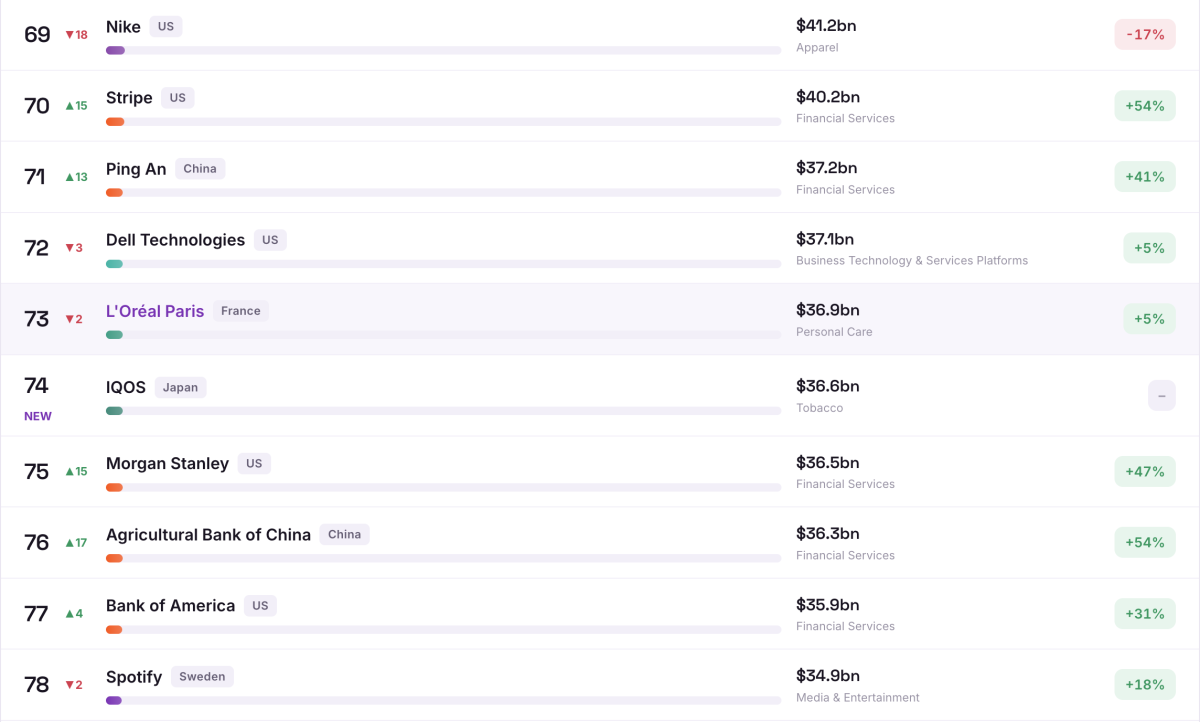
IQOS Enters Kantar BrandZ Global Top 100 for First Time, Valued at $36.6 Billion and Ranked No. 74
Philip Morris International’s IQOS has entered the Kantar BrandZ Top 100 Most Valuable Global Brands for the first time, ranking No. 74 with a brand value of $36.634 billion and becoming one of only three newcomers to the 2026 ranking. Kantar said the combined value of the Global Top 100 reached $13.1 trillion, up 22% year on year, while the threshold for entry rose to a record high. PMI says IQOS has more than 35 million users worldwide and surpassed $10 billion in annual net revenues within a decade of launch.
Sep.03
China Tobacco Hubei explores staged nicotine pouch delivery, using dynamic membranes to slow early release and gradient particles to sustain later delivery
China Tobacco Hubei Industrial Co., Ltd. disclosed several oral nicotine-related patent applications in August 2026, including two that approach staged nicotine release from different directions. One uses a high-viscosity membrane that forms inside the pouch after contact with saliva to slow rapid early release, while the other uses gradient particles with a faster-disintegrating outer layer and a slower core to create a fast-to-sustained release profile. Together, the filings explore how nicotine pouches could balance initial delivery with release later in use.
Sep.03
Product | PMI Japan Expands ZYN by IQOS Strength Portfolio With Strong Series, Increasing Lineup to 12 Products
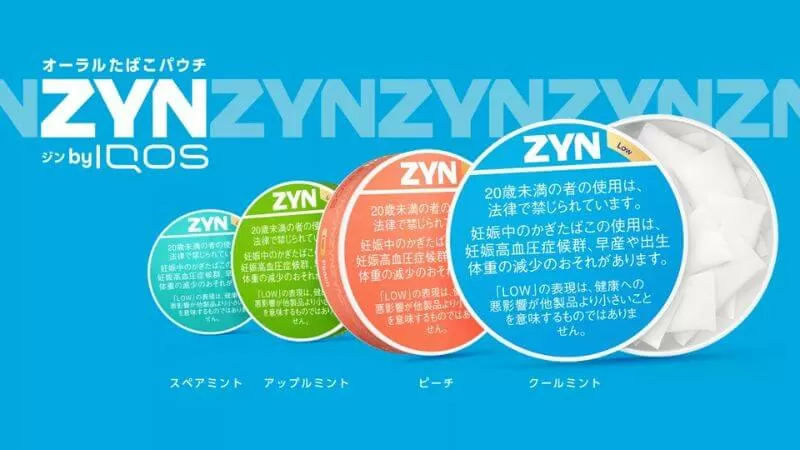
Philip Morris Japan (PMJ) has expanded the ZYN by IQOS oral tobacco pouch portfolio in Japan with four new ZYN Strong products, adding a third intensity level alongside the existing Low and Medium ranges. The Strong series first entered selected duty-free channels in Japan on July 1, 2026, before expanding to IQOS stores, the ZYN Online Store and selected tobacco retailers from August 18. The expansion increases the Japanese ZYN by IQOS lineup from eight to 12 products.
Aug.20