Pennsylvania Initiates Effort to Restrict Tobacco and E-Cigarette Shops

Regulations by 2FIRSTS.ai
Mar.07.2024
Pennsylvania Initiates Effort to Restrict Tobacco and E-Cigarette Shops
Pennsylvania township to restrict tobacco and e-cigarette shops, sparking resident opposition at public hearing. Officials discuss regulations.

According to Shutterstock, Larry Holmes, chairman of the Haverford Township Commissioners in Pennsylvania, stated that the government will be attempting to "restrict the proliferation of tobacco and e-cigarette shops" for the first time. During a public hearing, residents of the township expressed opposition to local e-cigarette shops. The meeting primarily focused on discussing these types of stores, with residents expressing concerns about them.


According to reports, a meeting was held on Monday to discuss ordinance P-2024, which aims to revise Chapters 47 and 182 of the town regulations, specifically targeting skill games and major tobacco retailers. This ordinance focuses on defining what kind of businesses are considered "major tobacco retailers," and requires a 1000-foot buffer zone to be established around these retailers to prevent them from being located near public and private schools and daycare centers. Additionally, the operating hours of these businesses will be limited from 10 am to 11 pm.


According to reports, Larry Holmes, the chairman of the Commissioner's Committee, stated that this is the government's first attempt to restrict the spread of tobacco and e-cigarette shops. He mentioned that restrictions on tobacco and e-cigarette shops are limited under state law. The regulations also mention that skill games, similar to casino slot machines, will be prohibited from being conducted in "significant tobacco retailers" and convenience stores.


According to reports, if the new regulations are passed, Holmes stated that this would be a "positive step" towards addressing residents' concerns about these commercial activities. The decision on the regulations is expected to be made at the regular commissioner meeting on Monday.


We welcome news tips, article submissions, interview requests, or comments on this piece.

Please contact us at info@2firsts.com, or reach out to Alan Zhao, CEO of 2Firsts, on LinkedIn


Notice

1.  This article is intended solely for professional research purposes related to industry, technology, and policy. Any references to brands or products are made purely for objective description and do not constitute any form of endorsement, recommendation, or promotion by 2Firsts.

2.  The use of nicotine-containing products — including, but not limited to, cigarettes, e-cigarettes, nicotine pouchand heated tobacco products — carries significant health risks. Users are responsible for complying with all applicable laws and regulations in their respective jurisdictions.

3.  This article is not intended to serve as the basis for any investment decisions or financial advice. 2Firsts assumes no direct or indirect liability for any inaccuracies or errors in the content.

4.  Access to this article is strictly prohibited for individuals below the legal age in their jurisdiction.


Copyright


This article is either an original work created by 2Firsts or a reproduction from third-party sources with proper attribution. All copyrights and usage rights belong to 2Firsts or the original content provider. Unauthorized reproduction, distribution, or any other form of unauthorized use by any individual or organization is strictly prohibited. Violators will be held legally accountable.

For copyright-related inquiries, please contact: info@2firsts.com


AI Assistance Disclaimer


This article may have been enhanced using AI tools to improve translation and editorial efficiency. However, due to technical limitations, inaccuracies may occur. Readers are encouraged to refer to the cited sources for the most accurate information.

We welcome any corrections or feedback. Please contact us at: info@2firsts.com

GSTHR Estimates 200 Million People Use Non-Combustible Nicotine Products as 28 Countries Show Rising Use Alongside Falling Smoking Rates
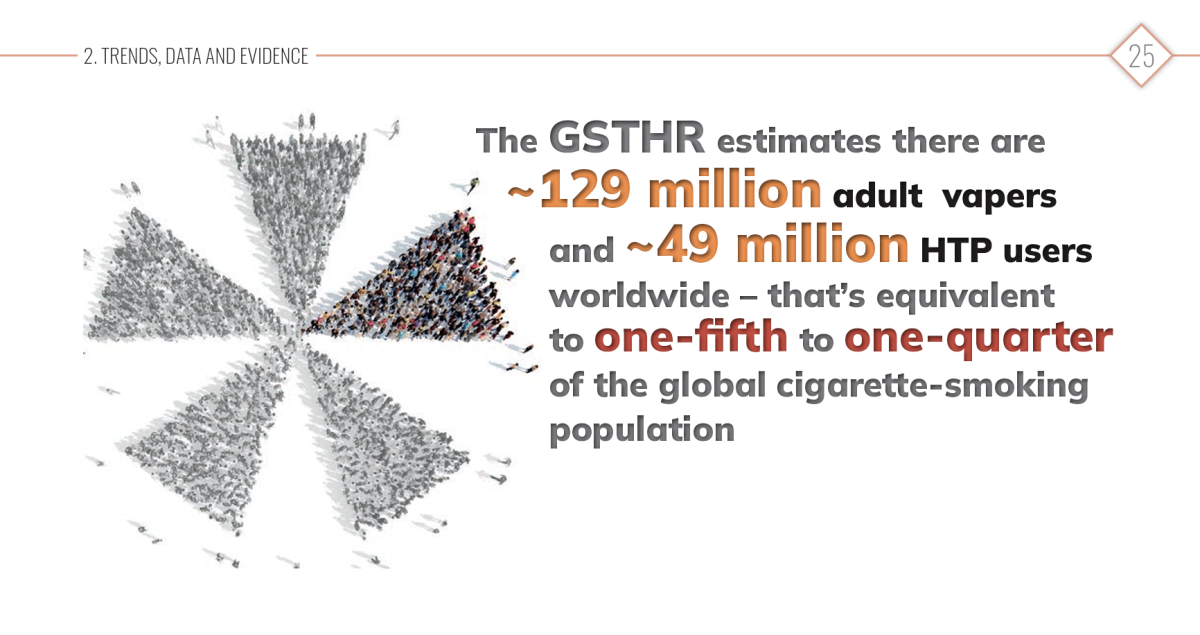
The Global State of Tobacco Harm Reduction, a project operated by Knowledge·Action·Change, estimates that about 200 million people worldwide use non-combustible nicotine products including vapes, heated tobacco, nicotine pouches and snus. Its 2026 report says use of these products rose alongside declining smoking rates in 28 countries it analyzed. The data do not establish that all 200 million users have quit smoking, nor do they prove a direct causal relationship. GSTHR also says regulatory restrictions on the products continue to expand in many markets.
Sep.10
NAS 2026 | Cliff Douglas: Risk Continuum Should Play a Central Role in Tobacco Policy
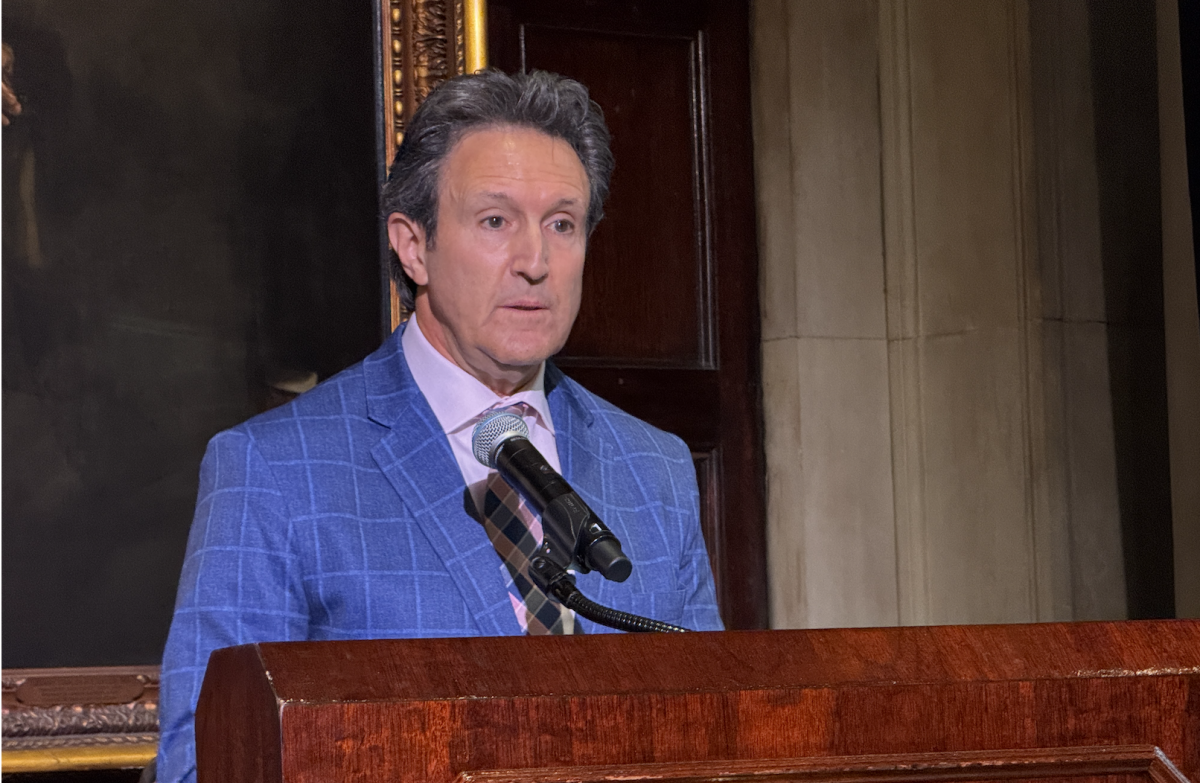
Cliff Douglas, a veteran U.S. tobacco-control and public health policy figure, told NAS 2026 that the “continuum of risk” should play a central role in tobacco policy. He called for clearer market pathways, stronger risk communication, differentiated regulation and enforcement, and said possible FDA reforms to PMTA reviews could be a “welcome correction” if they create a more efficient, predictable route for scientifically substantiated lower-risk products. Read 2Firsts’ on-site coverage.
Sep.26
EU Tobacco Tax Reform Targets November Push as Sweden Holds Nicotine-Pouch Minimum at €20 per Kilogram
The Irish presidency of the Council of the European Union is using bilateral talks to push the bloc’s Tobacco Taxation Directive toward a political agreement in November. According to Law360, citing an EU official, Sweden is unwilling to accept a minimum excise threshold above €20 per kilogram for nicotine pouches. Council negotiations have already lowered the European Commission’s original proposal, but a May 2026 presidency compromise still set the minimum at 10% of the tax-inclusive retail price or €30 per kilogram in 2028-29, with higher levels later.
Market
Sep.17 by 2Firsts Perspectives
Elf Bar Vape Explosion and Amputation Claim Spurs Coverage Suit, U.S. Insurer MUSIC Seeks Ruling It Owes No Duty to Defend or Indemnify Distributor i5
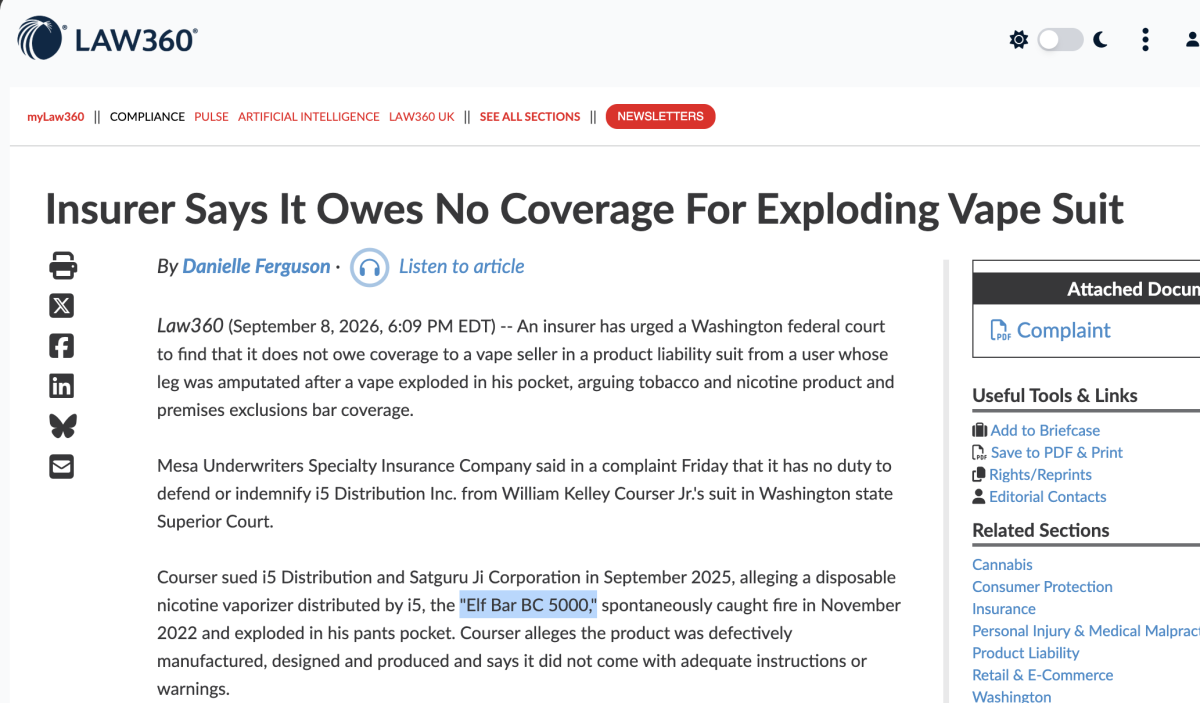
Mesa Underwriters Specialty Insurance Company has asked a federal court in Washington to declare that it has no duty to defend or indemnify vape distributor i5 Distribution in a product liability case involving an Elf Bar BC5000. The plaintiff alleges that the disposable vape caught fire and exploded in his pocket, causing severe burns and ultimately requiring an above-the-knee amputation of his left leg. MUSIC is relying on a tobacco, nicotine or nicotine replacement products exclusion and a premises limitation endorsement. The court has not ruled on the coverage dispute.
News
Sep.10
UK ONS Data: Vaping Rate Among Women Aged 25–34 Reaches 18.3%, Compared With 14.4% for Men
The vaping rate among women aged 25 to 34 in Great Britain reached 18.3% in 2025, up from 13.7% in 2024 and 8.3% in 2020, according to data from the Office for National Statistics (ONS). The figure was the highest for this group since records began in 2014 and exceeded the 14.4% recorded among men of the same age. Adults aged 25 to 34 also overtook those aged 16 to 24 as the age group with the highest vaping prevalence. Overall, about 5.4 million adults in Great Britain used e-cigarettes in 2025, broadly unchanged from the previous year.
DATA
Oct.13
Australia Adds 6-Methylnicotine to Schedule 9 Prohibited Substances, Effective October 1
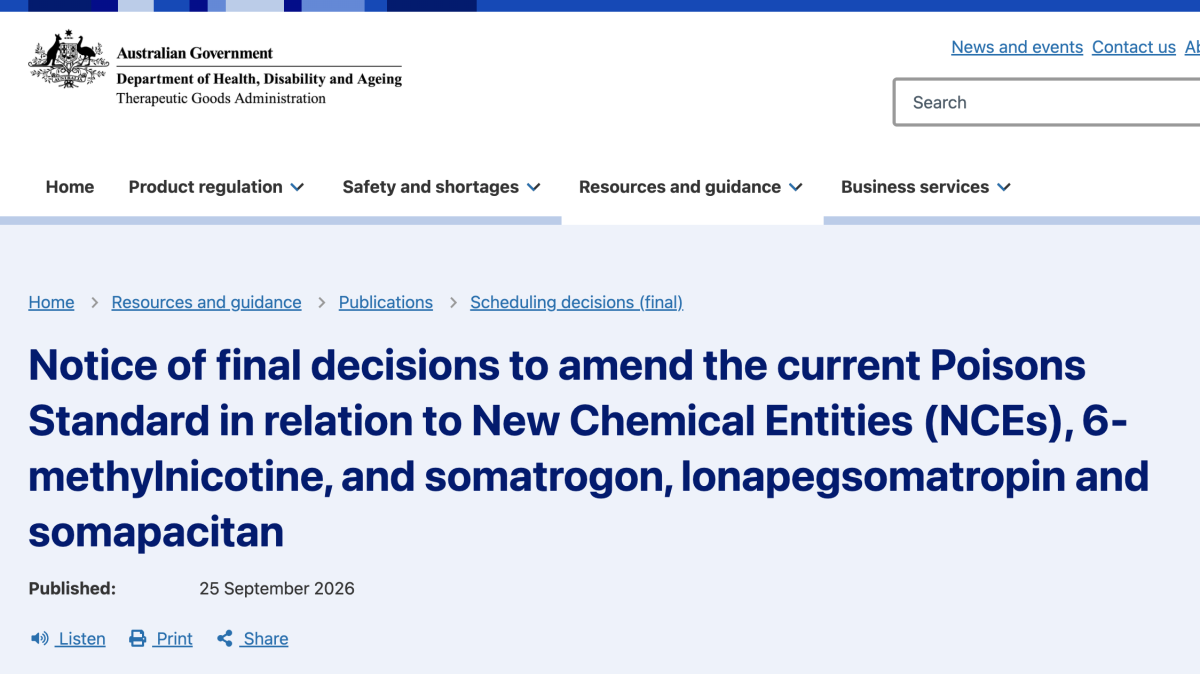
Australia's Therapeutic Goods Administration published a final decision on September 25 to classify 6-methylnicotine as a Schedule 9 prohibited substance under the Poisons Standard, effective October 1, 2026. TGA said the chemical has been reported in e-cigarette liquids sold in Australia and marketed as nicotine-free or nicotine alternatives, while evidence also indicates its use in preparations such as oral pouches. The government originally proposed a Schedule 7 classification but ultimately adopted the stricter Schedule 9 designation, citing acute toxicity, dependence risk, use in unapproved consumer products and misleading marketing.
News
Sep.29 by 2Firsts Perspectives