Hong Kong Seizes $90m Worth Illegal Cigarettes

Market by Ashe Wong
May.17.2023
Hong Kong Seizes $90m Worth Illegal Cigarettes
Following a 31% tobacco tax increase in February, Hong Kong authorities have confiscated over HK$700 million worth of illegal cigarettes.

Hong Kong authorities have seized over HK$700 million ($90 million USD) worth of illicit cigarettes since the region's 31% increase in tobacco tax in February, according to a report by the South China Morning Post on May 16th.


Latest data reveal that customs enforcement officers seized approximately 191 million untaxed cigarettes during this period, estimated to be worth over HK$706 million. An insider familiar with the illicit trade suggested that, if imported legally, these tobacco products would have generated HK$477 million in tax revenue for the government.

"Customs officers made numerous seizures of a large quantity of illicit cigarettes in March and April as smuggling syndicates continued to replenish their stocks with smuggled products," the source said.


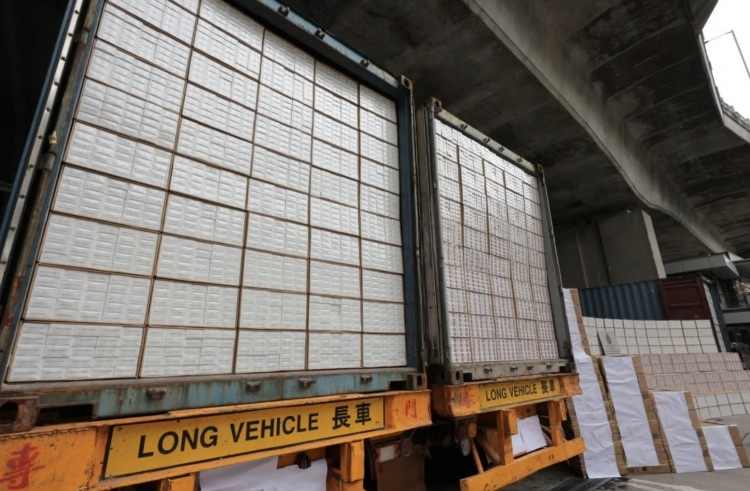
In a recent case, customs officers confiscated HK$120 million worth of untaxed cigarettes in the Tuen Mun public cargo working area. These 32 million illicit cigarettes were found in three shipping containers onboard a vessel. Two young men aboard the ship were arrested on suspicion of dealing with illicit tobacco.


Under Hong Kong's Dutiable Commodities Ordinance, the violator carries a maximum penalty of two years' imprisonment and a fine of HK$1 million. Preliminary investigations indicate that the seized goods were intended for local consumption, but the source of the contraband is still under investigation.


Hong Kong customs noted that illegal cigarettes are rarely found in the morning; most seizures occur in the evening or at night.


The 31% increase in tobacco tax in February pushed the average cost of a 20-cigarette pack to over HK$70, an additional HK$12 per pack. The price of black-market cigarettes has also risen by HK$5 per pack, with prices ranging between HK$18 and HK$30 for a pack of 20.


*The content of this article is written after the extraction, compilation and integration of multiple information for exchange and learning purposes. The copyright of the summary information still belongs to the original article and its author. If any infringement is found, please contact us to delete it. 

China’s Zhengzhou Tobacco Research Institute develops end-to-end heated tobacco analysis to trace aerosol compound origins
The Zhengzhou Tobacco Research Institute of China National Tobacco Corporation has filed a patent application for an end-to-end method to analyze the migration and transformation of chemical compounds in heated tobacco products. Using GC-Orbitrap/MS non-targeted analysis, the method compares tobacco substrate and aerosol samples to distinguish compounds transferred directly from the substrate from those newly formed during heating, while also calculating transfer rates. In an example involving nine heated tobacco products, the patent identified 17 newly formed thermal decomposition compounds and 38 transferred compounds.
Aug.13
China Tobacco Yunnan files patent for cellulose-free nicotine pouch scaffold to replace microcrystalline cellulose
China Tobacco Yunnan Industrial Co., Ltd. has filed a patent application for a cellulose-free scaffold material for nicotine pouches, proposing a combination of bioceramic material, polydextrose and sugar alcohols to replace conventional microcrystalline cellulose and cellulose derivatives. The filing aims to address issues including powdery mouthfeel, residue and limited release control, while also reducing reliance on existing cellulose-based patent portfolios. In patent examples, one fast-release formulation reached a nicotine release rate of 50% at 10 minutes and more than 90% at 20 minutes.
Sep.02
Zhang Xiaotang Appointed Deputy Director of China’s Tobacco Regulator, Adding Another Finance-Background Official to Top Leadership
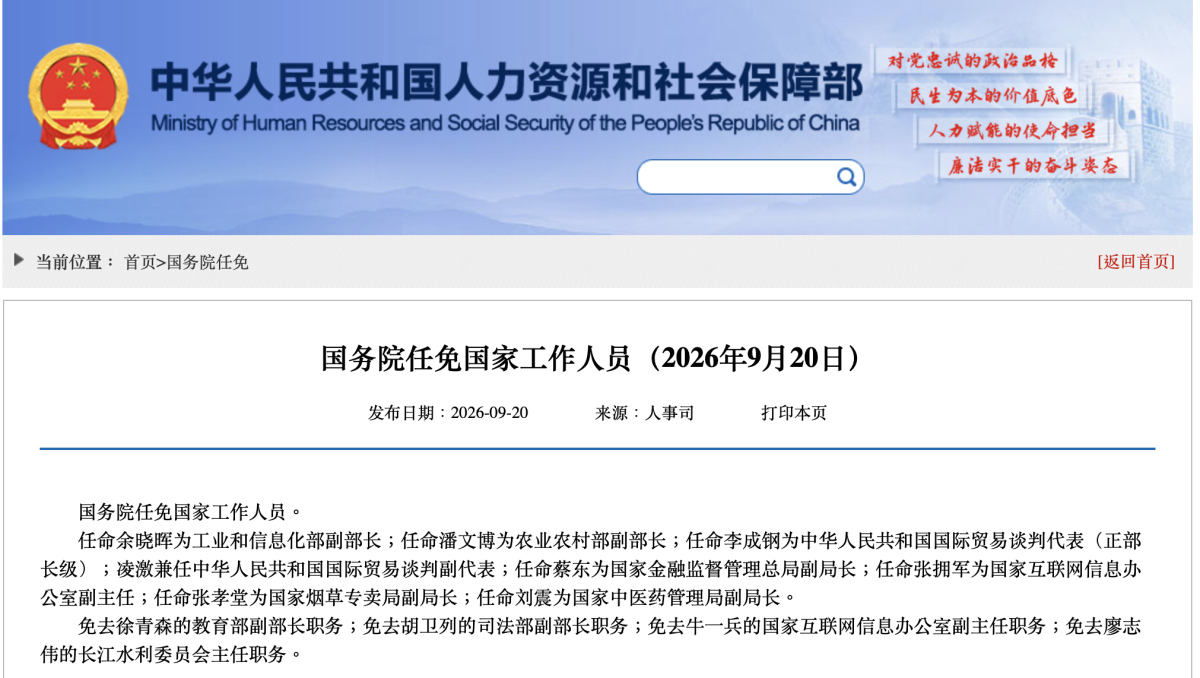
China’s State Council has appointed Zhang Xiaotang as deputy director of the State Tobacco Monopoly Administration, with the regulator’s official website now listing him as a Party leadership group member and deputy director. Zhang previously led Hebei China Tobacco and earlier headed the STMA’s finance and audit department. His appointment follows the elevation earlier this year of former tax official Yao Laiying to head the STMA, adding another senior official with a strong fiscal or financial-management background to China Tobacco’s top leadership in 2026.
News
Sep.20
China Tobacco Plans CNY 60 Billion Investment in ICBC, Agricultural Bank as Strategic Ties Extend Beyond Equity
China National Tobacco Corporation and several subsidiaries plan to invest a combined CNY 60 billion ($8.7 billion) in share placements by Industrial and Commercial Bank of China and Agricultural Bank of China as strategic investors. The agreements extend beyond equity investment to corporate governance, banking services and supply-chain finance. The filings also disclose 2025 data on China Tobacco’s tax and profit contributions and industry scale.
Sep.07
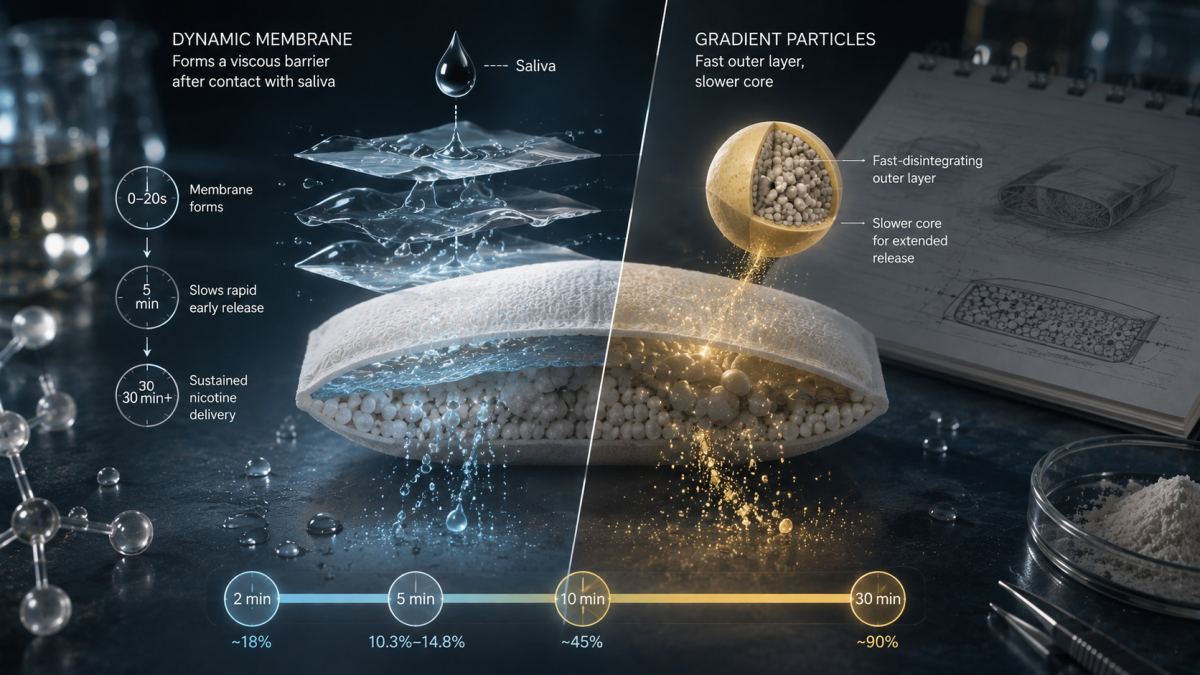
China Tobacco Hubei explores staged nicotine pouch delivery, using dynamic membranes to slow early release and gradient particles to sustain later delivery
China Tobacco Hubei Industrial Co., Ltd. disclosed several oral nicotine-related patent applications in August 2026, including two that approach staged nicotine release from different directions. One uses a high-viscosity membrane that forms inside the pouch after contact with saliva to slow rapid early release, while the other uses gradient particles with a faster-disintegrating outer layer and a slower core to create a fast-to-sustained release profile. Together, the filings explore how nicotine pouches could balance initial delivery with release later in use.
Sep.03