Ireland Urgently Needs Program to Help Youth Quit E-Cigarettes

Aug.26.2024
Ireland Urgently Needs Program to Help Youth Quit E-Cigarettes
An urgent appeal for a program to help Irish youths quit e-cigarettes to prevent lifelong nicotine addiction, says charity.

According to The Sun's report on August 25th, a charity organization in Ireland has stated that there is an urgent need for a service to help young people quit e-cigarettes in order to save thousands of teenagers from a lifetime of nicotine addiction.


The Irish Heart Foundation has pointed out that Ireland is facing a "teenage e-cigarette epidemic" and special support is needed to help young people kick the addictive substance.


In its budget report submitted, the foundation also called for an increase in cigarette prices to 20 euros per pack, and for e-cigarettes to be taxed sufficiently to prevent their use by young people.


Chris Macey, Advocacy Manager of the Irish Heart Foundation, stated that


We know that many young people are seeking help to quit e-cigarettes, and American programs have shown that when this help is available, the results are very significant.


When facing the epidemic of teenage e-cigarette use, failing to provide this support is equivalent to abandoning thousands of teenagers at risk of long-term addiction.


Messi stated that the Health Service Executive (HSE) in Ireland continues to receive requests from various quit smoking services around the country for help in quitting e-cigarettes. Despite the increasing demand, he added that Quit.ie does not have enough resources to provide this service because quitting e-cigarettes requires a different approach than traditional smoking cessation services to be most effective.


The Irish Heart Foundation also pointed out that according to the data from the youth information and support platform Spunout, their webpages on the health impacts of smoking and e-cigarettes have received thousands of views, with searches for "how to quit e-cigarettes" being the biggest source of traffic for this content.


The foundation is also calling for a budget allocation of over 1 million euros for the development of an e-cigarette prevention and control information campaign and a research project to create an e-cigarette cessation plan. The foundation hopes to increase cigarette prices by 3.25 euros to reach a price of 20 euros per pack.


Messi also stated that the government should provide more support for smokers to quit smoking. At the same time, they pay an additional tax of 1 billion euros each year, while the budget for anti-smoking measures is only 17 million euros per year.


We welcome news tips, article submissions, interview requests, or comments on this piece.

Please contact us at info@2firsts.com, or reach out to Alan Zhao, CEO of 2Firsts, on LinkedIn


Notice

1.  This article is intended solely for professional research purposes related to industry, technology, and policy. Any references to brands or products are made purely for objective description and do not constitute any form of endorsement, recommendation, or promotion by 2Firsts.

2.  The use of nicotine-containing products — including, but not limited to, cigarettes, e-cigarettes, nicotine pouchand heated tobacco products — carries significant health risks. Users are responsible for complying with all applicable laws and regulations in their respective jurisdictions.

3.  This article is not intended to serve as the basis for any investment decisions or financial advice. 2Firsts assumes no direct or indirect liability for any inaccuracies or errors in the content.

4.  Access to this article is strictly prohibited for individuals below the legal age in their jurisdiction.


Copyright


This article is either an original work created by 2Firsts or a reproduction from third-party sources with proper attribution. All copyrights and usage rights belong to 2Firsts or the original content provider. Unauthorized reproduction, distribution, or any other form of unauthorized use by any individual or organization is strictly prohibited. Violators will be held legally accountable.

For copyright-related inquiries, please contact: info@2firsts.com


AI Assistance Disclaimer


This article may have been enhanced using AI tools to improve translation and editorial efficiency. However, due to technical limitations, inaccuracies may occur. Readers are encouraged to refer to the cited sources for the most accurate information.

We welcome any corrections or feedback. Please contact us at: info@2firsts.com

Hungary Moves to End BAT-Backed Tobacco Supply Monopoly Eight Years Early After $200 Million in Profits, With No Compensation Planned
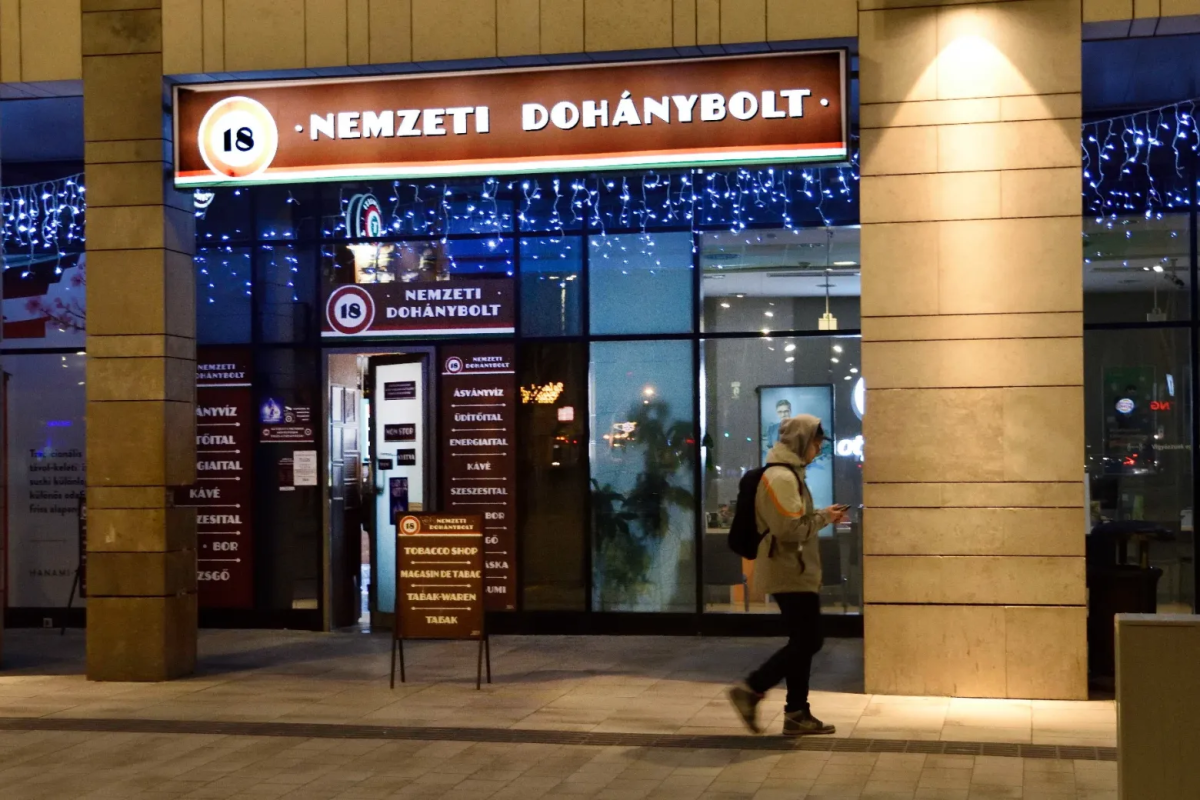
Hungary's government announced on November 18, 2026, plans to terminate the exclusive tobacco retail supply concession held by Országos Dohányboltellátó (ODBE) on June 1, 2027, approximately eight years before the contract's scheduled expiry in 2035. ODBE is owned 49% by a Hungarian subsidiary of British American Tobacco (BAT) and 51% by Tabán Trafik. It has served as the exclusive supplier to Hungary's licensed tobacco retail network since 2015. The proposed legislation would end the concession without compensation and allow other qualified suppliers and tobacco wholesalers to serve retailers directly. ODBE generated HUF 67.3 billion (approximately $200 million) in after-tax profit between 2015 and 2025 and distributed nearly HUF 64 billion ($191 million) in dividends. The bill also proposes changes to retail margins, inventory rules, payment arrangements and procurement penalties, including those affecting heated tobacco products.
company
Nov.19 by 2Firsts Perspectives
Imperial Brands Plans to Cut Nearly 18% of Workforce as German Plant Closure and Polish Outsourcing Drive Restructuring
Imperial Brands disclosed on November 17, 2026, that its global manufacturing and organisational restructuring is expected to reduce between 4,200 and 4,600 roles by the end of 2030, equivalent to approximately 16%–18% of its workforce at the end of 2025. The first phase covers 2,100 roles with departures confirmed or subject to consultation, while a further 2,100–2,500 positions are expected to be eliminated by 2030. The company is proceeding with the closure of its Langenhagen factory in Germany, has sold its manufacturing facility in Taiwan, and has transferred selected finance, procurement and supply-chain operations in Poland to Capgemini. The restructuring programme is expected to cost approximately £740 million, with Imperial targeting at least £320 million in annual cost savings by 2030.
company
Nov.18
Product | PMI's ZYN Launches BEYOND Limited-Edition Series in Sweden With Two 9mg Nicotine Pouches
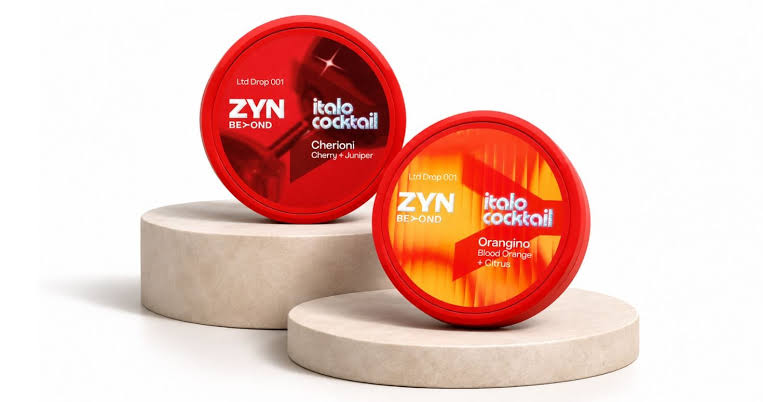
Philip Morris International subsidiary Swedish Match announced the launch of ZYN BEYOND Limited Edition in Sweden on November 24, 2026. The inaugural release, LTD Drop 001, comprises Cherioni and Orangino, two Slim nicotine pouch products containing 9mg of nicotine per pouch and 20 pouches per can. Swedish Match lists both products at SEK 39 per can and offers a two-can mixed pack for SEK 60. The new series uses an Italo Cocktail theme, distinctive packaging and numbered limited releases, positioning it separately from ZYN's regular product range.
product
Nov.26
Texas Extends Tobacco Tax Interpretation to a 6-Methylnicotine Product, Citing VELO Ruling
The Texas Comptroller of Public Accounts ruled in September 2026 that a combustible product made with non-tobacco plant material and 6-methylnicotine (6-MN), a synthetic nicotine analog, qualifies as a taxable tobacco product. The applicant said the product contained neither tobacco leaf nor measurable conventional nicotine. The determination applies reasoning from a May Texas Supreme Court decision involving VELO nicotine pouches, finding that the plant material and 6-MN together perform the functions of tobacco in a conventional smoking product. The ruling carries applicable tax, licensing and reporting obligations but is limited to the facts submitted by the taxpayer. It does not establish a blanket tax classification for all 6-MN products or extend the same conclusion to e-cigarettes.
Regulations
Nov.06
PMI Pushes Smoke-Free Business in Latin America as Argentina Lifts Heated Tobacco Ban, Mexico City Share Tops 7%
Philip Morris International (PMI) showcased IQOS heated tobacco systems and nicotine pouch products at Technovation 2026 in Buenos Aires on October 7–8, presenting research on consumer attitudes, regulatory developments and illicit cigarette trade across Latin America. PMI Chief Global Growth Officer Stefano Volpetti said smoke-free products accounted for more than 7% of the Mexico City market. Argentina repealed its heated tobacco ban in May 2026 and introduced registration requirements for tobacco and nicotine products, while local media reported nicotine pouch sales in Mendoza. A PMI-commissioned survey found that only 8% of respondents across four Latin American countries were familiar with nicotine pouches. A separate KPMG study estimated illicit cigarette consumption at 77 billion sticks across 11 markets in Latin America and Canada in 2025.
PMI
Oct.13
Russia's Vape Ban Decisions Reach 17 Regions With 39 More Considering Laws, Putting Over 3,000 St. Petersburg Retail Outlets in Focus
Russia's regional vape retail restrictions are expanding. State Duma Speaker Vyacheslav Volodin said on November 7 that 17 regions had adopted decisions to ban vape sales, while another 39 were preparing or considering similar legislation. On November 12, lawmakers in Leningrad Oblast and the Republic of Karelia adopted bans scheduled to begin on March 1, 2027. A day earlier, St. Petersburg unanimously approved a five-year ban proposal in its first reading. The city has 615 specialist vape shops and more than 2,400 other retail outlets selling vaping products alongside other goods. Under Federal Law No. 186-FZ, enacted in June 2026, Russian regions may prohibit retail sales of electronic nicotine delivery systems and related liquids between March 2027 and March 2032. The legislation also restricts licensed suppliers from delivering covered products to retail premises in regions where bans apply.
Regulations
Nov.13