Japan Tobacco Corporation Reports Strong Financial Growth in Q1 2024

JTI by 2FIRSTS, edited by Sophia
May.09.2024
Japan Tobacco Corporation Reports Strong Financial Growth in Q1 2024
Japan Tobacco Inc. (JT) reported significant financial growth in Q1 of 2024, with revenue up 11.3% and net profit up 8.7%.

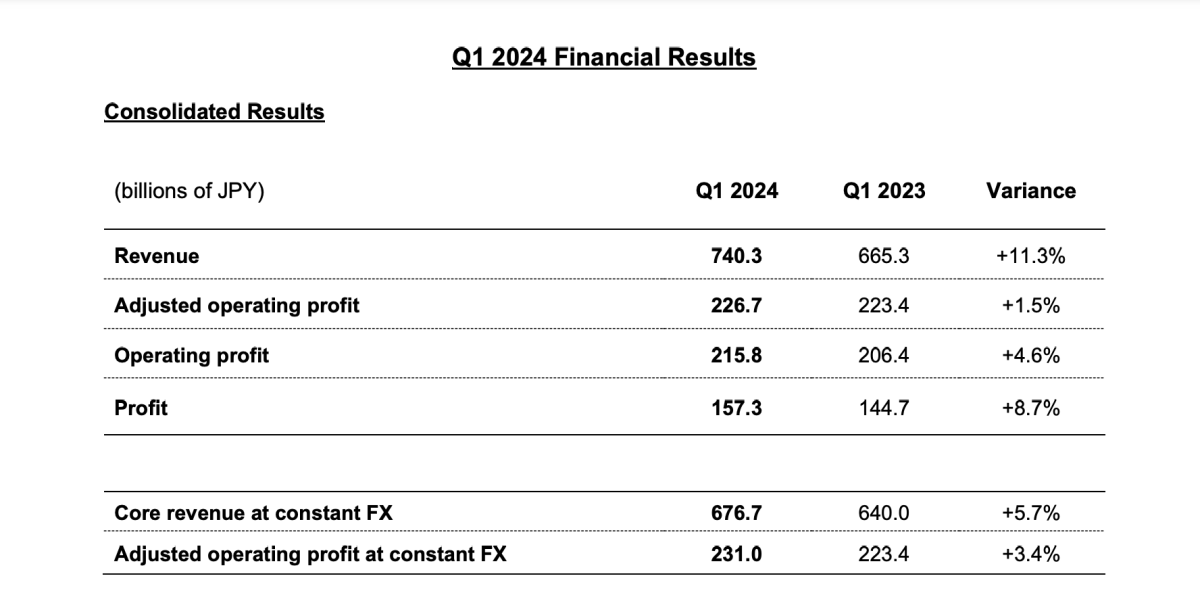
On May 9, Japan Tobacco Inc. (JT) released its financial report for the first quarter of 2024, showing significant financial growth for the company in that quarter. Operating income increased by 11.3% year-on-year to 740.3 billion yen (approximately 4.9 billion US dollars); net profit grew by 8.7% year-on-year to 157.3 billion yen (approximately 1 billion US dollars).
 

Japan Tobacco Corporation Reports Strong Financial Growth in Q1 2024
Financial report for the first quarter of 2024 | Source: JT


Data shows that compared to 2023, Japan Tobacco Inc.'s cigarette business revenue increased by 12.8%, or 6.6% at constant exchange rates, reaching 653.3 billion yen (approximately $43 billion). Adjusted net profit increased by 3%, or 4.9% at constant exchange rates, reaching 239.1 billion yen (approximately $1.5 billion); total cigarette sales volume decreased by 1.7% year-on-year, while sales of alternative tobacco products (such as heated tobacco products) increased by 25.2% year-on-year, with revenue increasing by 17.7%.


In certain markets, such as the UK, cigarette sales experienced a significant decline, dropping by 16.1%, according to the Japanese tobacco company. However, the overall market share of the tobacco market has increased in many markets, including Italy, the Philippines, Russia, and Taiwan, China.


We welcome news tips, article submissions, interview requests, or comments on this piece.

Please contact us at info@2firsts.com, or reach out to Alan Zhao, CEO of 2Firsts, on LinkedIn


Notice

1.  This article is intended solely for professional research purposes related to industry, technology, and policy. Any references to brands or products are made purely for objective description and do not constitute any form of endorsement, recommendation, or promotion by 2Firsts.

2.  The use of nicotine-containing products — including, but not limited to, cigarettes, e-cigarettes, nicotine pouchand heated tobacco products — carries significant health risks. Users are responsible for complying with all applicable laws and regulations in their respective jurisdictions.

3.  This article is not intended to serve as the basis for any investment decisions or financial advice. 2Firsts assumes no direct or indirect liability for any inaccuracies or errors in the content.

4.  Access to this article is strictly prohibited for individuals below the legal age in their jurisdiction.


Copyright


This article is either an original work created by 2Firsts or a reproduction from third-party sources with proper attribution. All copyrights and usage rights belong to 2Firsts or the original content provider. Unauthorized reproduction, distribution, or any other form of unauthorized use by any individual or organization is strictly prohibited. Violators will be held legally accountable.

For copyright-related inquiries, please contact: info@2firsts.com


AI Assistance Disclaimer


This article may have been enhanced using AI tools to improve translation and editorial efficiency. However, due to technical limitations, inaccuracies may occur. Readers are encouraged to refer to the cited sources for the most accurate information.

We welcome any corrections or feedback. Please contact us at: info@2firsts.com

South Korea Fully Reviews Nicotine-Analog and Nicotine-Free Vape Liquid Imports, With Over 99% From China and Chinese Supply-Chain Documents Under Scrutiny
Korea Customs Service has tightened import controls on nicotine-analog and nicotine-free e-cigarette liquids, placing the products under 100% document review and subjecting all e-cigarette liquid import declarations to pre-clearance ingredient analysis. As of September 20, 2026, South Korea had imported about 15 metric tons of nicotine-analog liquids, 99.99% from China, and about 316 metric tons of nicotine-free liquids, including roughly 315 metric tons, or 99.7%, from China. The measures follow South Korea's April expansion of its tobacco definition to include synthetic nicotine products and include new checks on Chinese manufacturing, transaction and export documentation.
Sep.24
China Tobacco Plans CNY 60 Billion Investment in ICBC, Agricultural Bank as Strategic Ties Extend Beyond Equity
China National Tobacco Corporation and several subsidiaries plan to invest a combined CNY 60 billion ($8.7 billion) in share placements by Industrial and Commercial Bank of China and Agricultural Bank of China as strategic investors. The agreements extend beyond equity investment to corporate governance, banking services and supply-chain finance. The filings also disclose 2025 data on China Tobacco’s tax and profit contributions and industry scale.
Sep.07
Product | Four CrossBar 20K 13mL High-Puff Vapes Listed on Pennsylvania's ENDS Directory, Rated for Up to 20,000 Puffs
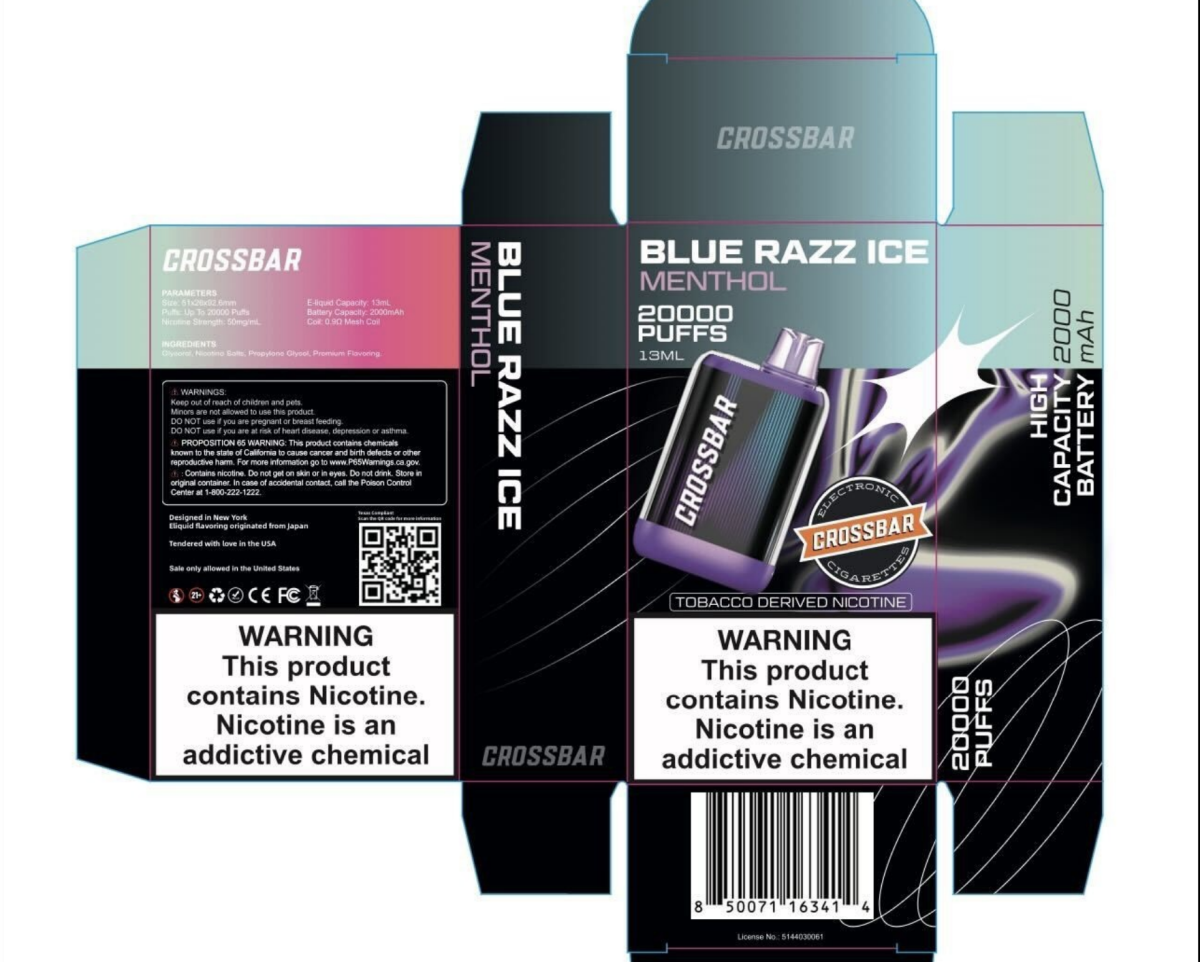
Four CrossBar 20K disposable e-cigarettes appeared on Pennsylvania's 163-entry ENDS directory ahead of enforcement beginning October 19, 2026. The devices feature 13mL e-liquid reservoirs, 50mg/mL nicotine, 2,000mAh batteries and 0.9Ω mesh coils, with advertised puff counts of up to 20,000. CrossBar was the only modern high-puff disposable series among the directory's 15 disposable entries. Its packaging emphasizes New York design and Japanese-origin flavoring, while historical CrossBar records identify a registered U.S. tobacco manufacturing-related establishment. The link between the newer 13mL devices and earlier 1.3mL PMTA filings remains unconfirmed.
product
Oct.26
UK HMRC Issues One-Month Countdown Warning, Urges Vape Businesses to Prepare for New Tax Rules
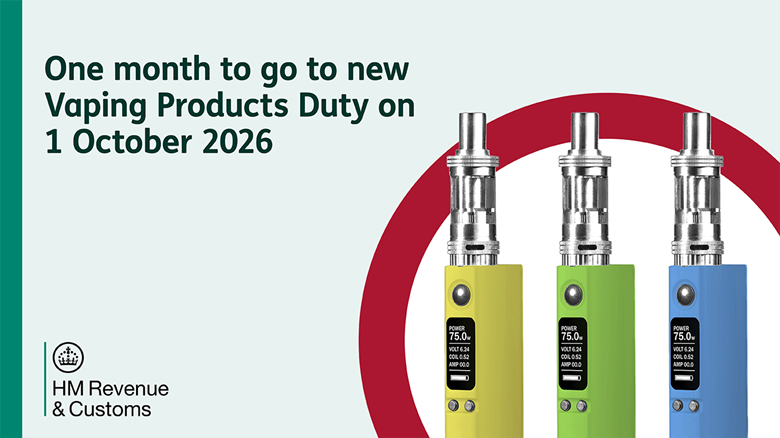
The UK’s Vaping Products Duty and Vaping Duty Stamps Scheme will take effect on October 1, 2026. All vaping liquids manufactured in or imported into the UK will face a flat excise duty of £2.20 per 10ml, whether or not they contain nicotine. Newly manufactured or imported products released onto the UK market from October 1 will require a valid duty stamp, while eligible existing unstamped inventory can continue to be sold through March 31, 2027. From April 1, 2027, all vaping products outside duty suspension must carry a valid stamp.
Sep.03
UK Vape Duty Starts in October as Hayati, DOJO and Others Launch Lower-Capacity Products With Lower Per-Unit Tax
The UK's Vaping Products Duty will take effect on October 1, 2026, at a flat rate of £2.20 per 10ml of vaping liquid. Ahead of implementation, DOJO, PIXL and Hayati have introduced or been reported to be adding lower-capacity tiers alongside larger products. DOJO has added a 6ml BLAST7K Fresh below its 10ml BLAST10K Fresh, PIXL offers both a 12ml 8000 and a 6ml 5K, while retailer Ninja Vapes says Hayati is preparing a 7ml 4K alongside its existing 12ml 6K. The pattern points to a growing lower-capacity tier in the UK market, although the brands have not all explicitly linked the changes to the new duty.
Sep.23
Malaysia Liquid Nicotine Returns to Poisons List, Leaving Vape Retail and RM354 Million Tax Collection in Legal Uncertainty
Malaysia’s withdrawal of its appeal in a landmark liquid-nicotine case has left a High Court ruling that struck down the 2023 nicotine exemption in force, bringing liquid and gel nicotine used in vaping products back under the Poisons Act 1952. At the same time, the Control of Smoking Products for Public Health Act 2024 continues to provide a regulatory framework for vaping products, creating uncertainty over retail sales, taxation and existing inventory. MPs are calling for nicotine vape sales and excise collection to stop, including refunds of more than RM354 million collected since 2023, while industry and consumer groups are asking the government to clarify the current legal position.
Sep.04