JSTE's Response to JFT Regarding Debt Situation: False Allegations, Litigation Underway

Business by 2FIRSTS
Jun.06.2024
JSTE's Response to JFT Regarding Debt Situation: False Allegations, Litigation Underway
JSTE Technology Mr. Liu De Wen responds to JFT's creditor letter, claiming it contains falsehoods. The full statement follows.

On June 6th at noon, Mr. Liu Dewen, the head of JSTE Electronic Technology (Dongguan) Co., Ltd., publicly responded to the "Letter to Creditors" released by JFT, stating that the letter contained falsehoods.


The complete response is as follows:


JFT Company confirmed in a December 2021 email that they had acquired a 50% stake in our JSTE factory, but they suddenly changed their minds in September 2022 and decided to sell their stake instead of acquiring it. They officially exited JSTE in January 2023 and received a significant amount of money from the stock transfer.

During the equity exit process, JFT company confirmed the value of over 60 million worth of JUSTFOG brand e-cigarettes under the original processing agreement, but they have been delaying payment and not taking delivery. After several months of dragging their feet, they suddenly notified of the termination of the processing partnership, leaving Jest in a difficult situation.


However, the European agents of JFT company continue to authorize domestic licensed trading companies to request small batches of JUSTFOG branded e-cigarettes for sale. Unfortunately, this led to a criminal charge of trademark infringement by JFT, claiming that the e-cigarettes produced under the original agreement were unauthorized. The malicious intent behind this action is surprising, and this absurdity cannot be justified. Jast company reserves the right to hold the criminal plaintiff accountable for their legal responsibility.


Subsequently, Jast Company employed legal methods such as litigation and arbitration to seek compensation, and successfully obtained an injunction to preserve JFT Company’s registered trademarks (such as JUSTFOG) in China, as well as its fully-owned subsidiary’s bank accounts and patents related to the e-cigarette business in China. The breach of contract case is scheduled to be heard in the near future.


At the same time, Gest also filed a patent confirmation lawsuit to the court. During the cooperation between both parties, JFT appointed a research and development manager who established a labor relationship with Gest, and transferred numerous patents to its wholly-owned subsidiary, severely infringing on Gest's rights.


As a leading media and think tank in the field of atomization technology, 2FIRSTS closely monitors the latest developments on this issue and maintains contact with various parties.


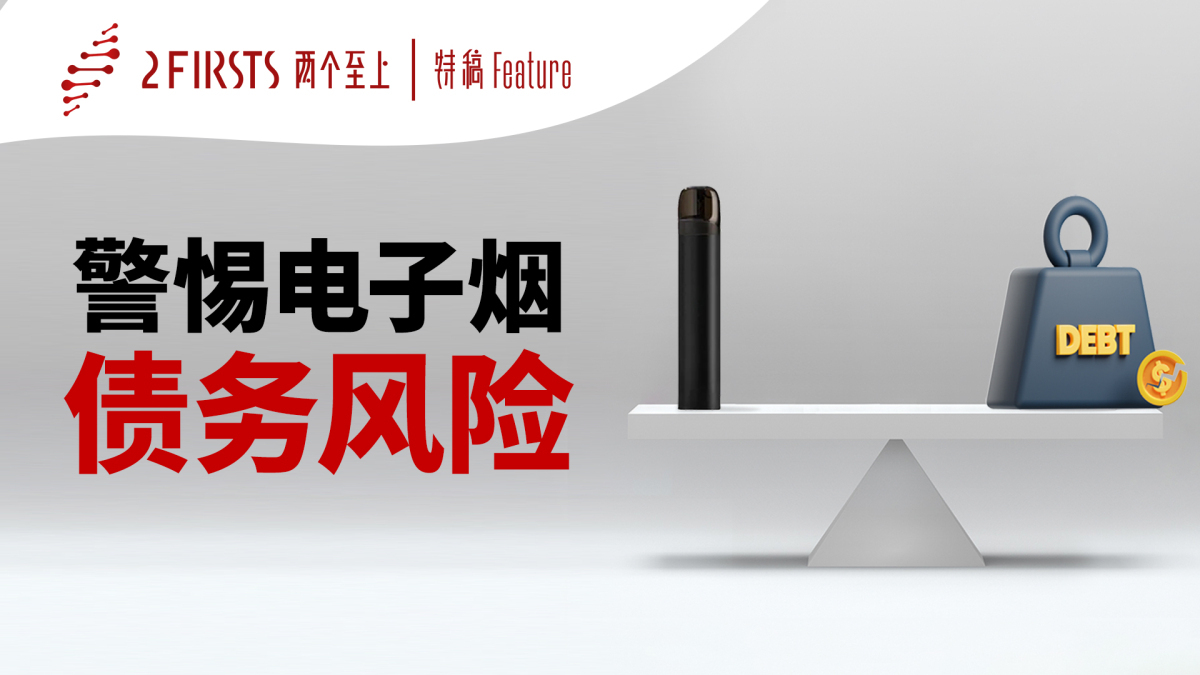
Click on the image to read: "Vape Debt Risk: How can the operational difficulties of a single company affect the entire industry chain?"
 

JSTE's Response to JFT Regarding Debt Situation: False Allegations, Litigation Underway


Click on the image to read: JSTE Electronic Technology (Dongguan) Co., Ltd. Announces Liquidation

 

JSTE's Response to JFT Regarding Debt Situation: False Allegations, Litigation Underway
Click on the image to read: JSTE Electronic Technology (Dongguan) Co., Ltd. Announces Liquidation


Click on the image to read: "JUSTFOG Official Response: JSTE's Liquidation is for Self-Protection after Serious Violations".

 

JSTE's Response to JFT Regarding Debt Situation: False Allegations, Litigation Underway
Click on the image to read: "JUSTFOG Official Response: JSTE's Liquidation is for Self-Protection after Serious Violations"


We welcome news tips, article submissions, interview requests, or comments on this piece.

Please contact us at info@2firsts.com, or reach out to Alan Zhao, CEO of 2Firsts, on LinkedIn


Notice

1.  This article is intended solely for professional research purposes related to industry, technology, and policy. Any references to brands or products are made purely for objective description and do not constitute any form of endorsement, recommendation, or promotion by 2Firsts.

2.  The use of nicotine-containing products — including, but not limited to, cigarettes, e-cigarettes, nicotine pouchand heated tobacco products — carries significant health risks. Users are responsible for complying with all applicable laws and regulations in their respective jurisdictions.

3.  This article is not intended to serve as the basis for any investment decisions or financial advice. 2Firsts assumes no direct or indirect liability for any inaccuracies or errors in the content.

4.  Access to this article is strictly prohibited for individuals below the legal age in their jurisdiction.


Copyright


This article is either an original work created by 2Firsts or a reproduction from third-party sources with proper attribution. All copyrights and usage rights belong to 2Firsts or the original content provider. Unauthorized reproduction, distribution, or any other form of unauthorized use by any individual or organization is strictly prohibited. Violators will be held legally accountable.

For copyright-related inquiries, please contact: info@2firsts.com


AI Assistance Disclaimer


This article may have been enhanced using AI tools to improve translation and editorial efficiency. However, due to technical limitations, inaccuracies may occur. Readers are encouraged to refer to the cited sources for the most accurate information.

We welcome any corrections or feedback. Please contact us at: info@2firsts.com

As Regulators Focus on Nicotine Pouch Child Safety, Safeguard Pursues an External Packaging Route
As regulators pay closer attention to child safety in nicotine pouches, manufacturers face a practical challenge: how to strengthen child-resistant packaging without unnecessarily reworking products, production lines and regulatory submissions already in place. In a written interview with 2Firsts, Chemular detailed Safeguard’s external packaging approach, its customer-specific testing requirements and possible PMTA pathways. The model remains early-stage, but it offers a new way to think about an increasingly important regulatory and manufacturing issue.
Industry Insight
Sep.19
China Tobacco Regulator Deputy Head Visits Laos as Both Sides Strengthen Cooperation on Illegal Tobacco Trade
China’s official Xinhua News Agency reported that Liu Sanjiang, deputy head and Party group member of China’s tobacco regulator, led a delegation to Laos from July 31 to Aug. 2, 2026, for discussions with Lao authorities on combating cross-border illegal tobacco trade. The two sides discussed areas including law enforcement cooperation, information sharing and efforts to address tobacco-related illegal activities such as counterfeiting and smuggling. The visit highlights cooperation between Chinese and Lao authorities on illicit tobacco control.
News
Aug.05
Product | DOJO Launches BLAST10K Fresh in UK With 0+10ml E-Liquid Structure, Retaining 2+8ml Pod Compatibility
DOJO launched the BLAST10K Fresh in the UK on September 4, 2026, introducing its INSTA-JUICED™ technology and a new 0+10ml structure that keeps e-liquid separated from the coil before activation. The device features a 1000mAh rechargeable battery, COREX BLAST dual-mesh technology and SSS leak-resistant technology, with a manufacturer-rated capacity of up to 10,000 puffs. It also retains compatibility with existing 2+8ml pods across the BLAST ecosystem. The launch introduces eight new flavors, including Matcha Strawberry, which DOJO describes as an industry first.
Market
Sep.04
Philippines Weighs Unified Vape Tax as Lawmakers Back Risk-Based Rates and Government Seeks to Fill ₱66 Billion Revenue Gap
Philippine lawmakers are considering an overhaul of the country's vape excise-tax regime to eliminate the wide gap between taxes on nicotine salt and freebase nicotine liquids and reduce incentives for misdeclaration. House Bill 5364, filed by Rep. Rufus Rodriguez and Rep. Maximo Rodriguez Jr., would impose a unified ₱10-per-milliliter tax on vapor products, with 5% annual increases beginning in 2027. Rodriguez says the proposal could generate an average ₱6 billion in annual collections from 2027 through 2030. The debate comes as the Philippine government considers tobacco, vape and other health-tax reforms to help offset around ₱66 billion in revenue expected to be forgone under a proposed tax-relief package.
Aug.18
Russia Adds Vapes to “Strategic Goods” List, Illegal Cross-Border Trade Faces Up to Five Years in Prison
Russia will place e-cigarettes and related nicotine products under its “strategic goods” framework from August 20, 2026. According to TVP World’s report published on August 19, the newly listed items include e-cigarettes, electronic smoking devices, vape liquids and nicotine salts. Individuals who illegally move these products across Russia’s customs border or its state border with other Eurasian Economic Union (EAEU) members could face up to five years in prison if shipment values exceed 100,000 rubles (about €1,000), provided all elements of a criminal offence are established.
Aug.20
China’s HTP Exports Fell 14.3% in H1 2026 as Russia and Belarus Accounted for 76% Lead
In H1 2026, China’s HS 24041100 exports stood at $1.32 million, down 14.3% YoY, with volume falling 17.2% to 55.33 tons. Market distribution shifted drastically amid overall export drops. Exports to Russia and Belarus totaled $1 million, taking 76.0% of all shipments versus 29.5% in H1 2025. Belarus became the top destination with export value jumping 177.5%, while the Philippines, Singapore and Indonesia’s combined share slumped from 49.3% to 11.2%.Domestically, Yunnan led exporter registrations; Jiangsu and Shanghai were key suppliers, yet Anhui and Sichuan had no exports. Heavy concentration means order or declaration changes for Russia/Belarus greatly affect national aggregate data. The data shows customs entry points (not end markets), covering tobacco consumables only, excluding heating equipment and the complete HTP supply chain.
Aug.11