Juul Supports Legislation to Regulate Nicotine Products in Florida

Regulations by 2FIRSTS.ai
Jan.26.2024
Juul Supports Legislation to Regulate Nicotine Products in Florida
E-cigarette company JUUL calls for further regulation of nicotine products to deter illegal sales from China.

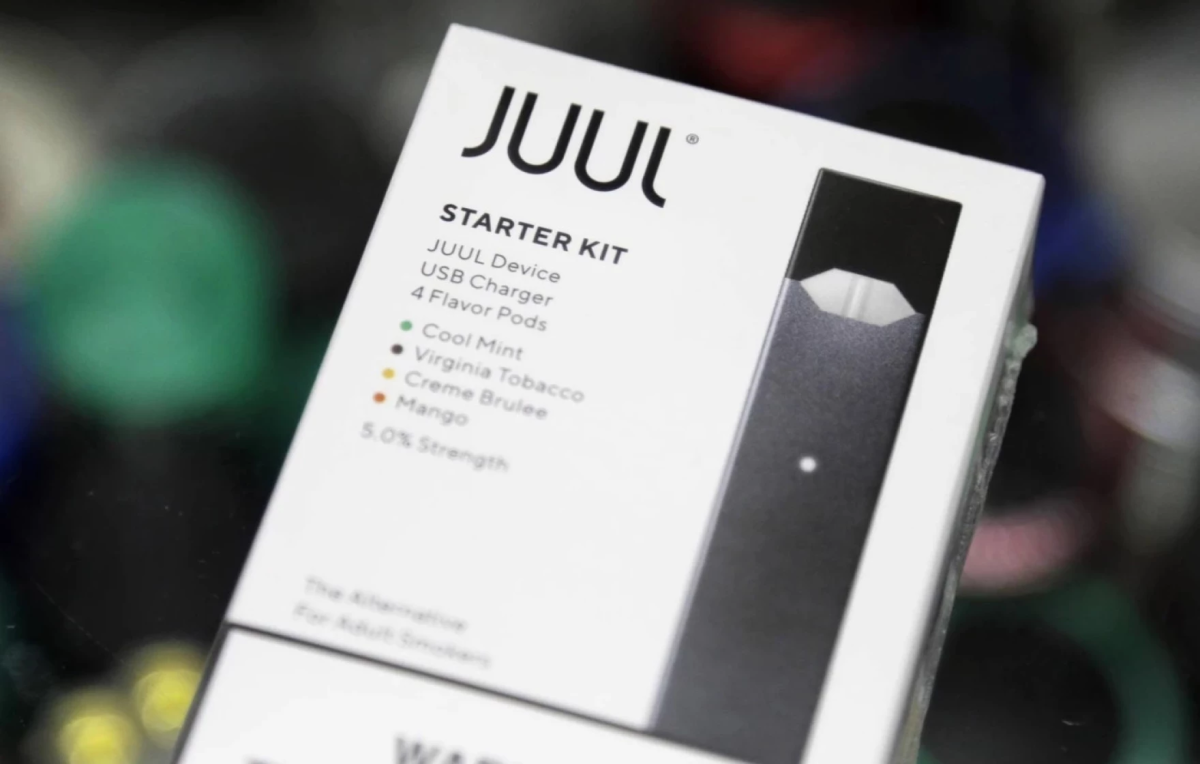
According to a report by Health News Florida on January 25, e-cigarette company JUUL has reached out to Florida lawmakers seeking support for increased regulations on nicotine products due to concerns over the illicit sale of e-cigarette products imported from China.


Currently, e-cigarette company JUUL Labs has written to the Florida legislature in support of bills SB 1006 and HB 1007. These bills aim to further regulate nicotine products in order to tackle the issue of certain retailers illegally selling e-cigarette products imported from China.


These bills will require nicotine product manufacturers to submit necessary forms to the tobacco department for each product sold in the state and provide additional information as required. In addition, certain violations will be subject to penalties. In a letter, representatives from Juul stated that these two bills will create a "well-regulated market" for legal e-cigarette products.


We welcome news tips, article submissions, interview requests, or comments on this piece.

Please contact us at info@2firsts.com, or reach out to Alan Zhao, CEO of 2Firsts, on LinkedIn


Notice

1.  This article is intended solely for professional research purposes related to industry, technology, and policy. Any references to brands or products are made purely for objective description and do not constitute any form of endorsement, recommendation, or promotion by 2Firsts.

2.  The use of nicotine-containing products — including, but not limited to, cigarettes, e-cigarettes, nicotine pouchand heated tobacco products — carries significant health risks. Users are responsible for complying with all applicable laws and regulations in their respective jurisdictions.

3.  This article is not intended to serve as the basis for any investment decisions or financial advice. 2Firsts assumes no direct or indirect liability for any inaccuracies or errors in the content.

4.  Access to this article is strictly prohibited for individuals below the legal age in their jurisdiction.


Copyright


This article is either an original work created by 2Firsts or a reproduction from third-party sources with proper attribution. All copyrights and usage rights belong to 2Firsts or the original content provider. Unauthorized reproduction, distribution, or any other form of unauthorized use by any individual or organization is strictly prohibited. Violators will be held legally accountable.

For copyright-related inquiries, please contact: info@2firsts.com


AI Assistance Disclaimer


This article may have been enhanced using AI tools to improve translation and editorial efficiency. However, due to technical limitations, inaccuracies may occur. Readers are encouraged to refer to the cited sources for the most accurate information.

We welcome any corrections or feedback. Please contact us at: info@2firsts.com

WHO warns Europe will remain the world’s biggest tobacco consumer by 2030 as vaping fuels youth uptake
According to Euronews, the World Health Organization (WHO) says its European Region—53 countries across Europe and Central Asia—is projected to remain the world’s largest tobacco consumer by 2030. While overall tobacco use is declining, e-cigarettes and flavoured nicotine products are capturing a new generation.
Feb.27 by 2FIRSTS.ai
Russia’s Rostov Region Eyes Full Vape Sales Ban, Signals Tighter Tobacco Retail Rules
Russia’s Rostov region is preparing to pursue a region-wide ban on vape sales and is also signaling support for broader regional powers to tighten tobacco retail rules. A regional lawmaker said the initiative aligns with a State Duma bill that would allow regions to impose vape sales bans—an initiative he said has presidential backing.
Jan.28 by 2FIRSTS.ai
Puerto Rico House Files P.C. 1070 to Ban Flavored Vaping Product Sales to Under-21s
According to a statement from the Puerto Rico House of Representatives, House Speaker Carlos Méndez and Rep. Pedro Julio Santiago announced the filing of House Bill 1070 (P.C. 1070), which would prohibit sales to people under 21 of vaping devices, liquids, or cartridges featuring a flavor and/or aroma other than nicotine.
Jan.29 by 2FIRSTS.ai
Estonia warns of a booming illicit vape market, raising risks for minors and legitimate trade
Estonia’s Chamber of Commerce and Industry and the Tax and Customs Board are urging the government to address a thriving illicit vape market that undermines fair competition and makes vapes easily accessible to minors.
Feb.04 by 2FIRSTS.ai
Product | Compatible with 3ml/2ml Pods and Up to 45W Output: RELX Launches a New Open-System E-Cigarette on Its Indonesia Website
RELX has launched the open-system RELX Prime Pro on its Indonesia website and has also rolled it out across multiple local e-commerce channels. According to publicly available product pages, the device is rated at up to 45W, features a 1350mAh battery, and is compatible with 3ml and 2ml pod capacities.
Dec.30 by 2FIRSTS.ai
Rethinking Nicotine Harm Reduction: A Neuroscientist’s Perspective on Scientific Gaps and Future Directions — By Dr. Xin-an Liu
After France’s ANSES report on nicotine products and harm reduction, Dr. Xin-an Liu wrote to 2Firsts reassessing the field’s foundations. She argues the debate reveals gaps in evidence on long-term behavioral substitution, addiction pathways and neurobiological impacts, and calls for longitudinal research, integrated behavioral science and neuroimaging, clearer risk assessment and stronger transparency to ensure policy and next-generation product development rest on solid evidence.
Industry Insight
Feb.24