JUUL Labs Seeks FDA Authorization for Mint Flavored E-Cigarette Pods

Regulations by 2FIRSTS.ai
Dec.20.2023
JUUL Labs Seeks FDA Authorization for Mint Flavored E-Cigarette Pods
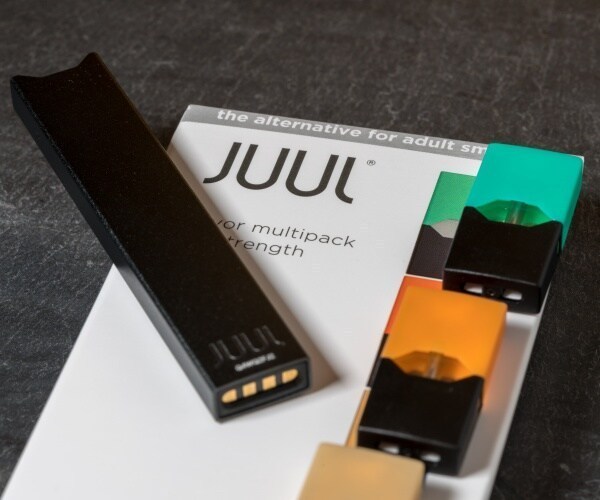
US e-cigarette brand JUUL Labs is seeking FDA authorization to sell its new mint-flavored pods with age verification requirements.

According to a report by Newsmax on December 19th, American e-cigarette brand JUUL Labs has announced its intention to seek authorization from the US FDA to release a new mint-flavored pod that requires age verification for users.


In June 2022, JUUL's e-cigarette was temporarily banned in the United States after the Food and Drug Administration (FDA) determined that JUUL Labs failed to demonstrate the suitability of its product sales for public health. However, following JUUL Labs' appeal, the FDA suspended the ban and agreed to conduct additional scrutiny of JUUL's marketing application.


The newly introduced mint-flavored pod from the company contains a nicotine concentration of 18mg/ml. This is part of JUUL Labs' latest Pre-Market Tobacco Product Application (PMTA) submitted to the FDA.


JUUL Labs, a prominent e-cigarette company, has recently filed an application in the United States with the aim of introducing a new e-cigarette equipped with a distinctive pod. The purpose behind this innovative pod design is two-fold: to enhance anti-counterfeiting measures and to restrict usage among minors. The e-cigarette, known as the JUUL2 system, was successfully launched in the British market earlier this year in 2021.


The new mint-flavored e-cigarette pod comes with a safety microchip that requires age verification before use. The device can be locked by users at any time to prevent unauthorized usage. In order to minimize risks from underage access, JUUL Labs has announced that they will restrict the number of mint-flavored pods that can be purchased, activated, and used by each age-verified user.


However, up until now, the FDA has only authorized the sale of 23 e-cigarette products in the United States, and all of them are tobacco-flavored. The FDA has rejected applications for mint-flavored e-cigarettes from several well-known manufacturers, including British American Tobacco, and these companies are currently appealing these decisions.


We welcome news tips, article submissions, interview requests, or comments on this piece.

Please contact us at info@2firsts.com, or reach out to Alan Zhao, CEO of 2Firsts, on LinkedIn


Notice

1.  This article is intended solely for professional research purposes related to industry, technology, and policy. Any references to brands or products are made purely for objective description and do not constitute any form of endorsement, recommendation, or promotion by 2Firsts.

2.  The use of nicotine-containing products — including, but not limited to, cigarettes, e-cigarettes, nicotine pouchand heated tobacco products — carries significant health risks. Users are responsible for complying with all applicable laws and regulations in their respective jurisdictions.

3.  This article is not intended to serve as the basis for any investment decisions or financial advice. 2Firsts assumes no direct or indirect liability for any inaccuracies or errors in the content.

4.  Access to this article is strictly prohibited for individuals below the legal age in their jurisdiction.


Copyright


This article is either an original work created by 2Firsts or a reproduction from third-party sources with proper attribution. All copyrights and usage rights belong to 2Firsts or the original content provider. Unauthorized reproduction, distribution, or any other form of unauthorized use by any individual or organization is strictly prohibited. Violators will be held legally accountable.

For copyright-related inquiries, please contact: info@2firsts.com


AI Assistance Disclaimer


This article may have been enhanced using AI tools to improve translation and editorial efficiency. However, due to technical limitations, inaccuracies may occur. Readers are encouraged to refer to the cited sources for the most accurate information.

We welcome any corrections or feedback. Please contact us at: info@2firsts.com

PMI Highlights 43 Million Smoke-Free Users at Stockholm Summit
Philip Morris International says about 43 million adults worldwide now use its smoke-free products, with nearly 70% having stopped using cigarettes and smoke-free products accounting for about 43% of its net revenues.
Jun.18
Nicotine Pouches Gain Ground in U.S. Convenience Stores as Vape Unit Sales Fall 14%
According to convenience retail publication CStore Decisions, U.S. convenience store tobacco categories are undergoing a structural shift. Based on Circana OmniMarket Total U.S. Convenience data for the 52 weeks ending June 14, 2026, cigarettes remained the largest category with $50.8 billion in sales, but unit sales declined 5.3%. Electronic smoking devices and vaping products also declined, while modern oral nicotine products continued to grow, with nicotine pouch sales rising 29% in dollars and 17% in units. Retailers said changing consumer preferences are reshaping tobacco product assortments at convenience stores.
Regulations
Aug.07
Germany Expands Take-Back Rules for Disposable Vapes From July 1
Germany has expanded take-back obligations for disposable vapes from July 1, 2026, requiring consumers to be able to return used devices at stores that sell such products, including kiosks, petrol stations and vape shops, as e-cigarette regulation extends from sales to waste management and lithium-battery safety.
Market
Jul.06 by 2Firsts Perspectives
Special Report | Russia, Ukraine and Belarus Launch Fresh Push to Rein in Vaping
Russia, Ukraine and Belarus are tightening vape regulation through different tools, from Ukraine’s stronger enforcement push and Belarus’s proposed advertising restrictions to Russia’s new GOST standard and regional sales-ban mechanism. As black-market concerns persist, some Russian experts argue that China’s tightly controlled but legalised model — built around licensing, traceability and taxation — may offer a more effective alternative to blanket prohibition.
Jul.15
Virginia Tightens Vape and Tobacco Retail Enforcement, With Fines Up to $15,000 Per Unlisted Product
A new Virginia law that took effect on July 1, 2026, requires retailers to obtain permits to sell liquid nicotine, vape and tobacco products, while directing Virginia ABC to conduct inspections and verify that stores sell only products listed in the state directory.
Jul.20
CCPIT Says Trade Friction Index for China-Related Electronics Sector Remains High, With Vape Products Among Areas of Focus
China Council for the Promotion of International Trade (CCPIT) held its July regular press conference on July 31, 2026, releasing the May 2026 Global Economic and Trade Friction Index. CCPIT spokesperson Yang Fan said the global trade friction index stood at 95 in May, remaining at a medium-to-high level. By industry, the electronics sector recorded the highest trade friction index among 13 monitored industries. In China-related trade frictions, the index stood at 93, with electronics products including drones, chips and vape products among areas where friction remained elevated.
Aug.03