KT&G: Leading the Global Tobacco Market Expansion

Aug.05.2024
KT&G: Leading the Global Tobacco Market Expansion
KT&G brand director Kim Hye Sook reveals the secrets to exporting to 132 countries and the focus on global expansion.

Korea's Pioneer Economy reported on August 5th, "We spend half the year overseas. We conduct market research for product launches and visit various countries for management after the release. This is the secret to being able to export products to 132 countries around the world.


Jin Huixiu, 50, is the head of the KT&G brand department. Having been with KT&G since 2004 and having managed brands for 20 years, she is a seasoned professional. Recently, she has been focused on expanding into international markets. Director Jin stated, "We are focused on analyzing market conditions and developing new ideas," and emphasized that "shaping the identity of each brand like Esse, Bohem, and Raison, and cultivating them into 'global mega brands' is our goal.


Representative brand is "Esse". Esse has been dominating the domestic cigarette market in South Korea for 20 years since its release on November 1, 1996. According to last year's data, the domestic HNB cigarette market share is approximately 35%. She explained, "The KT&G brand room is at the forefront of the business, responsible for developing products, ensuring market share, and overall in charge of brand development and management.


Currently, the brand department has a total of 26 employees. There are 3 teams domestically and 4 teams globally. This indicates that KT&G is focusing on developing overseas markets. She emphasized, "The Esse brand achieved sales of 496.5 billion Korean won domestically last year, while also achieving sales of 405.1 billion Korean won overseas, showing growth.


KT&G has actually launched a clove-flavored product called "Esse" in Indonesia. This product alone sold over 4.2 billion Korean won last year. Kim Soo-chang stated, "Esse is currently exported to more than 90 countries including Indonesia, Russia, and the Middle East, raising KT&G's status," and confidently added, "Especially in the ultra-slim cigarette sector, we have held the top position in global sales for the past ten years since 2014.


Recently, KT&G has been improving market accessibility through overseas factories. In 2008, they established a factory in Turkey, followed by one in Russia in 2010. In 2011, they established a production base in Indonesia through the acquisition of a local company. They are also currently constructing new factories in Indonesia and Kazakhstan. Equipment expansion is also underway in Turkey. Director Kim stated, "Operating factories locally is advantageous for distributing to neighboring countries," and added, "Tariffs, logistics, and other benefits are an added bonus.


The overseas HNB business is one of KT&G's e-cigarette, dry-type, and three core businesses proposed in its medium- to long-term vision. In fact, overseas HNB sales have been steadily increasing from 388 billion Korean won in 2021, 494 billion Korean won in 2022, to 532 billion Korean won in 2023. Kim, the CEO, stated that "KT&G's overseas HNB business is playing the role of a cash cow in terms of continuing capital expenditure (CAPEX) investment and shareholder returns," and also mentioned that "accordingly, the brand department will also spare no effort in expanding the overseas market.


We welcome news tips, article submissions, interview requests, or comments on this piece.

Please contact us at info@2firsts.com, or reach out to Alan Zhao, CEO of 2Firsts, on LinkedIn


Notice

1.  This article is intended solely for professional research purposes related to industry, technology, and policy. Any references to brands or products are made purely for objective description and do not constitute any form of endorsement, recommendation, or promotion by 2Firsts.

2.  The use of nicotine-containing products — including, but not limited to, cigarettes, e-cigarettes, nicotine pouchand heated tobacco products — carries significant health risks. Users are responsible for complying with all applicable laws and regulations in their respective jurisdictions.

3.  This article is not intended to serve as the basis for any investment decisions or financial advice. 2Firsts assumes no direct or indirect liability for any inaccuracies or errors in the content.

4.  Access to this article is strictly prohibited for individuals below the legal age in their jurisdiction.


Copyright


This article is either an original work created by 2Firsts or a reproduction from third-party sources with proper attribution. All copyrights and usage rights belong to 2Firsts or the original content provider. Unauthorized reproduction, distribution, or any other form of unauthorized use by any individual or organization is strictly prohibited. Violators will be held legally accountable.

For copyright-related inquiries, please contact: info@2firsts.com


AI Assistance Disclaimer


This article may have been enhanced using AI tools to improve translation and editorial efficiency. However, due to technical limitations, inaccuracies may occur. Readers are encouraged to refer to the cited sources for the most accurate information.

We welcome any corrections or feedback. Please contact us at: info@2firsts.com

Reuters Tracks Big Tobacco’s Shift Beyond Cigarettes as Nicotine Pouches Vie for the Next Growth Curve
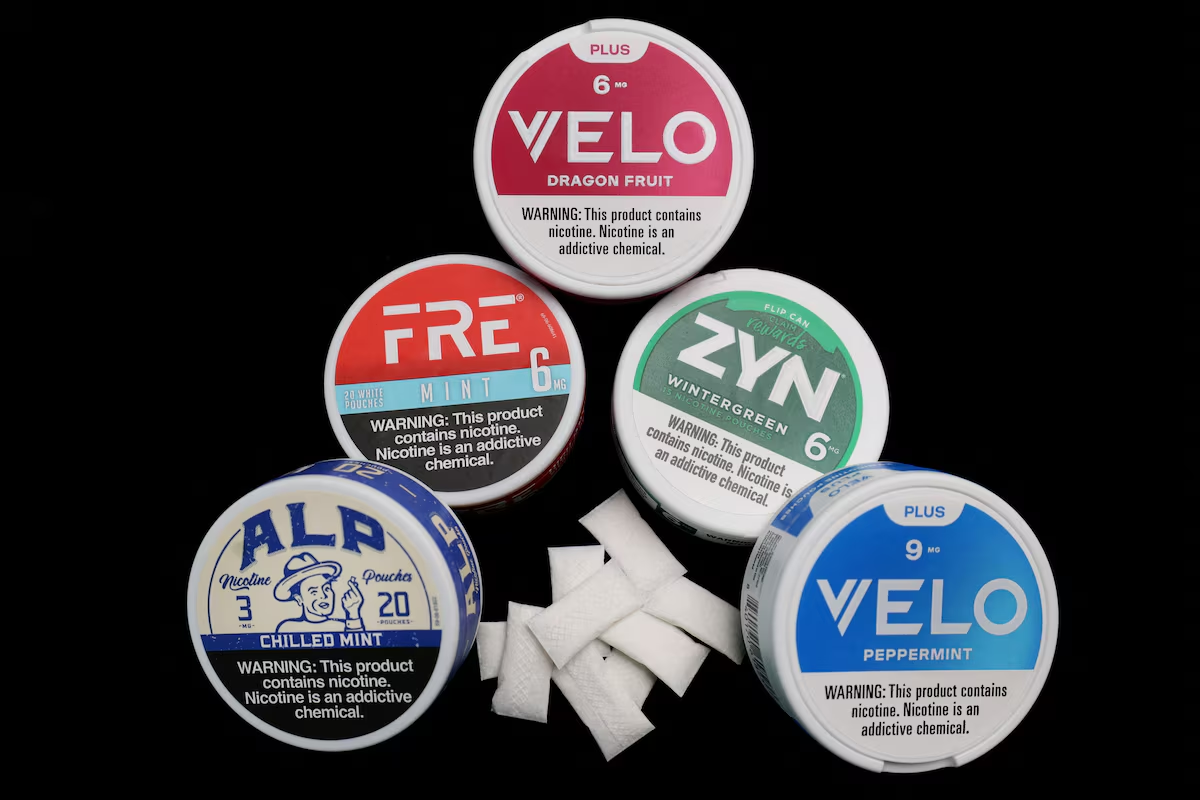
As cigarette markets face long-term pressure, major tobacco companies are increasingly turning to nicotine pouches in search of growth beyond combustible tobacco. Reuters has examined whether nicotine pouches can become the next strategic growth platform for companies including Philip Morris International, British American Tobacco and Japan Tobacco. PMI strengthened its position through the acquisition of Swedish Match and its ZYN brand, while BAT and JTI continue expanding their own nicotine pouch portfolios. The category has gained attention because of its smoke-free, device-free format, but regulation, youth-use concerns and market scale will determine whether it can become a long-term growth engine.
Regulations
Aug.18 by 2Firsts Perspectives
PMI CEO Attends Opening of IQOS Global Flagship in Tokyo’s Ginza as 1,814 Limited ILUMA i PRIME Sets Launch
IQOS opened its first global flagship, IQOS Flagship Ginza, in Tokyo on September 4, 2026, replacing the former IQOS Store Ginza after nearly a decade of operation. The new location expands conventional product retail into member lounges, digital experiences, art installations and brand programming. IQOS also launched a Ginza-exclusive IQOS ILUMA i PRIME set limited to 1,814 individually numbered units, priced at JPY11,980, or about US$77. PMI Sales Strategy Consultant Yuji M. later said on LinkedIn that more than 500 people had lined up from the night before the opening.
Sep.07
UK Vape Tax Countdown: Retailer Vape HQ Estimates 100ml E-liquid Prices Could Rise From £12.99 to £39.39, While Pod Kits Increase Less Than 10%
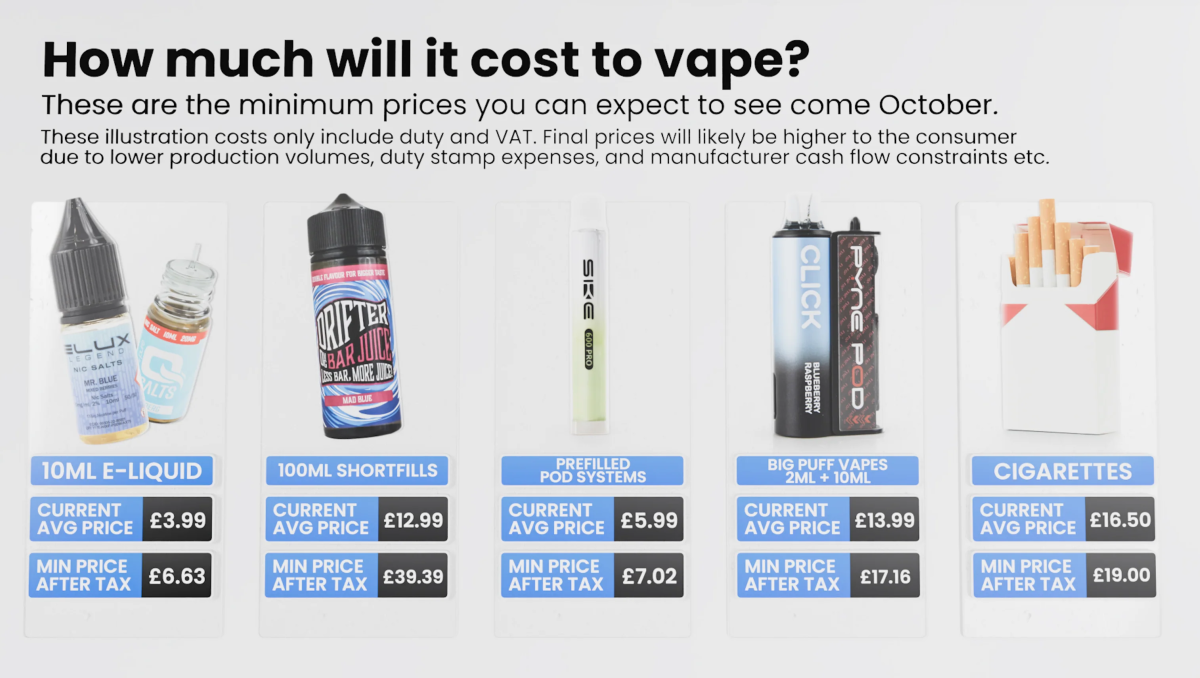
The UK’s Vaping Products Duty (VPD), scheduled to take effect in October 2026, is prompting retailers to assess how different vape categories may be affected. UK retailer Vape HQ has estimated potential price changes under the new volume-based tax system, showing that 100ml shortfill e-liquids could see prices rise from around £12.99 to £39.39, a 203% increase, while 2ml prefilled pod vape kits could rise from £5.99 to £6.52, an increase of about 9%. The estimates highlight how a volume-based tax structure creates uneven cost impacts across product categories.
Aug.19
Imperial Brands Plans Thousands of Job Cuts Across U.S. and Europe in Cost Restructuring
According to Reuters, citing Bloomberg News, British tobacco company Imperial Brands PLC plans to cut thousands of jobs across the United States and Europe as part of a cost reduction and organizational restructuring effort. The announcement drew market attention to the company’s shares. The move comes as global tobacco companies continue adjusting their operations amid slower cigarette market growth, changing consumer preferences and the transition toward next-generation nicotine products.
Aug.11
China Tobacco Hubei explores staged nicotine pouch delivery, using dynamic membranes to slow early release and gradient particles to sustain later delivery
China Tobacco Hubei Industrial Co., Ltd. disclosed several oral nicotine-related patent applications in August 2026, including two that approach staged nicotine release from different directions. One uses a high-viscosity membrane that forms inside the pouch after contact with saliva to slow rapid early release, while the other uses gradient particles with a faster-disintegrating outer layer and a slower core to create a fast-to-sustained release profile. Together, the filings explore how nicotine pouches could balance initial delivery with release later in use.
Sep.03
Russian Strikes Destroy JTI and Imperial Brands Ukraine Warehouses, With Losses Reaching Tens of Millions of Hryvnias
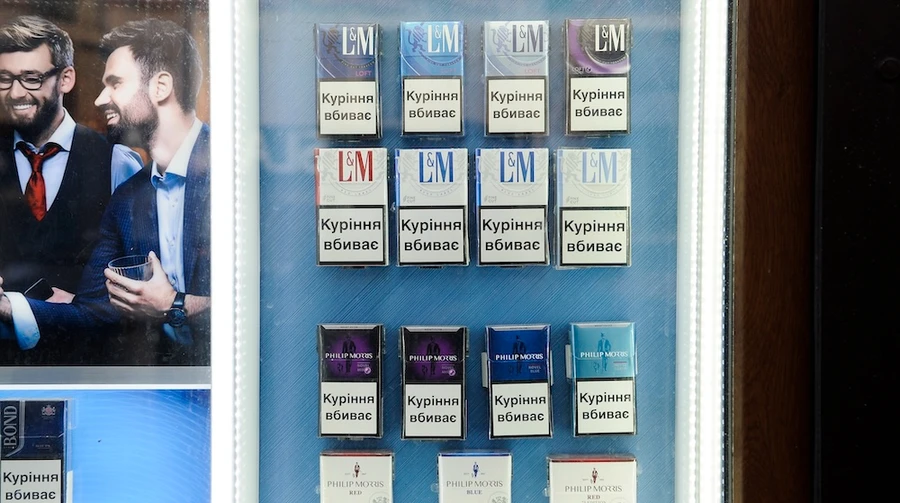
According to Ukrainska Pravda, Russian strikes on the Kyiv region during the night of Aug. 4-5, 2026, damaged warehouses storing products of Japan Tobacco International (JTI) and Imperial Brands Ukraine. JTI said a finished goods warehouse in Kyiv Oblast was destroyed, with no employees injured, and that it did not expect disruptions to retail supplies. Imperial Brands Ukraine said products stored at warehouses of distributors and retail partners were affected and estimated losses from the strikes at “tens of millions of Ukrainian hryvnias” (roughly hundreds of thousands of U.S. dollars).
JTI
Aug.07