Kyrgyzstan President Signs Revised Free Economic Zone Law

Feb.08.2025
Kyrgyzstan President Signs Revised Free Economic Zone Law
Kyrgyzstan President Sadyr Japarov signs law revising Free Economic Zone Law to support businesses and fair competition, resolving legal contradictions.

According to The Economist's report on January 12th, President Sadyr Japarov of Kyrgyzstan has signed a law amending the country's Free Economic Zones Act, which was previously passed by the Kyrgyzstan parliament. The new law aims to support entrepreneurs within the free economic zones, create conditions for fair competition, and address legal conflicts arising from changes in tax laws.


This new law clearly stipulates the types of activities allowed for entities within the free economic zone. With few exceptions, the production and sale of taxable goods are prohibited.


Exceptions permitted include: Free Economic Zone companies registered before the year 2000 can produce and sell tobacco products (HS code 2402), which are subject to consumption tax and value-added tax when entering other regions of Kyrgyzstan; products containing nicotine, including disposable e-cigarettes and similar devices (HS codes 2404 and 8543 40 000 0), but their sale must be restricted to outside of Kyrgyzstan; mineral water and carbonated drinks with added sugar, fruit flavors, or other sweeteners (HS code 2202), which also require payment of consumption tax and value-added tax when sold outside of the Free Economic Zone.


We welcome news tips, article submissions, interview requests, or comments on this piece.

Please contact us at info@2firsts.com, or reach out to Alan Zhao, CEO of 2Firsts, on LinkedIn


Notice

1.  This article is intended solely for professional research purposes related to industry, technology, and policy. Any references to brands or products are made purely for objective description and do not constitute any form of endorsement, recommendation, or promotion by 2Firsts.

2.  The use of nicotine-containing products — including, but not limited to, cigarettes, e-cigarettes, nicotine pouchand heated tobacco products — carries significant health risks. Users are responsible for complying with all applicable laws and regulations in their respective jurisdictions.

3.  This article is not intended to serve as the basis for any investment decisions or financial advice. 2Firsts assumes no direct or indirect liability for any inaccuracies or errors in the content.

4.  Access to this article is strictly prohibited for individuals below the legal age in their jurisdiction.


Copyright


This article is either an original work created by 2Firsts or a reproduction from third-party sources with proper attribution. All copyrights and usage rights belong to 2Firsts or the original content provider. Unauthorized reproduction, distribution, or any other form of unauthorized use by any individual or organization is strictly prohibited. Violators will be held legally accountable.

For copyright-related inquiries, please contact: info@2firsts.com


AI Assistance Disclaimer


This article may have been enhanced using AI tools to improve translation and editorial efficiency. However, due to technical limitations, inaccuracies may occur. Readers are encouraged to refer to the cited sources for the most accurate information.

We welcome any corrections or feedback. Please contact us at: info@2firsts.com

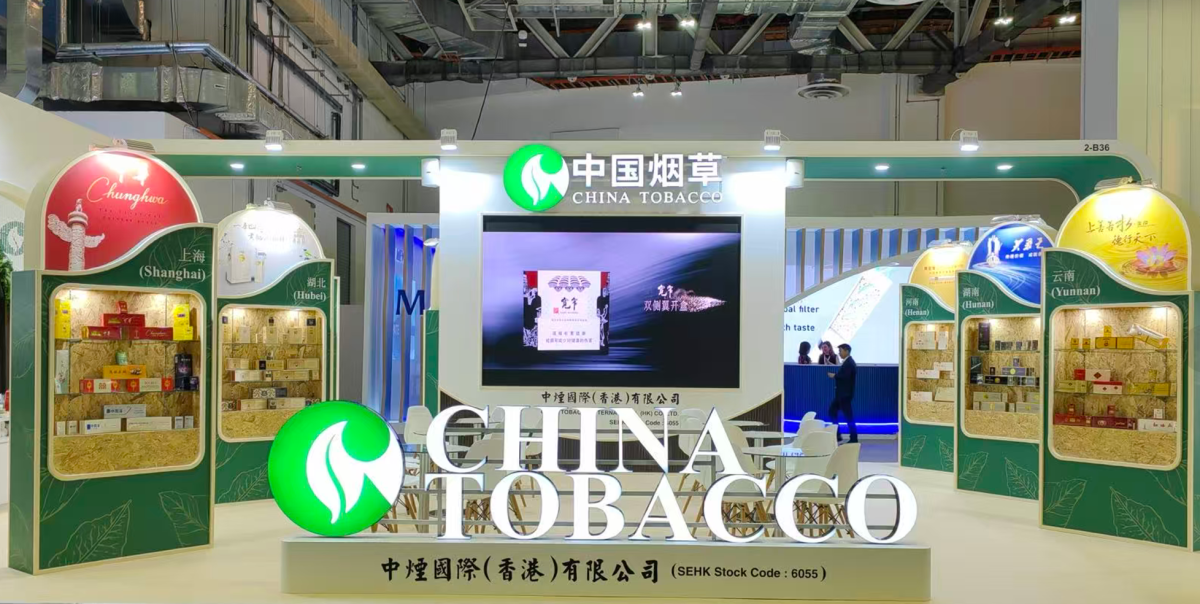
Earnings Analysis | CTIHK H1 2026 Revenue Falls 26.9% as Core Businesses Diverge and New Growth Drivers Remain to Be Proven
China Tobacco International (HK) reported a 26.9% revenue decline in H1 2026, while gross profit fell only 9.5%, revealing sharp divergence across its businesses. Tobacco leaf imports contracted, while leaf exports and Brazil operations expanded strongly. Cigarette exports faced China duty-free market transition, and new tobacco products remained small. Meanwhile, CTIHK continues to strengthen its role as an investment and financing platform, though major external deals have yet to emerge. 2Firsts examines what these shifts mean for its next growth drivers.
Capital Markets
Aug.24
Smoore Wins Three Heated Device Supply Lots in China Tobacco Jiangsu’s Overseas Market Project Covering Japan, South Korea and Southeast Asia
China Tobacco Jiangsu Industrial Co., Ltd. (JSIC) has completed its 2026-2028 heated device procurement project, with Shenzhen Smoore Technology Limited securing final supply contracts for three lots: U1, C1 and C2. The project was launched through a public tender in June 2026 to support overseas markets and involved heated tobacco devices carrying JSIC’s “iRod” trademark. Candidate supplier results published on July 13 showed Smoore ranked first for the three awarded lots, while Shenzhen Yunxi Intelligent Technology Co., Ltd. and Shenzhen Bodi Technology Development Co., Ltd. participated in the bidding process.
Aug.03
Philip Morris Romania Executive on Smoke-Free Strategy: How IQOS Spaces Are Moving Beyond Retail to Consumer Connection
In an interview with Romanian marketing publication IQads, Marek Gębski, Director of Smoke-Free Products at Philip Morris Romania, said IQOS experience spaces are evolving from traditional retail locations into platforms for consumer engagement and brand connection. Through locations such as IQOS Boutique Victoriei, PMI aims to use design, culture and consumer experiences to strengthen communication with adult consumers about smoke-free products. The interview highlights how tobacco companies are expanding smoke-free strategies beyond products toward experiential marketing and consumer relationships.
Aug.11
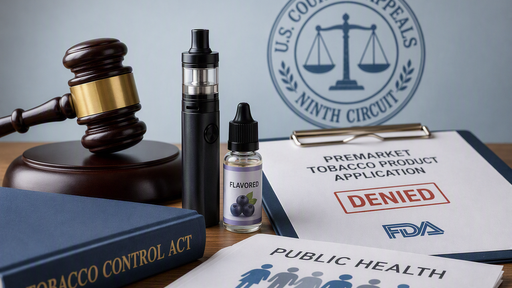
U.S. Ninth Circuit Upholds FDA Denial of MH Global’s Flavored Vape PMTA Applications
The U.S. Court of Appeals for the Ninth Circuit upheld the FDA’s denial of MH Global LLC’s applications to market flavored electronic nicotine delivery systems (ENDS). The court ruled that FDA’s comparative-efficacy framework, which requires applicants to show that flavored products provide greater cessation or switching benefits than tobacco-flavored alternatives, is consistent with the Tobacco Control Act’s “appropriate for the protection of the public health” standard. The court also found that FDA was not required to establish the framework through notice-and-comment rulemaking.
Aug.26
UK Reform Party Proposes Cap of 1,000 Vape Shops Under Plan to Tighten Retail Controls
The UK Reform Party has proposed limiting the number of dedicated vape shops in the country to around 1,000 as part of a plan to tighten oversight of vape retail channels. The proposal was put forward by Reform UK deputy leader and MP Lee Anderson. The plan remains a political proposal and has not become UK government policy, with no detailed legislation, implementation timeline or allocation rules announced.
Aug.10
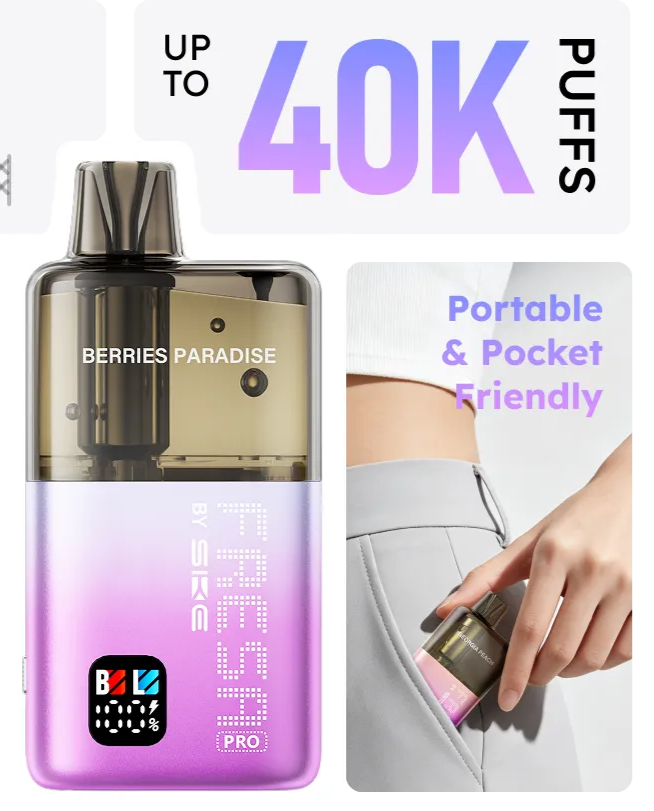
Product | SKE Launches FRESA PRO in the U.S., Introducing Fresh Lock Technology for E-Liquid Management in High-Capacity Vapes
Shenzhen SKE Technology has launched the FRESA PRO in the United States, a high-capacity rechargeable disposable vape featuring Fresh Lock electromagnetic valve supply control technology. The device combines a claimed capacity of up to 40,000 puffs, dual mesh coils, dual output modes and a transparent tank design. The launch reflects the high-capacity disposable vape segment’s shift from puff-count competition toward improved e-liquid management and device-level experience.
Aug.03