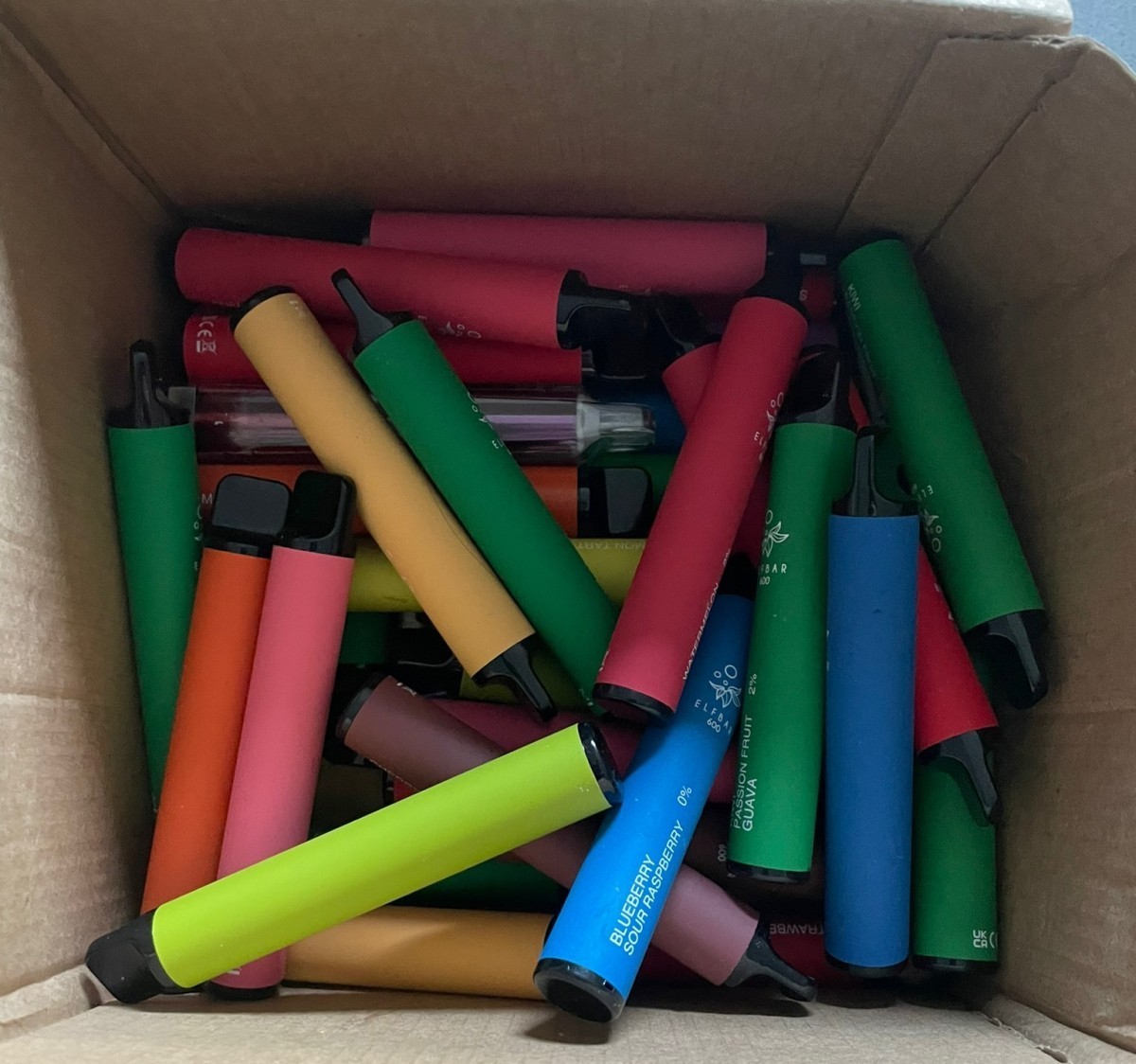
According to Letsrecycle, the UK Vaping Industry Association (UKVIA) released details of a survey this week which extensively investigated the equipment and usage of e-cigarette disposal facilities in the UK. The survey revealed that, despite growing environmental pressures on the e-cigarette industry, there is a lack of disposal facilities for e-cigarettes in public places.
In the investigation, the association has issued Freedom of Information requests to 10 major provincial cities including Birmingham, Manchester, Cardiff, Glasgow, and Westminster, as well as 10 central London borough councils.
According to the results, only 60% of responding organizations stated that they provide disposal services for e-cigarette waste at public convenience facilities or designated collection sites, while only 10% of organizations have set up e-cigarette waste recycling bins in public places. Approximately one-third of organizations even gave negative responses, claiming that they do not provide any form of e-cigarette waste disposal containers or drop-off points.
The investigation also revealed that so far, only one municipal government has implemented curbside or household e-cigarette collection services. 80% of municipal governments have not included investment in new e-cigarette collection solutions in next year's budget - even before hearing the news of disposable e-cigarettes being banned.
In response, John Dunne, Secretary General of the UK E-cigarette Industry Association, said:
Advocating for the ban of disposable e-cigarettes in the name of environmental protection, without investing in the construction of e-cigarette waste collection facilities, especially when the demand for such facilities in public places - which are controlled by local governments - is so urgent, is simply contradictory. Even after disposable e-cigarettes are no longer sold at retail outlets, millions of rechargeable and refillable e-cigarettes are still sold every year, not to mention the growth of black market products resulting from the ban on disposable e-cigarettes. Therefore, the lack of investment in collection facilities and the lack of foresight in establishing centralized e-cigarette waste disposal facilities is shocking and raises great concerns.
Four days ago, the government proposed raising the collection level of WEEE (Waste Electrical and Electronic Equipment), including consultation on implementing a separate category for e-cigarettes. The deadline for submitting opinions has just passed, and the survey results have been released, sparking high public interest.
The association also stated that it recognizes the need for the industry to demonstrate the highest level of environmental responsibility, but also insisted that local governments play a crucial role in providing necessary facilities for public spaces.
Dunne stated:
The British E-Cigarette Industry Association has also been involved in a newly submitted e-cigarette licensing proposal to lawmakers. If the proposal is adopted, retailers will be required to provide recycling facilities in their stores before being allowed to sell e-cigarettes.
We welcome news tips, article submissions, interview requests, or comments on this piece.
Please contact us at info@2firsts.com, or reach out to Alan Zhao, CEO of 2Firsts, on LinkedIn
Notice
1. This article is intended solely for professional research purposes related to industry, technology, and policy. Any references to brands or products are made purely for objective description and do not constitute any form of endorsement, recommendation, or promotion by 2Firsts.
2. The use of nicotine-containing products — including, but not limited to, cigarettes, e-cigarettes, nicotine pouchand heated tobacco products — carries significant health risks. Users are responsible for complying with all applicable laws and regulations in their respective jurisdictions.
3. This article is not intended to serve as the basis for any investment decisions or financial advice. 2Firsts assumes no direct or indirect liability for any inaccuracies or errors in the content.
4. Access to this article is strictly prohibited for individuals below the legal age in their jurisdiction.
Copyright
This article is either an original work created by 2Firsts or a reproduction from third-party sources with proper attribution. All copyrights and usage rights belong to 2Firsts or the original content provider. Unauthorized reproduction, distribution, or any other form of unauthorized use by any individual or organization is strictly prohibited. Violators will be held legally accountable.
For copyright-related inquiries, please contact: info@2firsts.com
AI Assistance Disclaimer
This article may have been enhanced using AI tools to improve translation and editorial efficiency. However, due to technical limitations, inaccuracies may occur. Readers are encouraged to refer to the cited sources for the most accurate information.
We welcome any corrections or feedback. Please contact us at: info@2firsts.com