Millions Worth of Smuggled Goods Seized in Argentina

Regulations by 2FIRSTS.ai
Jul.17.2024
Millions Worth of Smuggled Goods Seized in Argentina
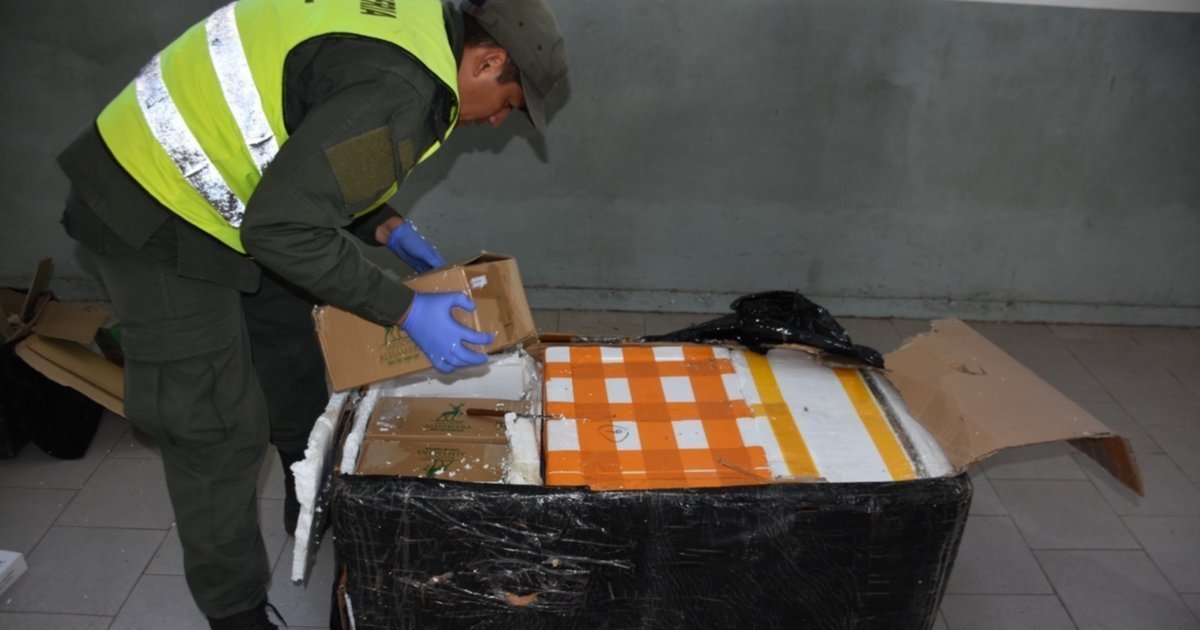
Argentinian police seized $7.6k worth of smuggled goods in Corrientes, including cigarettes, e-cigarettes, phones, perfumes, and cookware.

According to ELLITORAL, on July 16, smuggled goods worth 70 million Argentine pesos (approximately $76,000 USD) were seized by local police in the province of Corrientes, Argentina.


According to a court order, local police conducted inspections of 23 suspicious packages involved in smuggling. Law enforcement officers found a large quantity of prohibited items in the packages, including 7,500 packs of foreign cigarettes, 3,556 e-cigarettes, 90 cell phone modules, 156 bottles of perfume, 1 fryer, and 2 headphones. These items are all of foreign origin and did not have the necessary customs guarantees, industry basics, or stamp tax tickets required for legal entry into Argentina. They are suspected of violating relevant provisions of the Customs Code.


Local customs estimate that the market value of the seized smuggled goods this time reached a total of 70,356,000 Argentine pesos (approximately $76,300). At present, all confiscated contraband has been legally detained, and the related cases are under further investigation.


We welcome news tips, article submissions, interview requests, or comments on this piece.

Please contact us at info@2firsts.com, or reach out to Alan Zhao, CEO of 2Firsts, on LinkedIn


Notice

1.  This article is intended solely for professional research purposes related to industry, technology, and policy. Any references to brands or products are made purely for objective description and do not constitute any form of endorsement, recommendation, or promotion by 2Firsts.

2.  The use of nicotine-containing products — including, but not limited to, cigarettes, e-cigarettes, nicotine pouchand heated tobacco products — carries significant health risks. Users are responsible for complying with all applicable laws and regulations in their respective jurisdictions.

3.  This article is not intended to serve as the basis for any investment decisions or financial advice. 2Firsts assumes no direct or indirect liability for any inaccuracies or errors in the content.

4.  Access to this article is strictly prohibited for individuals below the legal age in their jurisdiction.


Copyright


This article is either an original work created by 2Firsts or a reproduction from third-party sources with proper attribution. All copyrights and usage rights belong to 2Firsts or the original content provider. Unauthorized reproduction, distribution, or any other form of unauthorized use by any individual or organization is strictly prohibited. Violators will be held legally accountable.

For copyright-related inquiries, please contact: info@2firsts.com


AI Assistance Disclaimer


This article may have been enhanced using AI tools to improve translation and editorial efficiency. However, due to technical limitations, inaccuracies may occur. Readers are encouraged to refer to the cited sources for the most accurate information.

We welcome any corrections or feedback. Please contact us at: info@2firsts.com

Vape Vending Machine Concerns Rise in German-Speaking Europe as Schools and Age Checks Come Into Focus
Recent reports from Germany and Switzerland show growing concern over vape and tobacco vending machines near schools or in public settings, with parents, teachers and residents questioning youth access, age-verification controls and the sale of vapes alongside snacks and drinks.
Jul.06
Japan Health Ministry Cites Limited Evidence in Decision Not to Tighten Heated Tobacco Rules
Japan’s health ministry has proposed not tightening regulations on heated tobacco products to the same level as cigarettes as part of a review of passive smoking measures, with an expert panel broadly agreeing with the proposal, Jiji Press reported.
Jul.10
From Heating Blades to Heating Paper? CTHB Patent Points to Microwave Heated Tobacco Design
According to China’s patent office records, a patent owned by China Tobacco Hubei Industrial Corporation (CTHB) for “cigarette paper and a cigarette for microwave heating” was granted on May 19, 2026. The patent describes cigarette paper with an outer wrapping layer, a heating layer, and an isolation heat-conducting layer, allowing it to absorb microwave energy, convert it to heat, and transfer that heat to the aerosol-generating substrate.
Jun.10
PMI Highlights 43 Million Smoke-Free Users at Stockholm Summit
Philip Morris International says about 43 million adults worldwide now use its smoke-free products, with nearly 70% having stopped using cigarettes and smoke-free products accounting for about 43% of its net revenues.
Jun.18
Special Report|U.S.-Facing Retailer Lists RELX Creator Pro 15K: A Chinese Brand Signal Under FDA’s Lower-Priority Enforcement Window
Vapesourcing has listed RELX Creator Pro 15K as “Coming Soon” with U.S. warehouse shipping options; while the page does not show that RELX has entered the U.S. market through official channels or that the product has received FDA authorization, the listing suggests that Chinese brand-led ENDS products are becoming a new point of observation as the U.S. market reassesses regulatory risk following the FDA’s updated enforcement-priority policy.
Industry Insight
Jun.11
Special Report | Russian Vape Compromise Faces First Hurdles
Russia’s regional vape-ban model is facing early legal and political tests, as Perm Krai moves ahead before federal legislation is fully adopted. The case highlights uncertainty over regional authority, concerns from business groups about market fragmentation, and the risk that pressure against regional bans could revive calls for a stricter nationwide prohibition.
Industry Insight
May.28