New Law on Nicotine Products and Smoking Restrictions in Donetsk

Oct.14.2024
New Law on Nicotine Products and Smoking Restrictions in Donetsk
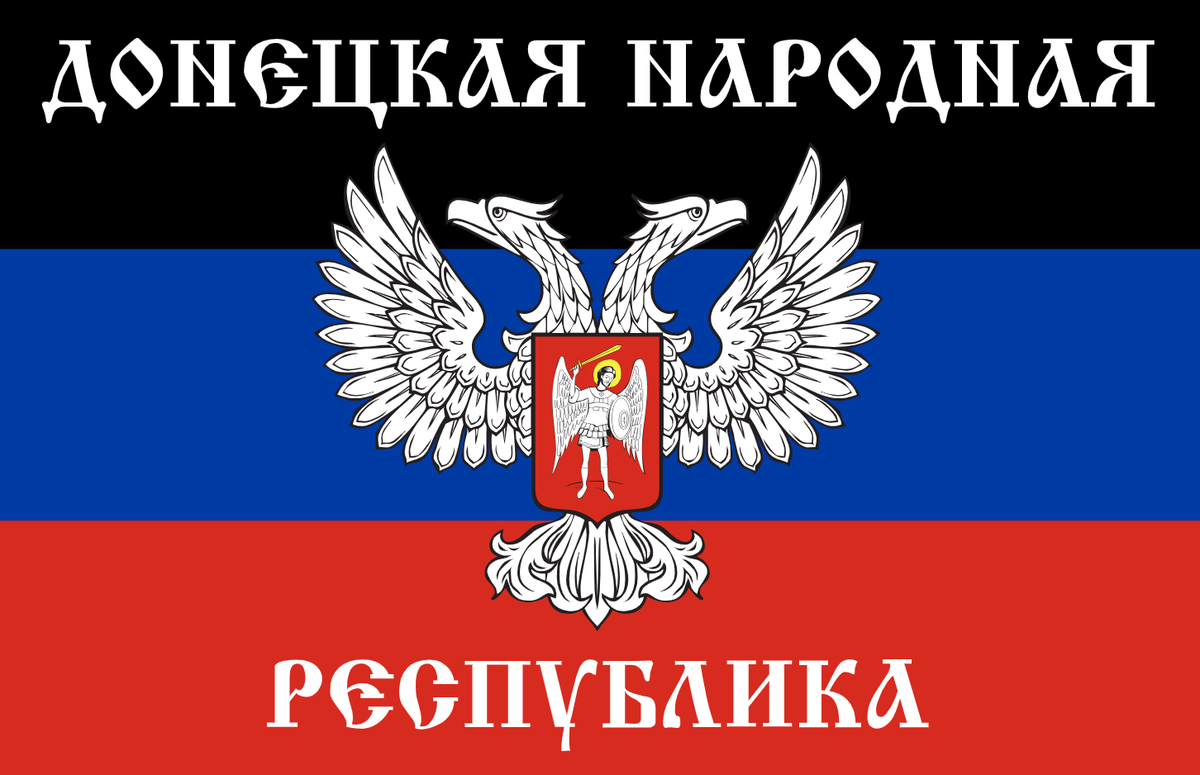
Donetsk People's Republic imposes new restrictions on e-cigarettes and smoking in public places, effective from October 9, 2024.

According to the official website of the Donetsk People's Republic, the country has issued a decree called "On Additional Restrictions on the Use of Nicotine e-cigarettes and Smoking in Certain Public Places and Premises within the Territory of the Donetsk People's Republic." The law was officially passed by the People's Council on September 27, 2024, and signed by the head of the Donetsk People's Republic, Denis Pushilin. It will officially take effect on October 9, 2024.


The regulation stipulates that the use of nicotine products and waterpipes is prohibited in certain public places and buildings. These places include outdoor areas within 15 meters of the entrance to government offices and local administrative offices, as well as near the entrances of places offering daily living services and commercial services, such as markets, hotels, social service agencies, and public transport platforms. Additionally, entrance areas and adjacent areas of residential building corridors, non-residential building courtyards, underground and aboveground parking lots, parks, squares, and other recreational areas are also included in the ban.


Individuals who violate this law will be subject to administrative penalties stipulated in the Donetsk People's Republic Law on Administrative Violations No. 91-RZ, which was passed on July 12, 2024.


The Donetsk People's Republic was established as a limited recognized state on Ukrainian territory by pro-Russian quasi-militants with support from Russia at the outbreak of the Ukrainian crisis. Pro-Russian armed groups in Donetsk Oblast occupied the regional administration building on April 7, 2014, and declared the republic, which has only been formally recognized by the Russian Federation, the Syrian Arab Republic, the Democratic People's Republic of Korea, the Republic of South Ossetia, and the Luhansk People's Republic in terms of diplomacy. The United Nations and the international community recognize it as part of Ukraine based on UN General Assembly Resolution 68/262.


We welcome news tips, article submissions, interview requests, or comments on this piece.

Please contact us at info@2firsts.com, or reach out to Alan Zhao, CEO of 2Firsts, on LinkedIn


Notice

1.  This article is intended solely for professional research purposes related to industry, technology, and policy. Any references to brands or products are made purely for objective description and do not constitute any form of endorsement, recommendation, or promotion by 2Firsts.

2.  The use of nicotine-containing products — including, but not limited to, cigarettes, e-cigarettes, nicotine pouchand heated tobacco products — carries significant health risks. Users are responsible for complying with all applicable laws and regulations in their respective jurisdictions.

3.  This article is not intended to serve as the basis for any investment decisions or financial advice. 2Firsts assumes no direct or indirect liability for any inaccuracies or errors in the content.

4.  Access to this article is strictly prohibited for individuals below the legal age in their jurisdiction.


Copyright


This article is either an original work created by 2Firsts or a reproduction from third-party sources with proper attribution. All copyrights and usage rights belong to 2Firsts or the original content provider. Unauthorized reproduction, distribution, or any other form of unauthorized use by any individual or organization is strictly prohibited. Violators will be held legally accountable.

For copyright-related inquiries, please contact: info@2firsts.com


AI Assistance Disclaimer


This article may have been enhanced using AI tools to improve translation and editorial efficiency. However, due to technical limitations, inaccuracies may occur. Readers are encouraged to refer to the cited sources for the most accurate information.

We welcome any corrections or feedback. Please contact us at: info@2firsts.com

VCU Tests Nearly 1,300 School-Confiscated Vapes, Finding Mislabeling, Mixed Cannabinoids and Contamination
New research from Virginia Commonwealth University (VCU) found microbial contamination — including coliform, a bacteria indicating fecal exposure — in some vaping devices confiscated from U.S. schools. However, researchers stressed that newly purchased, unopened vapes showed no such contamination. The findings point to risks linked to unregulated products and improper storage conditions, reinforcing the importance of regulated supply chains and product authentication.
News
Dec.01
South Korea’s National Assembly Passes Law Classifying E-Cigarettes as Tobacco Products with Full Equivalent Regulation
South Korea’s National Assembly recently passed a comprehensive package of 79 bills that, among other measures, formally classifies liquid vapes — e-cigarette products using nicotine-containing e-liquids — as tobacco products. These products will now be subject to the same taxation, sales restrictions and advertising controls as traditional cigarettes, and the vaping industry in South Korea is expected to face significant adjustments in compliance costs, market access and business strategy.
Dec.03
Singapore’s Underground Vape Chain Revealed:How Dispatchers, Telegram Groups, and Small “Online Shops” Form an Operating Model
A vape-related case reported by The Straits Times illustrates the typical operating methods of Singapore’s underground vape trade, including Telegram-based “online shops,” centrally coordinated scheduling, and small-volume, fragmented deliveries. The case highlights the segmented and concealed nature of the country’s black-market vape network. Drawing on the report, 2Firsts uses this case as a sample to map out the structure and operational patterns of Singapore’s underground vape chain.
Dec.02 by 2FIRSTS.ai
Poland Plans Total Prohibition of Single-Use Vapes to Protect Youth
Poland’s Ministry of Health has proposed legislation to ban all disposable e-cigarettes — both with and without nicotine — under a new amendment to tobacco product laws. The government aims to protect youth from nicotine addiction while reducing public health and environmental harm. Medical professionals largely support the move but call for balanced harm-reduction strategies.
Nov.25 by 2FIRSTS.ai
ZYN Rolls Out “X-Low” Campaign in the UK to Target Low-Strength Nicotine Pouch Market
Philip Morris International’s (PMI) nicotine pouch brand ZYN has launched an “X-Low” low-strength campaign in the UK, accelerating its push into the ultra-low nicotine pouch segment, with updated packaging and new flavours already rolled out in both the UK and the Philippines.
Dec.09 by 2FIRSTS.ai
Canada’s B.C. Passes First Vaping Cost-Recovery Framework, Allowing Government to Sue Manufacturers Over Health Expenses
According to the Nelson Star, British Columbia has passed the Vaping Product Damages and Health Care Costs Recovery Act by a 49–42 vote. The legislation enables the provincial government to seek recovery of future public health costs from vape manufacturers, following models used in opioid and tobacco litigation.
Dec.03