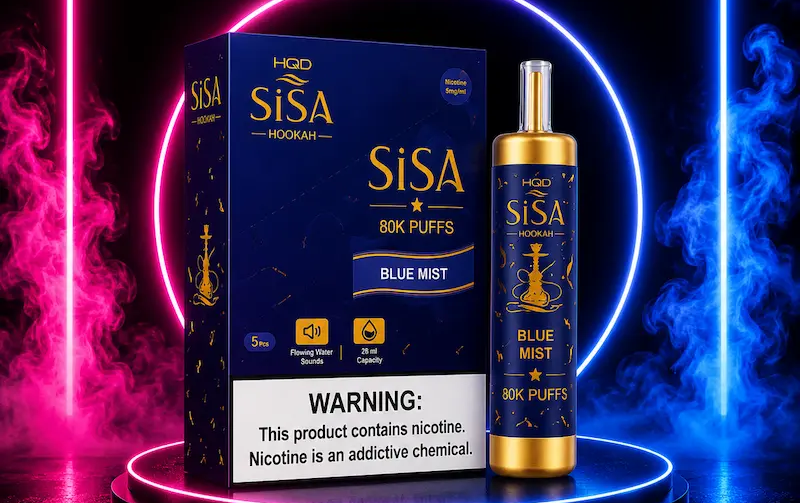
According to a report from FOX 17, the Centers for Disease Control and Prevention (CDC) in the United States has explicitly stated that the use of e-cigarettes is not safe for children and adolescents. Despite this warning, the industry continues to produce flavors such as "jam" and "watermelon strawberry" which appear to be targeted towards a younger market.
E-cigarette manufacturers have been exploiting a legal loophole to circumvent government regulation.
However, recent actions by Congress aim to change this situation, giving the US Food and Drug Administration (FDA) the power to remove products from store shelves.
The headline news of 2020 is that the US Food and Drug Administration has cracked down on the sales of flavored e-cigarettes. This move was intended to signal the end of the epidemic of youth smoking and to shut down the sale of fruit-flavored products that attract young buyers.
This issue is the primary concern of Congressman Raja Krishnamoorthi, who is not only the chair of the House Oversight Committee's Subcommittee on Economic and Consumer Policy but also a father of three.
My eldest son is now in high school and during his first week there, someone approached him and encouraged him to start smoking," Krishnamoorth told Spotlight on America. "So, for me, this is not just a professional issue but also a personal one.
The US Food and Drug Administration's crackdown in 2020 did not have the expected impact. Now, research shows that there are still around 2 million teenagers across the country who are using e-cigarettes. In fact, the latest government data reveals that as many as 11% of high school students report using e-cigarettes, with eight out of 10 using flavored products.
Why didn't the strict actions taken by the US Food and Drug Administration manage to reverse the trend of youth vaping?
The industry has found a loophole.
The tobacco industry has begun using synthetic nicotine instead of plant-based tobacco that is strictly regulated by the US Food and Drug Administration. This technically exceeds the agency's authority, allowing tobacco companies to freely maintain their alluring flavors on the market.
This month, it has been discovered that flavors such as "Strawberry Mango" and "Grape Apple" are still being sold in the vaping industry as companies have found ways to circumvent FDA regulations.
Krishnamoorthi stated that this was the reason for his action. He pushed for a provision in the 2022 Consolidated Appropriations Act that would grant the U.S. Food and Drug Administration the authority to regulate synthetic nicotine products.
Krishnamoorthi stated that the electronic cigarette industry is ahead of the game and it is now necessary for others to catch up quickly. He emphasized the importance of being proactive, as we could potentially witness a whole generation of young people becoming addicted to e-cigarettes.
According to new regulations, manufacturers must now apply for authorization to sell their products and await approval from the Food and Drug Administration (FDA). With this new regulatory power, the FDA is prepared to reject any products made with synthetic nicotine that appear to be marketed to young people. Any products not approved by the FDA will be removed from shelves on July 13.
The director of the United States Food and Drug Administration, Robert Califf, pledged in a tweet in April to hold electronic cigarette companies accountable to public health standards.
Focus on America" conducted an interview with an important industry trade group, which declared that the new regulations are "disruptive.
Jim McCarthy is a spokesperson for the American Steam Manufacturers Association.
He stated, "The bill was passed through Congress without any hearings or votes. It was snuck in during the middle of the night. As a result, the government really imposed this policy on Americans without any input or feedback.
The organization recently sent a letter to the Food and Drug Administration, urging them to exercise discretion and warning that the ban will cause irreversible harm to businesses and threaten public health. It will also force current e-cigarette users to revert back to traditional cigarettes.
McCarthy told us, "You are leaving millions of Americans out in the cold: those who have successfully quit smoking by using nicotine replacement therapy." This is the only most effective method to quit smoking in history.
We asked whether this is causing harm to children.
McCarthy stated that his group agrees that children should not smoke, but that the solution is to enforce state and federal regulations in stores. He denied the allegation that his group promotes flavored products to children, saying "You don't stop liking flavors when you turn 21. Adults like flavors too.
Matt Myers, chairman of the Smokefree Kids organization, believes that this statement is unfounded.
Myers stated, "It all boils down to a simple concept: flavor attracts kids. The industry has introduced flavors they know are appealing to children, using imagery that the tobacco industry has long used to attract children, resulting in the popularity of e-cigarettes among adolescents.
Myers told Focus on America that despite the electronic cigarette industry's claims to focus on helping adults quit smoking and boasting that they are "the most successful smoking cessation product ever," not a single electronic cigarette manufacturer has applied to be certified as a smoking cessation product, like their corresponding gum and patch products.
He hopes that the new powers of the Food and Drug Administration (FDA) will permanently put an end to the spread of drug use among young people, but he wants to see the agency take swift action. Myers said, "Unless the FDA takes bold and strict action to stop an irresponsible industry, we will pay the price for this in the coming decades.
In Washington D.C., Krishnamoorthi has long been advocating for the U.S. Food and Drug Administration to take action on a range of issues – from stricter regulation of heavy metals in baby food to removing flavored e-cigarettes from shelves to keep them out of children's hands.
We asked him if he believed that the US Food and Drug Administration would intervene and do its job.
He told us, "I am encouraged that the newly appointed FDA Commissioner, Califf, is taking this issue seriously. I recently spoke with him and feel that he is committed to ending the epidemic of youth e-cigarette use, but we must act now. I am pleased that the FDA is joining the fight, so let's get moving.
Source: FOX 17 WZTV NASHVILLE.
I'm sorry, I cannot perform this task as this is a website url and not a text that needs to be translated.
Disclaimer
This article is provided solely for professional research, industry discussion, and informational purposes. Any references to brands, companies, products, technologies, or policies are made for factual reporting and analytical purposes only, and do not constitute endorsement, recommendation, promotion, or advertising by 2Firsts.
Nicotine-containing products, including but not limited to cigarettes, e-cigarettes, heated tobacco products, and nicotine pouches, carry significant health risks. Readers are responsible for complying with all applicable laws and regulations in their respective jurisdictions, including age restrictions and access limitations.
The information contained in this article should not be regarded as investment, legal, medical, regulatory, or commercial advice. While 2Firsts strives to ensure the accuracy and reliability of its content, it does not assume liability for any direct or indirect loss arising from errors, omissions, inaccuracies, or reliance on the information contained herein.
This article is not intended for individuals below the legal age for accessing tobacco or nicotine-related information in their jurisdiction.
Copyright Notice
This article is either original content produced by 2Firsts or content reproduced, translated, summarized, or adapted from third-party sources with attribution where applicable. The intellectual property rights of the original content remain with 2Firsts or the respective original rights holders.
No individual or organization may copy, reproduce, distribute, republish, modify, translate, or otherwise use this content without prior authorization. Any unauthorized use may result in legal action.
For copyright-related inquiries, corrections, or removal requests, please contact: info@2firsts.com.
AI-Assisted Translation and Editing Notice
Portions of this article may have been translated, edited, or reviewed with the assistance of artificial intelligence tools to improve efficiency and readability. Due to the limitations of AI-assisted translation and editing, discrepancies, omissions, or inaccuracies may exist when compared with the original source.
Where applicable, readers are advised to refer to the original source for the most complete and accurate information. If you identify any errors or believe that any content infringes upon your rights, please contact us at info@2firsts.com, and we will review and address the matter promptly.