Notice on Issuing Application Forms for Tobacco Monopoly License

Oct.14.2024
Notice on Issuing Application Forms for Tobacco Monopoly License
State Tobacco Monopoly Administration issues new tobacco monopoly license application guidelines for 2024, aiming to enhance regulatory standards.

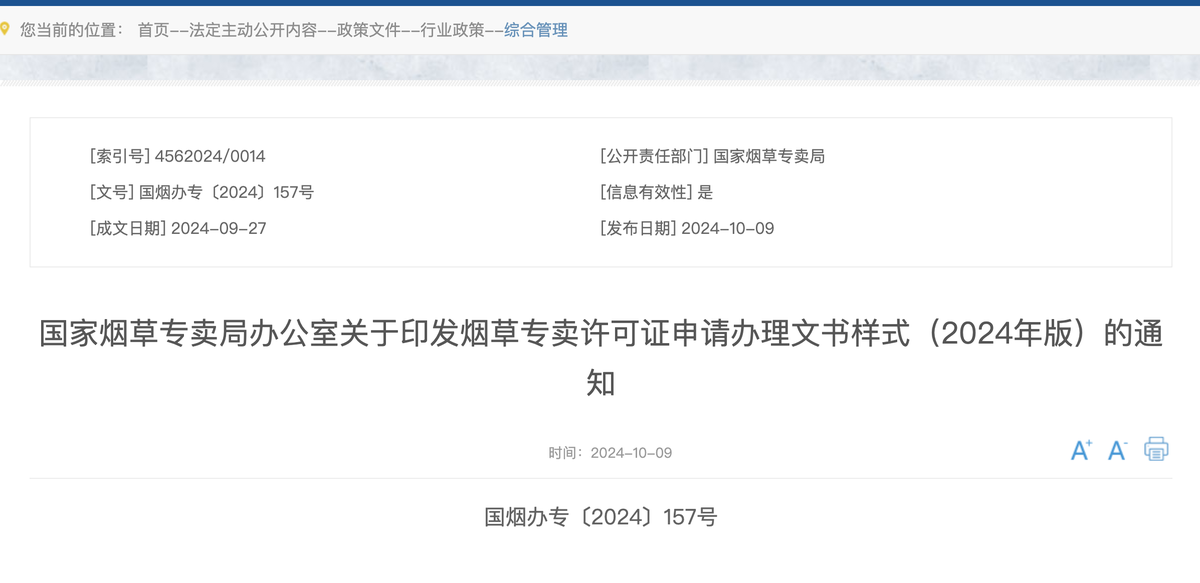
Notice from the Office of the State Tobacco Monopoly Administration on Issuing the 2024 Version of Application Document Formats for Tobacco Monopoly Licenses


Document No. 157 [2024] of the State Tobacco Monopoly Administration Office


To all provincial-level tobacco monopoly administrations:


In order to further strengthen the management of tobacco monopoly licenses and effectively improve the standardization of administrative licensing, the State Tobacco Monopoly Administration, in accordance with the Administrative Licensing Law of the People's Republic of China, the Tobacco Monopoly Law of the People's Republic of China, the Regulations for the Implementation of the Tobacco Monopoly Law of the People's Republic of China, and the Measures for the Administration of Tobacco Monopoly Licenses (Order No. 37 of the Ministry of Industry and Information Technology), has formulated the 2024 Version of Application Document Formats for Tobacco Monopoly Licenses. This document is now issued to you for implementation.


Provincial-level tobacco monopoly administrations may further detail and add to the document formats, but must not increase the obligations or burdens on administrative counterparts. Any changes must be reviewed and approved by the State Tobacco Monopoly Administration before implementation.


The 2024 Version of Application Document Formats for Tobacco Monopoly Licenses will come into effect on February 28, 2025. The Notice from the Office of the State Tobacco Monopoly Administration on Further Standardizing the Use and Management of Tobacco Monopoly License Administrative Documents (Document No. 423 [2017] of the State Tobacco Monopoly Administration Office) will be repealed simultaneously.


Attachment: 2024 Version of Application Document Formats for Tobacco Monopoly Licenses


Office of the State Tobacco Monopoly Administration


September 27, 2024

We welcome news tips, article submissions, interview requests, or comments on this piece.

Please contact us at info@2firsts.com, or reach out to Alan Zhao, CEO of 2Firsts, on LinkedIn


Notice

1.  This article is intended solely for professional research purposes related to industry, technology, and policy. Any references to brands or products are made purely for objective description and do not constitute any form of endorsement, recommendation, or promotion by 2Firsts.

2.  The use of nicotine-containing products — including, but not limited to, cigarettes, e-cigarettes, nicotine pouchand heated tobacco products — carries significant health risks. Users are responsible for complying with all applicable laws and regulations in their respective jurisdictions.

3.  This article is not intended to serve as the basis for any investment decisions or financial advice. 2Firsts assumes no direct or indirect liability for any inaccuracies or errors in the content.

4.  Access to this article is strictly prohibited for individuals below the legal age in their jurisdiction.


Copyright


This article is either an original work created by 2Firsts or a reproduction from third-party sources with proper attribution. All copyrights and usage rights belong to 2Firsts or the original content provider. Unauthorized reproduction, distribution, or any other form of unauthorized use by any individual or organization is strictly prohibited. Violators will be held legally accountable.

For copyright-related inquiries, please contact: info@2firsts.com


AI Assistance Disclaimer


This article may have been enhanced using AI tools to improve translation and editorial efficiency. However, due to technical limitations, inaccuracies may occur. Readers are encouraged to refer to the cited sources for the most accurate information.

We welcome any corrections or feedback. Please contact us at: info@2firsts.com

Kantar Study Finds More Than 93% of Vape Products in Ukraine Fail Regulatory Requirements
According to Interfax-Ukraine, a study conducted by market research firm Kantar Ukraine at the request of major tobacco companies found that more than 93% of vape products in Ukraine did not fully comply with regulatory requirements. The research examined product categories, brand distribution and consumer purchasing channels, showing that pod systems and disposable vapes represent major segments of the market, while offline retail remains the dominant purchasing channel. The findings highlight ongoing compliance challenges in Ukraine’s vape market.
Aug.26
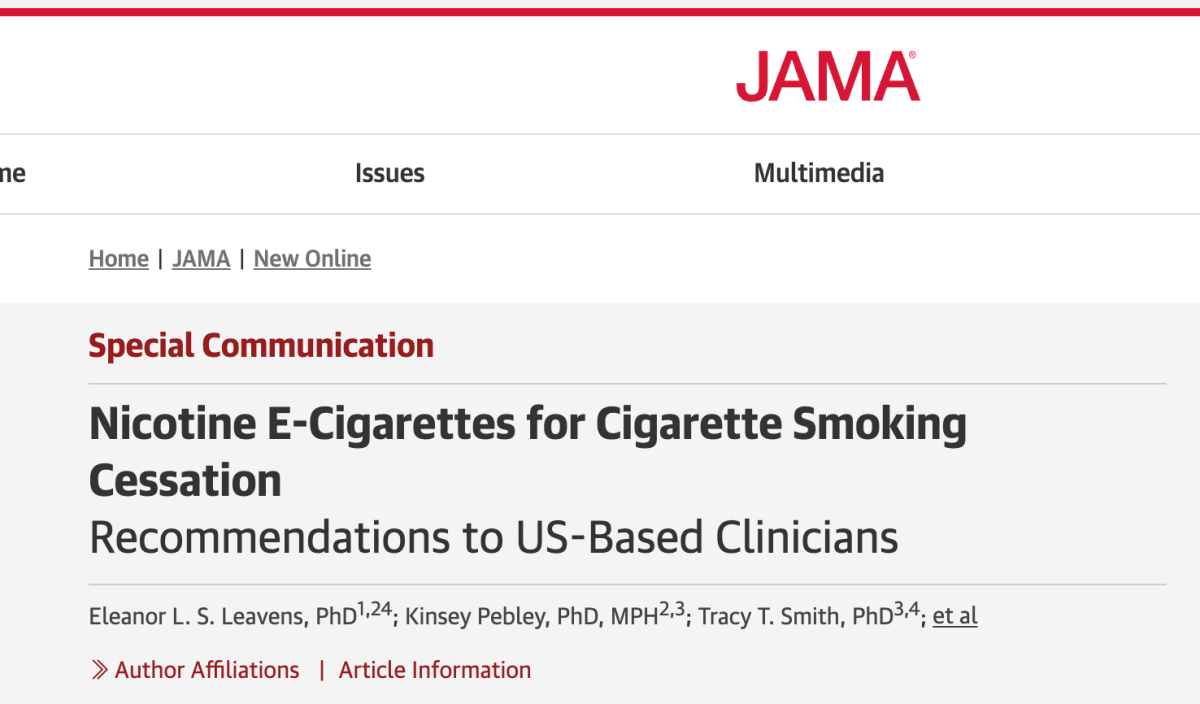
JAMA Issues First U.S. Clinical Guidance on Vaping for Smoking Cessation, Urging Complete Switch From Cigarettes
JAMA has published a Special Communication offering systematic recommendations for U.S.-based clinicians on the use of nicotine e-cigarettes in adult smoking cessation. Developed by the Harm Reduction Workgroup of the Society for Research on Nicotine and Tobacco’s Treatment Research Network, the paper recommends including e-cigarettes alongside FDA-approved cessation medications in risk-benefit discussions. It cites high-certainty evidence that nicotine e-cigarettes achieve higher quit rates than nicotine replacement therapy and evidence suggesting efficacy comparable to highly effective medications such as varenicline and cytisine. For adults who choose vaping to quit, the authors recommend FDA-authorized products, sufficient nicotine delivery and a rapid, complete transition away from cigarettes rather than prolonged dual use.
Aug.13
As JUUL2 Wins FDA Authorization, Harm Reduction Journal Highlights the Role of Real-World Evidence in Nicotine Product Regulation
A commentary published in the international open-access, peer-reviewed Harm Reduction Journal argues that randomized controlled trials remain central to evaluating smoking cessation efficacy but cannot alone capture real-world uptake, complete switching, longer-term use and population impact of non-combustible nicotine products such as e-cigarettes, heated tobacco and nicotine pouches. The authors frame impact as “reach × efficacy” and call for real-world evidence to complement RCTs. Three days after publication, the FDA authorized three JUUL2 products and highlighted complete switching among adult smokers in explaining its decision, providing a timely regulatory backdrop to the debate.
Sep.08
French Anti-Tobacco Group Questions PMI’s IQOS “Curiosity” Campaign Over Potential Youth Appeal
According to French anti-tobacco group Générations Sans Tabac, Philip Morris International’s (PMI) IQOS “Curiosity” campaign has drawn attention from public health advocates. The group argues that the campaign uses themes including curiosity, exploration and lifestyle branding that could increase interest among younger audiences. PMI has positioned IQOS as a key part of its smoke-free product strategy, while France maintains strict restrictions on tobacco and nicotine product marketing. The debate highlights ongoing tensions between heated tobacco branding strategies and public health concerns in Europe.
Jul.24
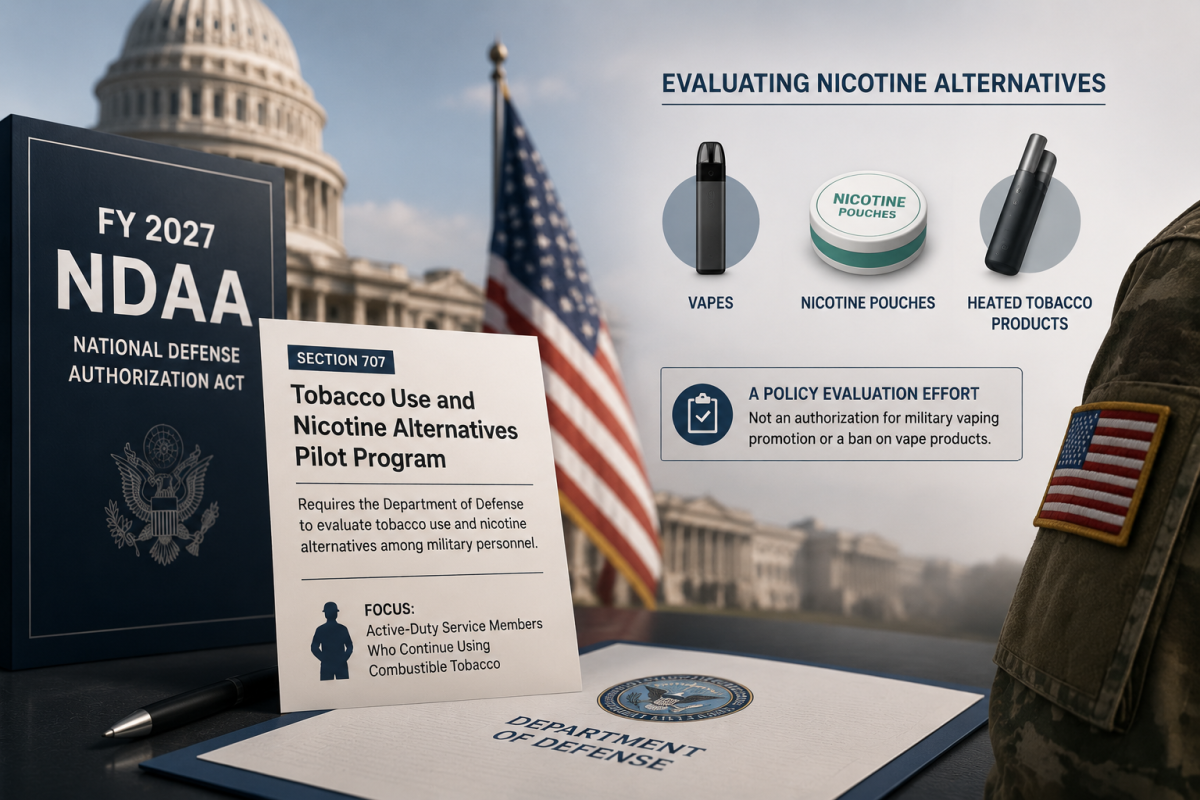
U.S. House Defense Bill Includes Pilot Review of Vapes, Nicotine Pouches and Heated Tobacco for Military Smokers
On July 23, 2026, the U.S. House of Representatives passed its version of the Fiscal Year 2027 National Defense Authorization Act (NDAA), which includes Section 707 provisions requiring the Department of Defense to evaluate tobacco use and nicotine alternatives among military personnel. The pilot program would examine products including vapes, nicotine pouches and heated tobacco products, primarily among active-duty service members who continue using combustible tobacco. The provision is a policy evaluation effort, not an authorization for military vaping promotion or a ban on vape products.
Jul.28
2Firsts Compliance Solutions Hosts PMTA Briefing on FDA Review Signals After JUUL2 Authorization
Following recent FDA authorizations for JUUL2 and ZYN ULTRA, 2Firsts Compliance Solutions held an online PMTA briefing on Sept. 4 to examine what the decisions may signal about review efficiency, scientific evidence and U.S. market access. Nearly 30 participants from brands, manufacturers, compliance service providers and investment firms joined the discussion.
2Firsts Events
Sep.06