Patent for Image Recognition-Based E-cigarette Smoke Detection Method

Aug.23.2024
Patent for Image Recognition-Based E-cigarette Smoke Detection Method
IJOY applies for a patent for an image-based e-cigarette smoke detection method and system in Shenzhen, China.

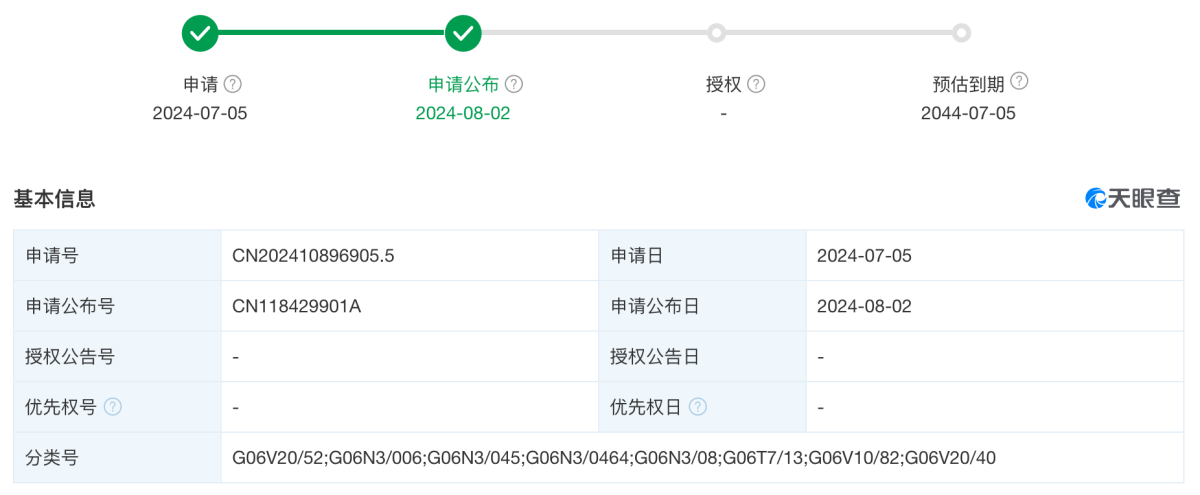
According to information from Tianyancha, Shenzhen iJoy Technology Co., Ltd. (IJOY) has applied for a patent for a method and system for detecting e-cigarette smoke based on image recognition. The application number is CN202410896905.5, the application date is July 5, 2024, and the publication date is August 2, 2024.
Patent for Image Recognition-Based E-cigarette Smoke Detection Method
A method and system for e-cigarette smoke detection based on image recognition" patent application status | Image source: Tianyancha


According to its patent abstract,


This invention discloses a method and system for detecting e-cigarette smoke based on image recognition, which involves the field of image processing technology. The e-cigarette smoke detection system based on image recognition includes: an image rough recognition module, an image enhancement module, and an image precise recognition module. By using the residual frame stacking method to extract the smoke image to be recognized, combined with the dual recognition process of the smoke rough recognition model and smoke precise recognition model, the invention can effectively improve the accuracy of e-cigarette smoke recognition. The smoke rough recognition model quickly filters out images that may contain smoke, while the smoke precise recognition model further improves the accuracy of recognition. This step-by-step processing method significantly enhances recognition efficiency. It can continuously capture frames of real-time monitoring videos and automatically identify e-cigarette smoke, enabling real-time monitoring and automatic identification of e-cigarette use in public places, effectively reducing the resource consumption of manual monitoring.


We welcome news tips, article submissions, interview requests, or comments on this piece.

Please contact us at info@2firsts.com, or reach out to Alan Zhao, CEO of 2Firsts, on LinkedIn


Notice

1.  This article is intended solely for professional research purposes related to industry, technology, and policy. Any references to brands or products are made purely for objective description and do not constitute any form of endorsement, recommendation, or promotion by 2Firsts.

2.  The use of nicotine-containing products — including, but not limited to, cigarettes, e-cigarettes, nicotine pouchand heated tobacco products — carries significant health risks. Users are responsible for complying with all applicable laws and regulations in their respective jurisdictions.

3.  This article is not intended to serve as the basis for any investment decisions or financial advice. 2Firsts assumes no direct or indirect liability for any inaccuracies or errors in the content.

4.  Access to this article is strictly prohibited for individuals below the legal age in their jurisdiction.


Copyright


This article is either an original work created by 2Firsts or a reproduction from third-party sources with proper attribution. All copyrights and usage rights belong to 2Firsts or the original content provider. Unauthorized reproduction, distribution, or any other form of unauthorized use by any individual or organization is strictly prohibited. Violators will be held legally accountable.

For copyright-related inquiries, please contact: info@2firsts.com


AI Assistance Disclaimer


This article may have been enhanced using AI tools to improve translation and editorial efficiency. However, due to technical limitations, inaccuracies may occur. Readers are encouraged to refer to the cited sources for the most accurate information.

We welcome any corrections or feedback. Please contact us at: info@2firsts.com

Canada’s Federal Vape Flavor Restrictions Remain Unclear Five Years After Announcement
Five years after Canada’s federal government announced plans to restrict vaping flavors nationwide, Health Minister Marjorie Michel has not said when or whether the measure will still proceed. In 2021, Health Canada said it planned to limit vaping flavors nationwide to mint, menthol and tobacco, citing evidence that fruity and sweet flavors appeal to youth.
May.11 by 2FIRSTS.ai
Data|China’s January-May 2026 Device Exports Rise 13% While Nicotine Product Exports Decline 6.9%
According to China Customs export data analyzed by 2Firsts, China’s vape export mix continued to evolve during January-May 2026. Exports of electronic vaporisation devices (HS 85434000) increased 13.00% year on year, supported by growth in both shipment volume and average export prices. Meanwhile, exports of nicotine-containing non-combustible products (HS 24041200) declined 6.89%, with lower shipment volumes partly offset by higher average export prices.
Special Report
Jun.30
 Philip Morris Lowers Profit Outlook as Zyn Faces Competition and FDA Delays
Philip Morris Lowers Profit Outlook as Zyn Faces Competition and FDA Delays
According to Reuters, Philip Morris International (PMI) lowered its 2026 adjusted earnings-per-share forecast amid regulatory uncertainty around Zyn nicotine pouches, rising competition and shipment pressure in the U.S. market.
PMI
Jun.02
AHA Journal Study: WS-23 Triples Premature Heartbeats, Raising Concerns Over Vape Cooling Agents
A University of Louisville research team published a study in an American Heart Association journal suggesting that synthetic cooling agents used in e-cigarettes, including WS-3 and WS-23, may disrupt cardiac electrical activity and increase arrhythmia risk. In animal experiments, WS-23 tripled premature heartbeats.
Jun.16
Special Report | Russian Vape Compromise Faces First Hurdles
Russia’s regional vape-ban model is facing early legal and political tests, as Perm Krai moves ahead before federal legislation is fully adopted. The case highlights uncertainty over regional authority, concerns from business groups about market fragmentation, and the risk that pressure against regional bans could revive calls for a stricter nationwide prohibition.
Industry Insight
May.28
Trump’s Tobacco Investments and Industry Donations Draw Scrutiny as FDA Eases Vape and Nicotine Pouch Rules
A report by KFF Health News says that as the Trump administration pursued a series of policies favorable to the nicotine and tobacco industry, President Donald Trump increased his holdings in tobacco companies while benefiting from substantial industry-linked political donations, prompting questions from public health advocates about potential conflicts of interest and regulatory direction.
Jun.12