Philippine Senator Emphasizes Strict Control on Disposable Sales

Regulations by 2FIRSTS.ai
Mar.11.2024
Philippine Senator Emphasizes Strict Control on Disposable Sales
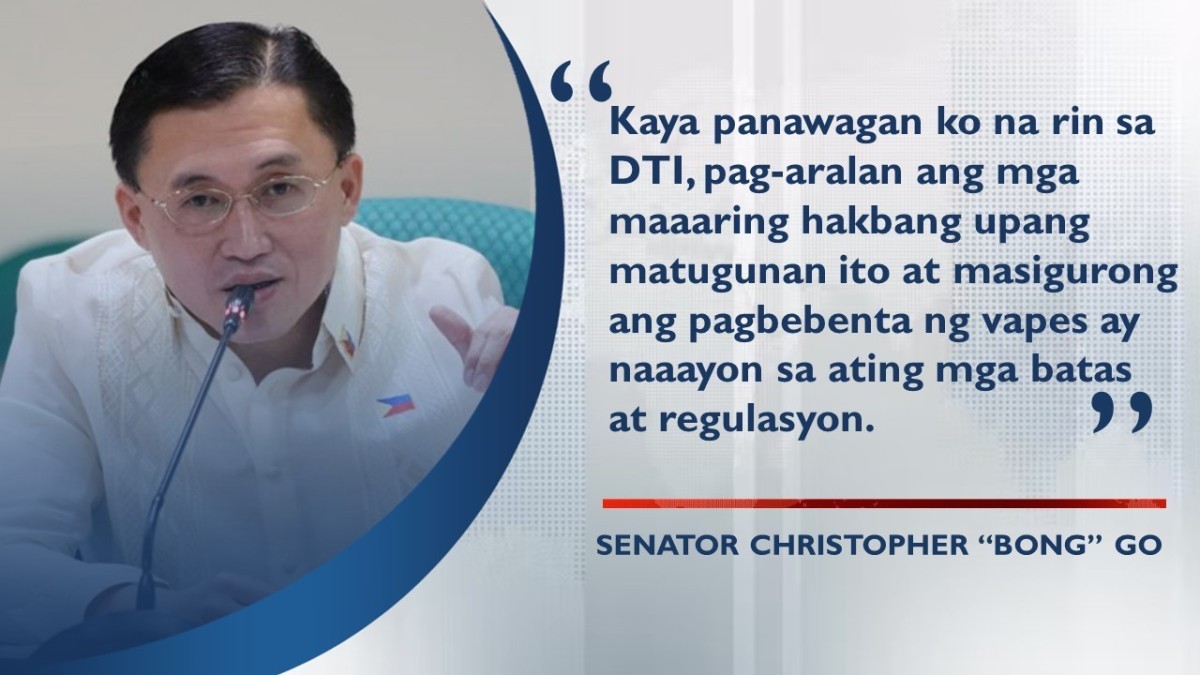
Philippine Senator Christopher Bong Go pushes for strict control and potential ban on disposable e-cigarette sales to protect youth.

According to a report by RMN on March 11th, Christopher Bong Go, chairman of the Health Committee of the Philippine Senate, emphasized strict control of the sale of disposable e-cigarettes and strongly supported the proposal to completely ban the sale of disposable e-cigarettes.


Health Secretary Francisco Duque III expressed concerns about the unregulated sale of e-cigarettes, particularly online where sales may allow minors easy access to these products. He noted that not only can young people easily obtain these products, but online sales also do not incur taxes, causing significant economic losses for the government. Therefore, he emphasized that the e-cigarette bill in the Philippines aims to ensure that e-cigarettes sold to consumers are safe and can only be used by individuals of legal age.


Therefore, the senator is urging the Department of Trade and Industry (DTI) to take action on the online sales of e-cigarettes in order to ensure the smooth implementation of the law.


We welcome news tips, article submissions, interview requests, or comments on this piece.

Please contact us at info@2firsts.com, or reach out to Alan Zhao, CEO of 2Firsts, on LinkedIn


Notice

1.  This article is intended solely for professional research purposes related to industry, technology, and policy. Any references to brands or products are made purely for objective description and do not constitute any form of endorsement, recommendation, or promotion by 2Firsts.

2.  The use of nicotine-containing products — including, but not limited to, cigarettes, e-cigarettes, nicotine pouchand heated tobacco products — carries significant health risks. Users are responsible for complying with all applicable laws and regulations in their respective jurisdictions.

3.  This article is not intended to serve as the basis for any investment decisions or financial advice. 2Firsts assumes no direct or indirect liability for any inaccuracies or errors in the content.

4.  Access to this article is strictly prohibited for individuals below the legal age in their jurisdiction.


Copyright


This article is either an original work created by 2Firsts or a reproduction from third-party sources with proper attribution. All copyrights and usage rights belong to 2Firsts or the original content provider. Unauthorized reproduction, distribution, or any other form of unauthorized use by any individual or organization is strictly prohibited. Violators will be held legally accountable.

For copyright-related inquiries, please contact: info@2firsts.com


AI Assistance Disclaimer


This article may have been enhanced using AI tools to improve translation and editorial efficiency. However, due to technical limitations, inaccuracies may occur. Readers are encouraged to refer to the cited sources for the most accurate information.

We welcome any corrections or feedback. Please contact us at: info@2firsts.com

Isle of Wight councillors raise concerns about youth vaping; one says it may be seen “akin to asbestos”
Concerns about the effects of vaping on young people and public health were raised at County Hall, the report said, with Cllr Chris Jarman saying it may one day be viewed as “akin to asbestos.” Jarman cited NHS-related research and a case highlighted by Hull University Teaching Hospitals NHS Trust: a 15-year-old admitted with chest pain and breathing difficulty who reported cannabis use and vaping about 500 puffs per day and was diagnosed via CT with “air leak syndrome.”
Feb.27 by 2FIRSTS.ai
China’s tobacco regulator names Yao Laiying as top leader
China’s tobacco regulator has undergone a top leadership change, according to an official announcement on March 20.
Mar.20
PMI Faces Setback in India: Global Regulatory Fragmentation Complicates Its Smoke-Free Transition
India has reaffirmed its 2019 ban on e-cigarettes and heated tobacco devices, effectively blocking Philip Morris International (PMI) from launching IQOS in the country despite years of lobbying. Together with Taiwan, China’s conditional opening of heated tobacco products, and Japan’s planned 2026 excise tax hikes, these moves highlight increasingly divergent national regulatory pathways—an external uncertainty shaping PMI’s smoke-free growth trajectory.
Feb.12
Shanghai releases 2025 smoke-free white paper: smoking incidence at designated smoke-free venues falls to 12.6%
Shanghai released its 2025 White Paper on Smoking Control in Public Places at a city tobacco control meeting on March 5. The paper reports a 12.6% smoking incidence in legally designated smoke-free venues, down 0.4 percentage points from 2024, and says 98.2% of residents support a full indoor smoking ban.
Mar.05
Russian consumer group urges Kremlin administration to reject regional vape sales bans
A Russian consumer organization has urged the Presidential Administration to block proposals that would let regions ban ENDS and e-liquid sales, warning it would create fragmented regulation and turbocharge the illicit market. The group cites WHO statistics and overseas experiences to argue for a more targeted regulatory model.
Feb.06 by 2FIRSTS.ai
Michigan Proposes 57% Vape Tax in $800M Revenue Plan
Michigan Governor Gretchen Whitmer’s FY2027 executive budget proposes a new 57% wholesale tax on vaping products and oral nicotine items as part of a broader $800 million revenue package aimed at stabilizing Medicaid funding.
Regulations
Feb.23