Police Raid Four Shops in Leyland, Seize Illegal Tobacco

Regulations by 2FIRSTS.ai
Nov.17.2023
Police Raid Four Shops in Leyland, Seize Illegal Tobacco
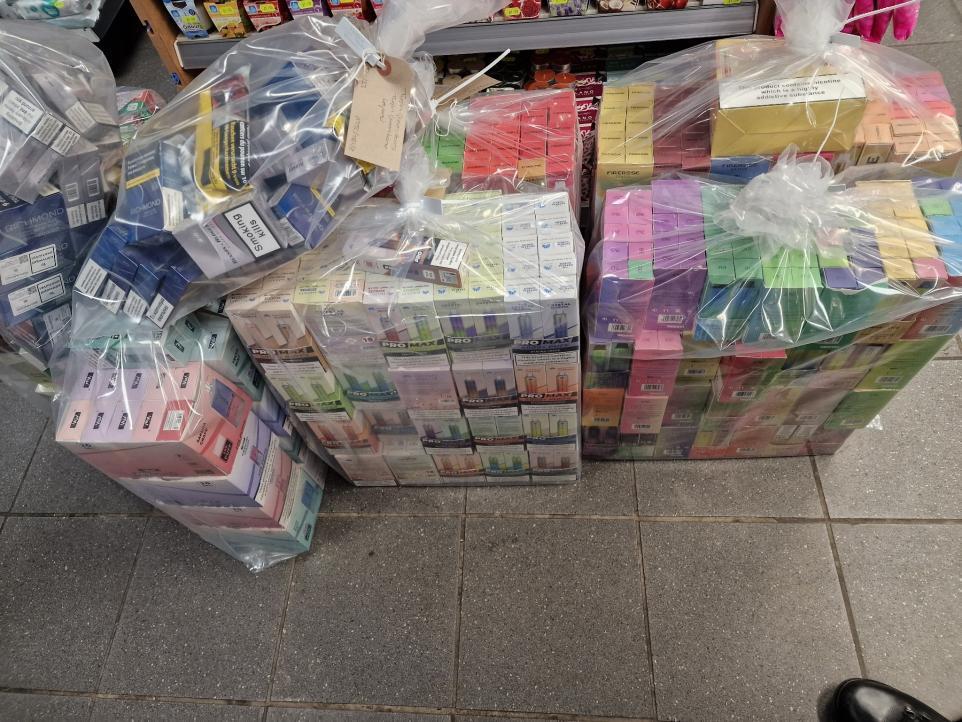
Lancashire Telegraph reports that Leyland police conducted raids on four local stores, seizing £50k worth of illegal cigarettes and e-cigarettes in Operation Centurion.

According to a report by the British media outlet, Lancashire Telegraph, on November 16th, the Leyland police in the UK conducted surprise searches at four local stores based on public tips, as part of "Operation Centurion." As a result of the operation, illegal cigarettes and e-cigarettes valued at nearly £50,000 (approximately $62,000) were seized.


According to Mike Moys, the captain of Leyland South Ribble Community Police Team, the team is committed to enhancing the sense of safety and the living and working environment in the community and will work closely with the community.


We welcome news tips, article submissions, interview requests, or comments on this piece.

Please contact us at info@2firsts.com, or reach out to Alan Zhao, CEO of 2Firsts, on LinkedIn


Notice

1.  This article is intended solely for professional research purposes related to industry, technology, and policy. Any references to brands or products are made purely for objective description and do not constitute any form of endorsement, recommendation, or promotion by 2Firsts.

2.  The use of nicotine-containing products — including, but not limited to, cigarettes, e-cigarettes, nicotine pouchand heated tobacco products — carries significant health risks. Users are responsible for complying with all applicable laws and regulations in their respective jurisdictions.

3.  This article is not intended to serve as the basis for any investment decisions or financial advice. 2Firsts assumes no direct or indirect liability for any inaccuracies or errors in the content.

4.  Access to this article is strictly prohibited for individuals below the legal age in their jurisdiction.


Copyright


This article is either an original work created by 2Firsts or a reproduction from third-party sources with proper attribution. All copyrights and usage rights belong to 2Firsts or the original content provider. Unauthorized reproduction, distribution, or any other form of unauthorized use by any individual or organization is strictly prohibited. Violators will be held legally accountable.

For copyright-related inquiries, please contact: info@2firsts.com


AI Assistance Disclaimer


This article may have been enhanced using AI tools to improve translation and editorial efficiency. However, due to technical limitations, inaccuracies may occur. Readers are encouraged to refer to the cited sources for the most accurate information.

We welcome any corrections or feedback. Please contact us at: info@2firsts.com

Can hookah go institutional? A hookah company seeking to go public makes its case with capital, technology and regulation
2Firsts explored whether hookah can evolve into a more mature and governable category by interviewing Dubai-based hookah company AIR. AIR argues that strong margins, OOKA’s closed-system model and the prospect of differentiated regulation could support that shift. The larger question is whether this is simply AIR’s capital-markets narrative, or an early sign that competition, regulation and category boundaries in hookah are beginning to change.
Apr.02
Swedish Government Minister Visits Nicotine Pouch Factory, Calls Sector Important Export Industry
Sweden’s Minister for Foreign Trade and Development Cooperation, Benjamin Dousa, visited nicotine pouch producer Another Snus Factory on Monday, calling the sector an important export industry as several European countries tighten regulation of the products.The company produces about 30 million cans of white snus annually and holds roughly 12% of Sweden’s domestic market.
Apr.16
Canada Studies UK-Style “Smoke-Free Generation” Tobacco Ban
Canada’s federal health minister, Majorie Michel, said she is looking into legislation that would permanently ban the sale of tobacco products to anyone born after 2008. She said Canada has seen the approach recently proposed in the United Kingdom and is reviewing it with partners. Health Canada previously said the Government of Canada has invested C$66 million annually since 2018 to help Canadians quit smoking and reduce the harms of nicotine addiction.
Apr.29 by 2FIRSTS.ai
Bonnie Herzog:U.S. nicotine market seen at about $67B in revenue by 2035 as smoke-free expands
Goldman Sachs Managing Director Bonnie Herzog said the U.S. nicotine market is attractive and growing, with total revenue projected to reach about $67 billion by 2035. She expects cigarettes to account for a smaller share of revenue (47%) as smoke-free revenue expands and becomes a key driver of industry profit growth. Herzog said smoke-free products represent about 48% of U.S. nicotine volumes today and could rise to roughly 75% by 2035.
Mar.04 by 2FIRSTS.ai
Indonesian drug agency chief proposes ban on e-cigarettes and e-liquid containing harmful substances
Indonesian drug agency chief proposes ban on e-cigarette and e-liquid in new draft law, citing dangerous substances found.
Apr.08 by 2FIRSTS.ai
IMF Article Sets Out Three Principles: Cover All Harmful Products, Match Tax Rates to Harm, Improve Cross-Border Coordination
A March 2026 article in Finance & Development, “Taxing Harmful Habits,” argues that taxes on harmful products such as tobacco, alcohol and sugary drinks should better reflect the health harm they cause. The authors propose three principles: capture all harmful products, align tax rates with health harm, and strengthen cross-border coordination to reduce evasion and smuggling.
Mar.24 by 2FIRSTS.ai