Proposed Legislation to Ban Disposable E-Cigarettes in Ireland

Sep.14.2024
Proposed Legislation to Ban Disposable E-Cigarettes in Ireland
Irish Health Minister Stephen Donnelly seeks to ban disposable e-cigarettes in Ireland, gaining support from Senator Pat Casey.

According to a report from the Irish Times on September 14, Irish Health Minister Stephen Donnelly has been granted cabinet approval to draft legislation proposing to ban the sale, manufacture, or import of disposable e-cigarettes in Ireland. Irish Senator Pat Casey has expressed support for the Minister's proposal.


Disposable e-cigarettes are causing significant harm to the environment. If not properly recycled, they can pollute our communities, including even the most remote areas.


It is important to ban disposable e-cigarettes for the environment and public health, especially for young people. Young people often impulsively purchase and try these e-cigarettes in stores.


Casey emphasized that the legislation will address e-cigarette advertising displays, packaging, and flavors, as these factors often target young people.


The bright colors and images attract young people to make impulse purchases. By introducing plain packaging for e-cigarettes, we will reduce their allure to young people and non-users. Banning advertising displays at sales points can also reduce the chances of young people trying e-cigarettes.


Casey praised Donald for his efforts in addressing the issue of youth e-cigarette use.


My party colleagues and I recognize that nicotine is a highly addictive drug. We are taking action to prevent young people from accessing these products and removing them from their daily lives.


We welcome news tips, article submissions, interview requests, or comments on this piece.

Please contact us at info@2firsts.com, or reach out to Alan Zhao, CEO of 2Firsts, on LinkedIn


Notice

1.  This article is intended solely for professional research purposes related to industry, technology, and policy. Any references to brands or products are made purely for objective description and do not constitute any form of endorsement, recommendation, or promotion by 2Firsts.

2.  The use of nicotine-containing products — including, but not limited to, cigarettes, e-cigarettes, nicotine pouchand heated tobacco products — carries significant health risks. Users are responsible for complying with all applicable laws and regulations in their respective jurisdictions.

3.  This article is not intended to serve as the basis for any investment decisions or financial advice. 2Firsts assumes no direct or indirect liability for any inaccuracies or errors in the content.

4.  Access to this article is strictly prohibited for individuals below the legal age in their jurisdiction.


Copyright


This article is either an original work created by 2Firsts or a reproduction from third-party sources with proper attribution. All copyrights and usage rights belong to 2Firsts or the original content provider. Unauthorized reproduction, distribution, or any other form of unauthorized use by any individual or organization is strictly prohibited. Violators will be held legally accountable.

For copyright-related inquiries, please contact: info@2firsts.com


AI Assistance Disclaimer


This article may have been enhanced using AI tools to improve translation and editorial efficiency. However, due to technical limitations, inaccuracies may occur. Readers are encouraged to refer to the cited sources for the most accurate information.

We welcome any corrections or feedback. Please contact us at: info@2firsts.com

Cochrane 2026 Update Adds Nine Trials, Keeps High-Certainty Finding That Nicotine E-Cigarettes Improve Quit Rates Over NRT
Cochrane’s 2026 update of its living review on electronic cigarettes for smoking cessation included 80 randomized controlled trials involving 29,861 adult smokers, with nine trials added in this update. The review retained its high-certainty conclusion that nicotine e-cigarettes increase smoking cessation rates compared with nicotine replacement therapy. In absolute terms, about 10 in 100 people using nicotine e-cigarettes may quit smoking for at least six months, compared with about 6 in 100 using NRT. The review found no clear difference in serious adverse event rates between the two groups, while longer-term safety and the relative effectiveness of newer device types remain less certain.
Sep.07
PMI Expands U.S. ZYN Portfolio With New 1.5 mg and 8 mg Strengths, Moves Toward a Unified 20-Pouch-Per-Can Format
Philip Morris International is expanding its U.S. ZYN nicotine pouch portfolio with new 1.5 mg and 8 mg strengths and plans to move its core 3 mg and 6 mg dry-pouch products from 15 to 20 pouches per can in the fourth quarter of 2026. ZYN ULTRA is also commercially available, with FDA authorization covering 10 products at 9 mg and one 11 mg Smooth product. PMI U.S. lists the new 1.5 mg and 8 mg strengths as commercially available, but as of September 10 they do not appear on the FDA’s public authorization list. Public materials do not identify which PMTA submissions cover the two new strengths or their current review status.
Sep.11
Product | JNR Launches Crown Shisha 100K for International Wholesale, Pairing 58ml Capacity With Triple-Mesh DTL Design
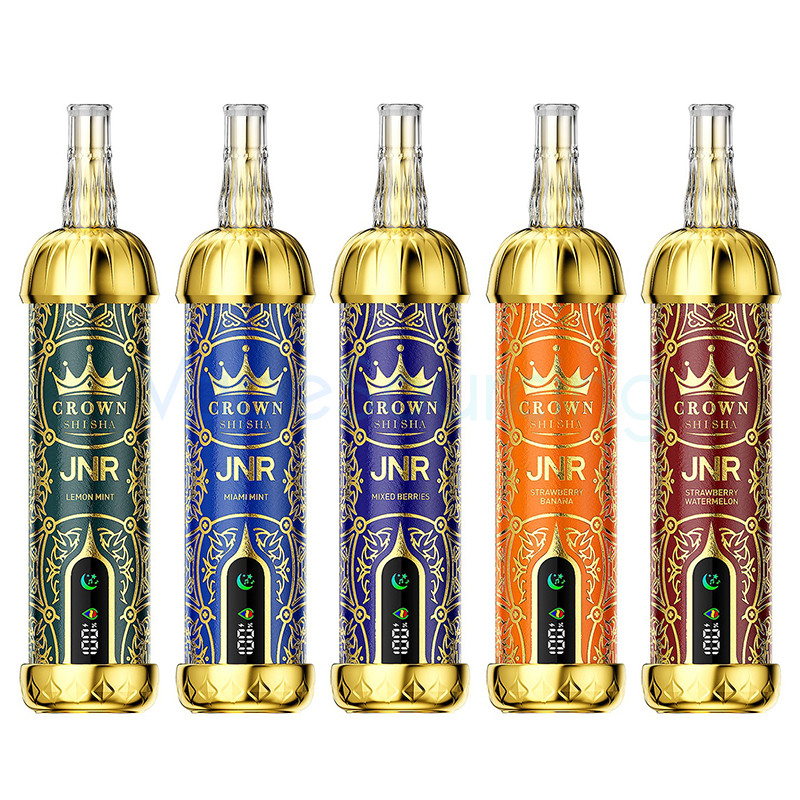
JNR released the Crown Shisha 100K on August 14, 2026, positioning the ultra-high-capacity disposable around a direct-to-lung (DTL) e-shisha experience. The device combines a 58ml e-liquid capacity, triple 1.0Ω mesh coils and a 1,300mAh rechargeable battery, with JNR claiming up to 100,000 puffs. Adjustable airflow, battery and e-liquid status displays, a leather-style exterior and a shisha-inspired sound effect further differentiate the product. JNR is currently promoting the device through international wholesale and distribution channels, while a specific first retail market has not been disclosed.
Aug.31
From Vuse, Velo and glo to AI Consulting: Former BAT Content Lead Launches Destreza
Former BAT global content lead Andy Parton has left the company and launched Destreza, a London-based AI-native marketing consultancy. Parton previously worked across BAT's New Category brands Vuse, Velo and glo and had also served as Global Brand Lead for Vuse Go. Destreza says it will advise consumer businesses on AI in brand strategy, operating models, capability and agency configuration, using specialist AI agents to support research, strategy and creative development. BAT reported £3.621 billion in New Category revenue in 2025.
Sep.22
Australian Coalition Unveils Illicit Tobacco Plan With 80% Excise Cut and Legal, Taxed Vapes and Nicotine Pouches
Australia’s Coalition has unveiled a national illicit-tobacco policy that would cut tobacco excise by 80% and create legal, regulated and taxed adult markets for vaping products and nicotine pouches if it wins government. The plan proposes an excise of A$0.50 per millilitre of e-liquid and A$0.025 per milligram of nicotine in pouches, alongside A$200 million in additional enforcement and a A$60 million three-year public-awareness campaign. The Coalition says the package would narrow the price advantage of illicit products and undermine organised crime, while Labor and public-health groups warn that dramatically cheaper cigarettes could reverse long-term declines in smoking.
Sep.03
As JUUL2 Wins FDA Authorization, Harm Reduction Journal Highlights the Role of Real-World Evidence in Nicotine Product Regulation
A commentary published in the international open-access, peer-reviewed Harm Reduction Journal argues that randomized controlled trials remain central to evaluating smoking cessation efficacy but cannot alone capture real-world uptake, complete switching, longer-term use and population impact of non-combustible nicotine products such as e-cigarettes, heated tobacco and nicotine pouches. The authors frame impact as “reach × efficacy” and call for real-world evidence to complement RCTs. Three days after publication, the FDA authorized three JUUL2 products and highlighted complete switching among adult smokers in explaining its decision, providing a timely regulatory backdrop to the debate.
Sep.08