RELX Stock Price Rises, Institutional Investors Adjust Holdings

Business by 2FIRSTS.ai
Dec.28.2023
RELX Stock Price Rises, Institutional Investors Adjust Holdings
RELX Technology Inc.'s stock price rose 4.8% in midday trading on December 27, with institutional investors adjusting their holdings.

According to financial market analysis on December 27th, RELX Technology Inc. (NYSE: RLX) saw a 4.8% increase in its stock price during midday trading. The company's shares briefly rose to $2.00 and finally closed at $1.98, with approximately 4,474,611 shares changing hands, representing a 47% decrease from the average daily trading volume of 8,412,278 shares.


In recent times, there have been adjustments in the ownership of RELX Technology stocks by institutional investors and hedge funds.


PNC Financial Services Group Inc. acquired stock shares valued at approximately $27,000, while Vanguard Personalized Indexing Management LLC purchased shares worth around $37,000 in the third quarter. In the first quarter, Apollon Wealth Management LLC acquired stock shares valued at approximately $38,000. Clear Street Markets LLC made a new purchase in the fourth quarter, acquiring stock shares valued at around $40,000. Lastly, Mariner LLC purchased stock shares worth approximately $47,000 in the third quarter.


Currently, institutional investors and hedge funds hold 22.68% of RELX Technology company's stocks.


We welcome news tips, article submissions, interview requests, or comments on this piece.

Please contact us at info@2firsts.com, or reach out to Alan Zhao, CEO of 2Firsts, on LinkedIn


Notice

1.  This article is intended solely for professional research purposes related to industry, technology, and policy. Any references to brands or products are made purely for objective description and do not constitute any form of endorsement, recommendation, or promotion by 2Firsts.

2.  The use of nicotine-containing products — including, but not limited to, cigarettes, e-cigarettes, nicotine pouchand heated tobacco products — carries significant health risks. Users are responsible for complying with all applicable laws and regulations in their respective jurisdictions.

3.  This article is not intended to serve as the basis for any investment decisions or financial advice. 2Firsts assumes no direct or indirect liability for any inaccuracies or errors in the content.

4.  Access to this article is strictly prohibited for individuals below the legal age in their jurisdiction.


Copyright


This article is either an original work created by 2Firsts or a reproduction from third-party sources with proper attribution. All copyrights and usage rights belong to 2Firsts or the original content provider. Unauthorized reproduction, distribution, or any other form of unauthorized use by any individual or organization is strictly prohibited. Violators will be held legally accountable.

For copyright-related inquiries, please contact: info@2firsts.com


AI Assistance Disclaimer


This article may have been enhanced using AI tools to improve translation and editorial efficiency. However, due to technical limitations, inaccuracies may occur. Readers are encouraged to refer to the cited sources for the most accurate information.

We welcome any corrections or feedback. Please contact us at: info@2firsts.com

Retail Case Study | Wisconsin Vape Market One Year After New Regulations: Johnny Vapes Reports 80% Sales Decline as Consumers Shift Online and Across State Lines
According to WNCY on August 24, 2026, some independent vape retailers in Wisconsin say they have faced significant business pressure one year after new vape regulations took effect. Johnny Vapes, a retailer operating in northeast Wisconsin, said its store count fell from seven locations to four, sales declined by about 80%, and roughly 90% of its inventory was affected. Retailers said some consumers have shifted to online purchases or traveled to neighboring Michigan to buy vape products. The case highlights how local regulations can reshape retail operations, inventory management and consumer purchasing patterns.
Aug.28
Switzerland Tightens Vape Checks as Only 3 of 32 Tested Products Meet New Tobacco Rules
According to Swiss media outlet Blick, local authorities are strengthening compliance checks on vape products, nicotine pouches and other tobacco-related products following the implementation of Switzerland’s revised Tobacco Products Act. A Basel laboratory tested 32 disposable vapes and e-liquids, with only three meeting regulatory requirements and 21 products banned from sale. Swiss authorities are also expanding retail inspections, laboratory testing and youth purchase checks to enforce the new tobacco and nicotine product rules.
Aug.12
DOJ Trade Fraud Task Force Tops $1 Billion in Cases, Putting Vape Supply Chains at Risk of Fraud Enforcement
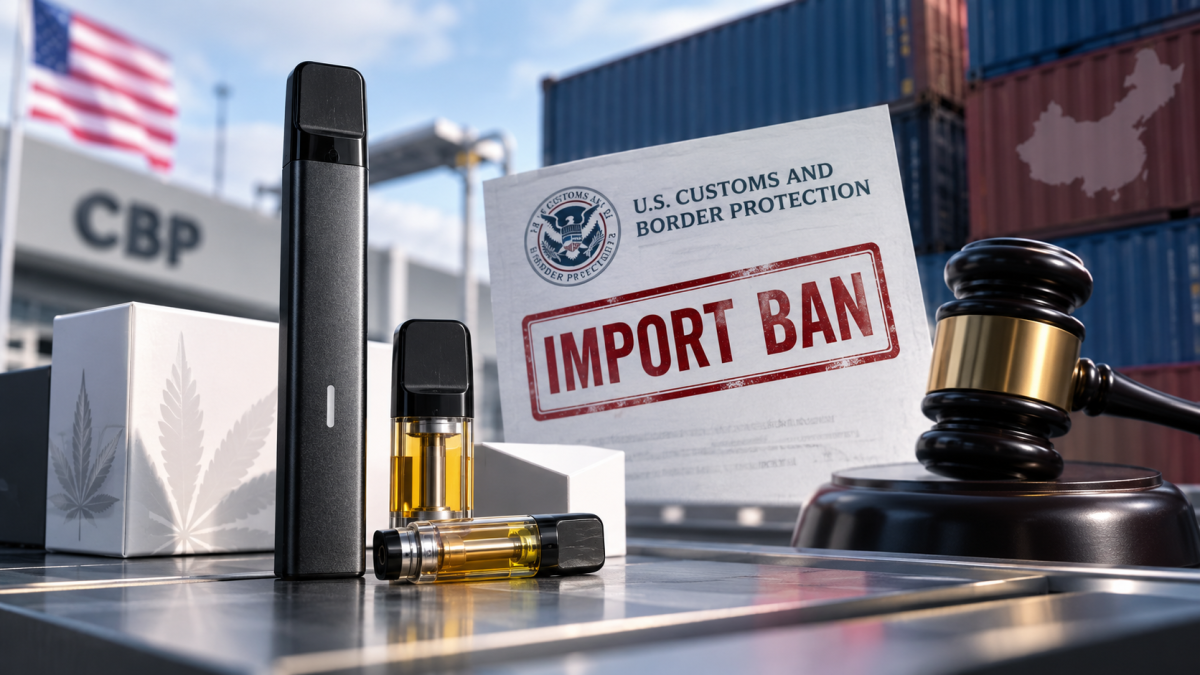
According to the U.S. Department of Justice (DOJ), Fox News and other reports, the DOJ’s Trade Fraud Task Force (TFTF) has been linked to more than $1 billion in recoveries, penalties, forfeitures and publicly charged losses in less than one year. The task force focuses on trade fraud issues including country-of-origin fraud, illegal transshipment, false declarations and tariff evasion. While vape products are not the main source of the $1 billion figure, the industry’s reliance on global manufacturing and cross-border supply chains places it within broader U.S. trade enforcement scrutiny. The development suggests that U.S. oversight of cross-border vape products may increasingly extend beyond product authorization into import compliance, supply-chain transparency and corporate accountability.
Jul.23
Special Report|AIR H1 Revenue Rises 3.7% as Shisha Volumes Fall 9%, Testing Its Shift Beyond Traditional Hookah
AIR’s first half-year results as a listed company offer a new test of how far a traditional hookah business can transform. H1 2026 revenue rose 3.7%, even as Flavored Shisha Molasses shipments fell 9%, with pricing and mix supporting growth. Traditional shisha still generates almost all revenue, while OOKA, Crown Switch, Greentank and U.S. regulatory spending point to accelerating diversification. The next test is whether those investments can become a second business of meaningful scale and profitability.
Capital Markets
Aug.21
From a 2017 Launch to 48% of South Korea’s Heated Tobacco Market, KT&G Looks Back on a Decade of lil
KT&G announced on Aug. 13, 2026, that it has opened “lil Archive,” a brand exhibition space in Seoul showcasing the evolution, technology platforms and future direction of its heated tobacco brand lil since its launch in 2017. KT&G said lil now spans three major platforms — lil SOLID, lil HYBRID and lil AIBLE — with more than 30 dedicated consumables, and held a 48% share of South Korea's heated tobacco market in the second quarter of 2026. The opening comes as lil enters its 10th year, with KT&G continuing to position the brand for expansion beyond its domestic market.
Aug.14
UK Sets Oct. 29 Start for New Vape Retail Rules Covering Age Checks, Giveaways and Discounts
The UK Department of Health and Social Care published new guidance on Aug. 11 outlining the next phase of retail rules under the Tobacco and Vapes Act 2026, which will take effect on Oct. 29, 2026. The measures extend the minimum age of sale of 18 to all vaping and consumer nicotine products and restrict proxy purchasing, promotional giveaways and substantial discounts. Relevant offences in England, Wales and Scotland may carry a £200 fixed penalty notice, while persistent offenders can face temporary sales bans.
Aug.12