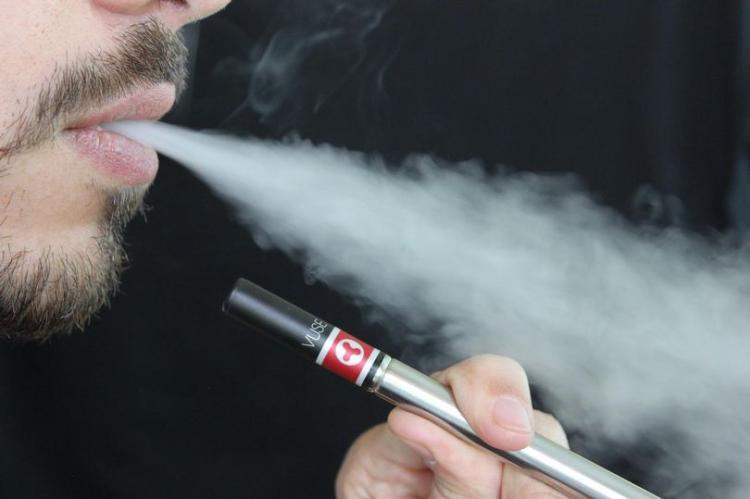
More and more young people in Renfrewshire, Scotland, are turning to e-cigarettes, and local residents are increasingly paying attention to this trend.
Electronic cigarettes are widely perceived to be much less harmful than traditional cigarettes and may assist in quitting smoking.
According to a recent study by ASH Scotland, it is estimated that there are 4.3 million "daily e-cigarette users" in Scotland, England, and Wales. The report reveals that 8.3% of British adults use e-cigarettes, including young people who have never smoked before and are developing the habit.
A study has found that 350,000 people who have never smoked before have started using e-cigarettes. The brightly colored and strongly flavored disposable e-cigarettes have captured the attention of many, raising concerns about health and the environment.
Young residents of Renfrewshire can purchase e-cigarettes from local stores at a lower cost than regular cigarettes. According to ASH Scotland, electronic vape liquid costs around 56 pounds per month, while traditional cigarette users spend 250 pounds per month.
Representatives from the National Health Service in Glasgow and Clyde stated, "Although it is widely believed that electronic cigarettes are much less harmful than smoking, we still do not know the long-term effects of e-cigarette use on health, and many e-cigarette products contain highly addictive nicotine.
Electronic cigarette products are not suitable for anyone under the age of 18 and are not recommended for non-smokers. According to a study conducted in 2018, the Scottish Public Health Observatory estimates that 2% of Scottish children aged 13 and 15% of those aged 15 regularly smoke, typically at least one cigarette per week.
According to estimates, among 15-year-old children who smoke regularly, 29% want to quit smoking, 34% do not want to quit smoking, and the remaining 37% do not know whether they want to quit smoking.
Statement
This article is compiled from third-party information and is intended for industry discussion and learning purposes only.
This article does not necessarily reflect the views of 2FIRSTS and we cannot confirm the truthfulness and accuracy of its content. The translation of this article is intended solely for industry communication and research.
Due to the limited level of translation ability, the translated article may not fully convey the intended meaning of the original text. Please refer to the original article for accuracy.
2FIRSTS maintains complete alignment with the Chinese government on all domestic, Hong Kong, Macau, Taiwan and foreign positions and statements.
The copyright of the compiled information belongs to the original media and authors. If there is any infringement, please contact us for removal.
Disclaimer
This article is provided solely for professional research, industry discussion, and informational purposes. Any references to brands, companies, products, technologies, or policies are made for factual reporting and analytical purposes only, and do not constitute endorsement, recommendation, promotion, or advertising by 2Firsts.
Nicotine-containing products, including but not limited to cigarettes, e-cigarettes, heated tobacco products, and nicotine pouches, carry significant health risks. Readers are responsible for complying with all applicable laws and regulations in their respective jurisdictions, including age restrictions and access limitations.
The information contained in this article should not be regarded as investment, legal, medical, regulatory, or commercial advice. While 2Firsts strives to ensure the accuracy and reliability of its content, it does not assume liability for any direct or indirect loss arising from errors, omissions, inaccuracies, or reliance on the information contained herein.
This article is not intended for individuals below the legal age for accessing tobacco or nicotine-related information in their jurisdiction.
Copyright Notice
This article is either original content produced by 2Firsts or content reproduced, translated, summarized, or adapted from third-party sources with attribution where applicable. The intellectual property rights of the original content remain with 2Firsts or the respective original rights holders.
No individual or organization may copy, reproduce, distribute, republish, modify, translate, or otherwise use this content without prior authorization. Any unauthorized use may result in legal action.
For copyright-related inquiries, corrections, or removal requests, please contact: info@2firsts.com.
AI-Assisted Translation and Editing Notice
Portions of this article may have been translated, edited, or reviewed with the assistance of artificial intelligence tools to improve efficiency and readability. Due to the limitations of AI-assisted translation and editing, discrepancies, omissions, or inaccuracies may exist when compared with the original source.
Where applicable, readers are advised to refer to the original source for the most complete and accurate information. If you identify any errors or believe that any content infringes upon your rights, please contact us at info@2firsts.com, and we will review and address the matter promptly.