Rising Popularity of E-cigarettes Among Belarusian Teenagers

Market by 2FIRSTS.ai
Nov.21.2023
Rising Popularity of E-cigarettes Among Belarusian Teenagers
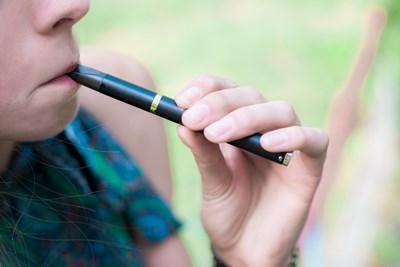
According to sb.by, a nationwide study by the Belarusian Health Research Center reveals the increasing popularity of e-cigarettes among teenagers.

According to sb.by news, the Belarusian Center for Health Studies has been conducting nationwide representative surveys on smoking behavior among students for the past 18 years. This year, they have expanded their monitoring scope to include an investigation into the use of e-cigarettes.


A survey conducted across 39 schools with the participation of 3,493 students in grades 7-10 has revealed that e-cigarettes are highly popular among adolescents. The findings indicate that 15% of the surveyed students reported using e-cigarettes.


A survey has revealed that the number of e-cigarette users has increased as age increases, with 9th grade students aged 15 being the most prominent group. Additionally, there is a gender disparity in e-cigarette usage, as female students are less likely to believe that e-cigarettes are harmful compared to their male counterparts. The data shows that as age increases, there is a decrease in the suspicion regarding the harmful effects of e-cigarettes.


Meanwhile, as individuals grow older, the number of teenagers unwilling to give up smoking is also on the rise, with the utilization of smokeless tobacco growing threefold over the past five years.


We welcome news tips, article submissions, interview requests, or comments on this piece.

Please contact us at info@2firsts.com, or reach out to Alan Zhao, CEO of 2Firsts, on LinkedIn


Notice

1.  This article is intended solely for professional research purposes related to industry, technology, and policy. Any references to brands or products are made purely for objective description and do not constitute any form of endorsement, recommendation, or promotion by 2Firsts.

2.  The use of nicotine-containing products — including, but not limited to, cigarettes, e-cigarettes, nicotine pouchand heated tobacco products — carries significant health risks. Users are responsible for complying with all applicable laws and regulations in their respective jurisdictions.

3.  This article is not intended to serve as the basis for any investment decisions or financial advice. 2Firsts assumes no direct or indirect liability for any inaccuracies or errors in the content.

4.  Access to this article is strictly prohibited for individuals below the legal age in their jurisdiction.


Copyright


This article is either an original work created by 2Firsts or a reproduction from third-party sources with proper attribution. All copyrights and usage rights belong to 2Firsts or the original content provider. Unauthorized reproduction, distribution, or any other form of unauthorized use by any individual or organization is strictly prohibited. Violators will be held legally accountable.

For copyright-related inquiries, please contact: info@2firsts.com


AI Assistance Disclaimer


This article may have been enhanced using AI tools to improve translation and editorial efficiency. However, due to technical limitations, inaccuracies may occur. Readers are encouraged to refer to the cited sources for the most accurate information.

We welcome any corrections or feedback. Please contact us at: info@2firsts.com

South Korea Rejects 16 Trillion Won Tax-Evasion Claim Over Chinese Synthetic Nicotine
The South Korean government rejected allegations that Chinese synthetic-nicotine e-liquids were linked to about 16 trillion won in tobacco tax evasion, saying China does not ban synthetic nicotine exports and the estimate is difficult to verify, while acknowledging that pre-law synthetic-nicotine inventory is effectively difficult to tax.
Market
Jun.25
Disposable Vape Ban Shifts Purchasing Formats as UK Vape Volume Falls 10.3%
Data from convenience insight agency Talysis shows that the value of tobacco, vapes and smoking alternatives in the independent convenience sector fell by 4.4% in the first quarter of 2026, while volume fell by 7.8%. The vaping subcategory declined by 3.9% in value and 10.3% in volume over the same period. Talysis said the impact of the disposable vape ban continues to pressure turnover and footfall.
May.08 by 2FIRSTS.ai
2Firsts Hosts U.S. Compliance Briefing on Building PMTA Support Capabilities Across the Nicotine Supply Chain
2Firsts held a U.S. compliance briefing in Shenzhen to help vaping, heated tobacco and nicotine pouch supply chain companies strengthen PMTA support capabilities. The event focused on supplier documentation, quality systems, traceability, TPMF/TPMP pathways, age verification and customer audit readiness as U.S. compliance expectations increasingly extend deeper into the nicotine supply chain.
Events
Jun.12
Malaysian Court Rules Liquid Nicotine Exemption Irrational, Renewing Vape Regulation Debate
Malaysia’s High Court ruled that the government’s earlier decision to remove liquid nicotine from the country’s Poisons List was “irrational,” reigniting debate over vape regulation, illicit trade, and youth protection.
Regulations
May.18
The new regulations on nicotine in Argentina are creating caution, expectations, and doubts about the market, according to a local reference in harm reduction for smoking.
The new Argentine framework for tobacco and nicotine marks a shift from prohibition towards registration, traceability, and health surveillance. Juan Facundo Teme told 2Firsts that adult consumers and some of the commercial sector are cautiously optimistic, although concerns remain about flavors, registration costs, and market access.
May.11
FDA Commissioner Marty Makary Resigns After Opposing Trump Administration’s Flavored Vape Push
FDA Commissioner Marty Makary resigned on May 12 after opposing the Trump administration’s push to authorize fruit-flavored vaping products, according to reporting by The New York Times. Makary reportedly objected over concerns that flavored vapes could attract young people and refused to support broader approvals.
News
May.13