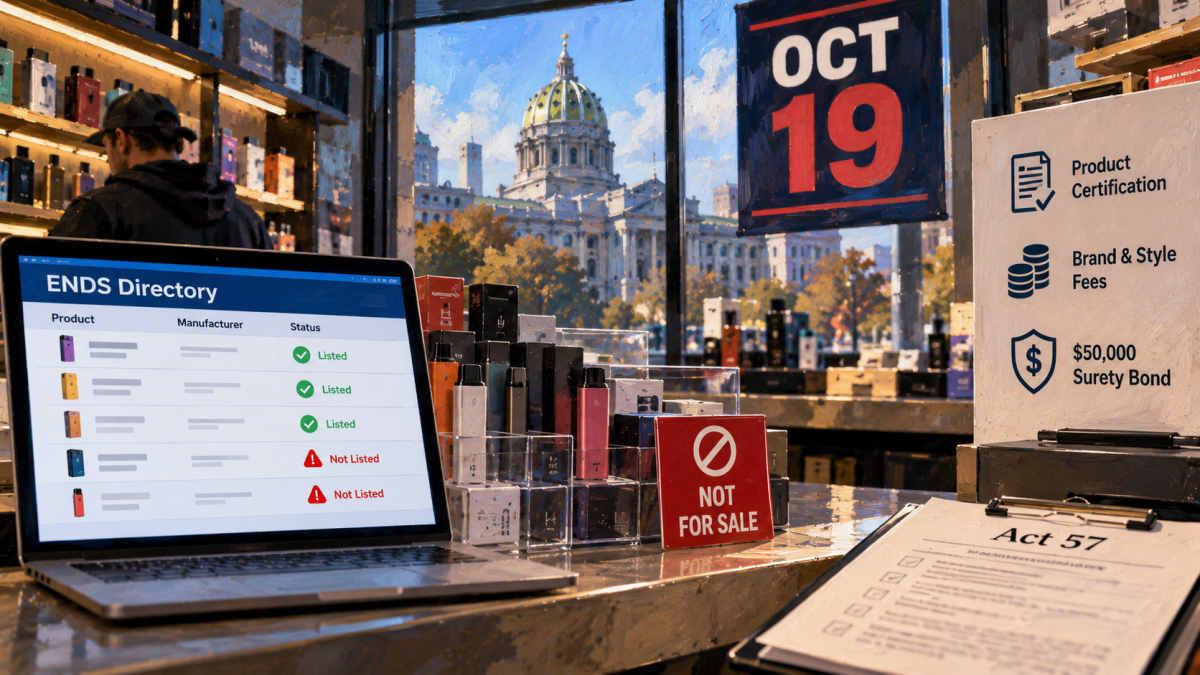
Small electronic cigarette manufacturers are calling on the FDA to delay the enforcement of regulations on synthetic nicotine, hoping that e-cigarette users can help delay FDA enforcement.
An electronic cigarette industry trade group has submitted a new citizen petition to the FDA, which may prompt the agency to grant a short-term lifeline to some manufacturers and retailers.
After the passage of the Consolidated Appropriations Act in March, which includes a requirement for the FDA to regulate synthetic nicotine, manufacturers have 60 days to submit a pre-market tobacco application (PMTA) for their synthetic nicotine products before they can be sold.
Afterward, regardless of whether the US Food and Drug Administration (FDA) takes action on the application, they have an additional 60 days to continue selling products with pending Pre-market Tobacco Product Applications (PMTA).
As of now, all synthetic nicotine products that have not yet received FDA authorization or extension - either no authorization or potential authorization - must be removed from the market before July 13th, or immediate enforcement actions will be taken.
Although the Pre-Market Tobacco Product Application (PMTA) process for traditional tobacco nicotine products is also relatively brief, it does provide manufacturers with a minimum of 10 months to submit their applications. Once submitted, they are given a one-year grace period following the PMTA deadline allowing their products to remain on the market without enforcement action.
However, the FDA's timeline for evaluating synthetic nicotine products - from announcement to removal from the market in four months - has not given manufacturers enough time to measure the chemical components in e-cigarette oils, let alone complete any complex research now required for a successful PMTA submission.
The US Congress has granted the FDA Tobacco Products Center the power to regulate synthetic nicotine. The intent is to shut down disposable e-cigarette manufacturers like Puff Bar, which switched to using synthetic nicotine in early 2021 instead of seeking FDA authorization for their tobacco-derived nicotine products.
A recent survey of young people has revealed that Puff Bar is the most popular brand of vape among high school smokers.
Products produced by small electronic cigarette oil manufacturers are of little interest to student smokers, and are only sold in stores where underage customers are prohibited from entering.
Some electronic cigarette oil manufacturers have been incorporating synthesized nicotine into their products for many years. Other companies have introduced synthetic e-cigarette oil after the US Food and Drug Administration (FDA) issued millions of template-based refusal orders against almost all vape products with flavors other than tobacco or menthol.
More than 100 companies – including many members of the American Vapor Manufacturers Association (AVM) – are rushing to submit PMTAs for their synthetic products. If the FDA begins enforcing regulations on synthetic products in July, many businesses are at risk of bankruptcy.
A small electronic cigarette company is asking the FDA to delay enforcement measures.
Smokers have the opportunity to help small manufacturers by submitting comments in support of the citizen petition presented by AVM.
The petition asks the FDA to use its enforcement discretion to allow synthetic products (bottled e-liquids) manufactured by open system manufacturers to continue to be sold in the market after the July 13 deadline.
After the deadline on July 13th, manufacturers were allowed to continue adding and modifying their PMTA as more data became available for reference.
AVM's request to the FDA only applies to bottled e-cigarette liquid manufacturers that have submitted PMTA on time, whose applications comply with the agency's filing and acceptance requirements, and have taken measures to eliminate underage exposure to their products. The organization is not seeking enforcement authority over disposable products like Puff Bar.
The citizen petition to the United States Food and Drug Administration (FDA) is not an insignificant measure like those found on Change.org. It is a legal avenue outlined in federal regulations that allows individuals or companies to request that the FDA "promulgate, revise, or revoke a regulation or order," or to "take or refrain from taking any other form of administrative action.
Source: Vaping360
Disclaimer
This article is provided solely for professional research, industry discussion, and informational purposes. Any references to brands, companies, products, technologies, or policies are made for factual reporting and analytical purposes only, and do not constitute endorsement, recommendation, promotion, or advertising by 2Firsts.
Nicotine-containing products, including but not limited to cigarettes, e-cigarettes, heated tobacco products, and nicotine pouches, carry significant health risks. Readers are responsible for complying with all applicable laws and regulations in their respective jurisdictions, including age restrictions and access limitations.
The information contained in this article should not be regarded as investment, legal, medical, regulatory, or commercial advice. While 2Firsts strives to ensure the accuracy and reliability of its content, it does not assume liability for any direct or indirect loss arising from errors, omissions, inaccuracies, or reliance on the information contained herein.
This article is not intended for individuals below the legal age for accessing tobacco or nicotine-related information in their jurisdiction.
Copyright Notice
This article is either original content produced by 2Firsts or content reproduced, translated, summarized, or adapted from third-party sources with attribution where applicable. The intellectual property rights of the original content remain with 2Firsts or the respective original rights holders.
No individual or organization may copy, reproduce, distribute, republish, modify, translate, or otherwise use this content without prior authorization. Any unauthorized use may result in legal action.
For copyright-related inquiries, corrections, or removal requests, please contact: info@2firsts.com.
AI-Assisted Translation and Editing Notice
Portions of this article may have been translated, edited, or reviewed with the assistance of artificial intelligence tools to improve efficiency and readability. Due to the limitations of AI-assisted translation and editing, discrepancies, omissions, or inaccuracies may exist when compared with the original source.
Where applicable, readers are advised to refer to the original source for the most complete and accurate information. If you identify any errors or believe that any content infringes upon your rights, please contact us at info@2firsts.com, and we will review and address the matter promptly.