Smoore International Director Increases Stake by HK$199 million

Apr.14.2025
Smoore International Director Increases Stake by HK$199 million
Smoore International director Xiong Shaoming increases stake by HK$199 million, raising ownership to 39.40%.

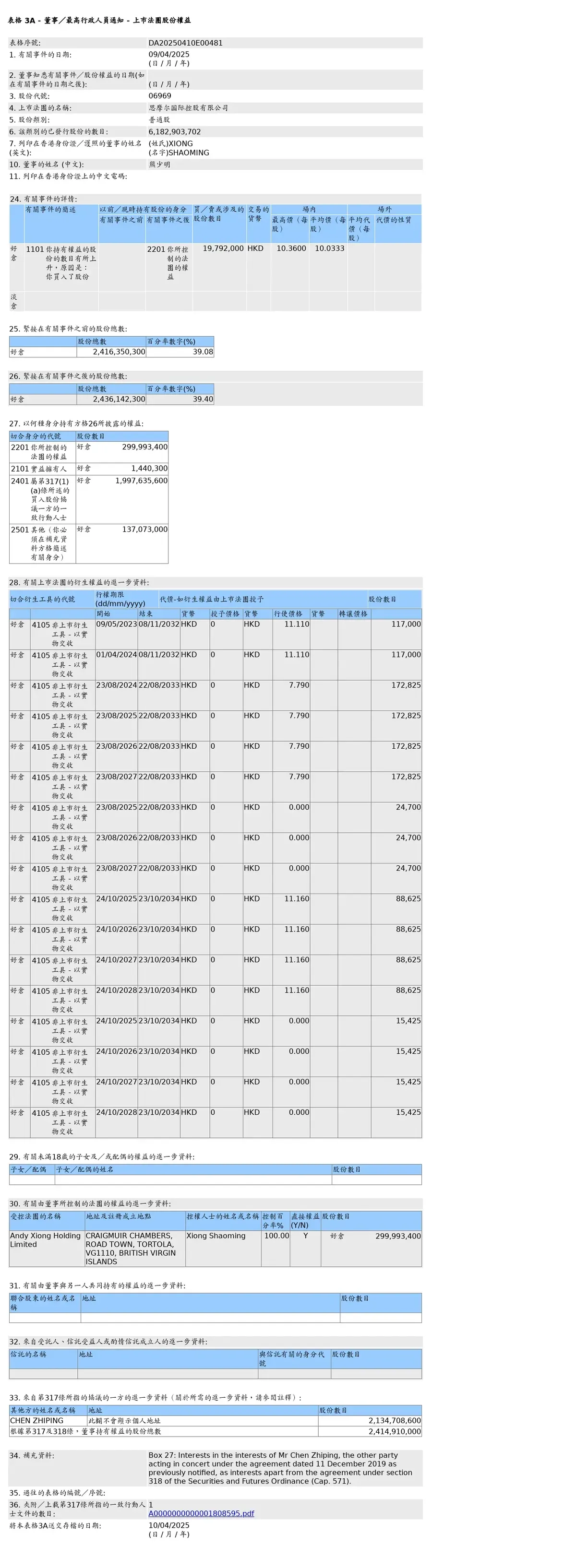
According to documents disclosed by The Stock Exchange of Hong Kong on April 11th, Xiong Shaoming, Executive Director and Deputy General Manager of Smoore International, increased his holdings in Smoore International (06969.HK) by purchasing 19.792 million shares at an average price of 10.0333 Hong Kong dollars per share on April 9th, with a total value of approximately 199 million Hong Kong dollars. After the purchase, Xiong Shaoming now holds a total of 2.436 billion shares, increasing hislong position from 39.08% to 39.40%.


Editor's note: A long position is a category in the Hong Kong Stock Exchange's shareholders' equity change table. It refers to major shareholders holding equity in the company, including holding, selling, or issuing financial instruments (including derivative instruments) to maintain ownership. As a result, they have rights and responsibilities such as those listed below, making them "long" holders.
Smoore International Director Increases Stake by HK$199 million
Table 3A - Notification of Directors/Chief Executives - Equity Interests in Listed Corporations | Source: Hong Kong Stock Exchange Equity Disclosure.


We welcome news tips, article submissions, interview requests, or comments on this piece.

Please contact us at info@2firsts.com, or reach out to Alan Zhao, CEO of 2Firsts, on LinkedIn


Notice

1.  This article is intended solely for professional research purposes related to industry, technology, and policy. Any references to brands or products are made purely for objective description and do not constitute any form of endorsement, recommendation, or promotion by 2Firsts.

2.  The use of nicotine-containing products — including, but not limited to, cigarettes, e-cigarettes, nicotine pouchand heated tobacco products — carries significant health risks. Users are responsible for complying with all applicable laws and regulations in their respective jurisdictions.

3.  This article is not intended to serve as the basis for any investment decisions or financial advice. 2Firsts assumes no direct or indirect liability for any inaccuracies or errors in the content.

4.  Access to this article is strictly prohibited for individuals below the legal age in their jurisdiction.


Copyright


This article is either an original work created by 2Firsts or a reproduction from third-party sources with proper attribution. All copyrights and usage rights belong to 2Firsts or the original content provider. Unauthorized reproduction, distribution, or any other form of unauthorized use by any individual or organization is strictly prohibited. Violators will be held legally accountable.

For copyright-related inquiries, please contact: info@2firsts.com


AI Assistance Disclaimer


This article may have been enhanced using AI tools to improve translation and editorial efficiency. However, due to technical limitations, inaccuracies may occur. Readers are encouraged to refer to the cited sources for the most accurate information.

We welcome any corrections or feedback. Please contact us at: info@2firsts.com

FDA 2025 NYTS: Youth E-Cigarette Use Declines but Unauthorized Disposables Remain Prominent; Nicotine Pouch Use Stays Low
The U.S. Food and Drug Administration (FDA) released its 2025 National Youth Tobacco Survey analysis, saying about 2.01 million U.S. middle and high school students currently used any tobacco product; among current youth e-cigarette users, unauthorized disposable brands including Geek Bar, Elf Bar, Lost Mary and Raz had high reported shares, potentially making them a focus for future enforcement.
Jun.24
 BAT Bangladesh Cigarette Sales Fall 14%, Q1 Profit Drops 34%
BAT Bangladesh Cigarette Sales Fall 14%, Q1 Profit Drops 34%
British American Tobacco Bangladesh reported a 14% year-on-year decline in cigarette sales volume and a 34% drop in first-quarter profit, highlighting mounting pressure from inflation, taxation, and weakening consumer spending in Bangladesh.
News
May.18
 RFK Jr. Spokesman Resigns Over FDA Authorization of Fruit-Flavored Vapes
RFK Jr. Spokesman Resigns Over FDA Authorization of Fruit-Flavored Vapes
Richard Danker, a senior public affairs official in Health Secretary Robert F. Kennedy Jr.’s team, resigned from his role at HHS over the FDA’s recent authorization of fruit-flavored vaping products. In a resignation letter addressed to President Donald Trump, Danker argued that the products could expose minors to nicotine addiction, lung damage, and increased cancer risks, while also conflicting with recent HHS guidance on youth risks associated with flavored nicotine products.
News
May.15
Geneva Court Annuls Ban on Disposable E-Cigarette Sales, Says Power Lies With Federal Authorities
The Geneva Court of Justice on Tuesday upheld appeals filed by four associations and companies active in the tobacco trade and annulled the Geneva legal provision banning the sale of disposable e-cigarettes, commonly known as “puffs.”
Apr.30 by 2FIRSTS.ai
Canada Vape Enforcement Action Puts VAPME Website, Trademark and China Supply-Chain Links in Focus
Quebec police seized about 300,000 suspected illegal vape products and froze more than C$1.8 million in funds. Local media said vapme.ca, a website selling flavoured vape products, was shut down during the operation.
Regulations
Jun.18
Bringing Tax and Insurance Into Nicotine Regulation: Insights From a Tobacco Harm-Reduction Report
A smoke-free nicotine policy report argues that tobacco harm reduction should move beyond product bans and health warnings into tax policy, insurance pricing and risk-based regulation. While some projections remain open to debate, the report highlights a wider challenge: nicotine products, technologies and consumer behavior have changed sharply over the past decade, and regulatory systems may need new tools to better align tobacco control with harm-reduction goals.
Jun.08