Five Key Takeaways from the E-Cigarette Regulatory Press Conference: Stricter Oversight, Production Control, and Crackdown on Grey Market
—— In-Depth Analysis by 2Firsts’ Alan Zhao on Policy Logic and Industry Impact
【By 2Firsts】On the eve of World No Tobacco Day, the State Tobacco Monopoly Administration held a news conference on e-cigarette regulation on May 27, elaborating on the challenges, key regulatory points, and future development trends facing the e-cigarette industry. Alan Zhao, CEO of 2Firsts, provided a detailed analysis of the e-cigarette regulatory conference by the State Tobacco Monopoly Administration on his personal video platform, "Ruihuo Talk".
This article is a summary of the video content from the personal video channel "Ruihuo Shuo" of 2Firsts CEO Alan Zhao. The aim is to present the key information of this press conference objectively, impartially, and professionally, and to provide readers with a comprehensive and in-depth industry analysis by combining Alan Zhao's interpretation perspective.
Regulation Enters "Deep Waters": Facing Both Internal and External Challenges
The State Tobacco Monopoly Administration announced at a press conference that e-cigarette regulation has entered a "deep water zone" and is facing dual challenges both internally and externally for the first time.
Internally, a prominent challenge is the emergence of the "reversal of e-cigarette exports" phenomenon. This refers to the possibility that some businesses may use export channels to illegally reintroduce e-cigarette products back into the domestic market, disrupting domestic regulatory order.
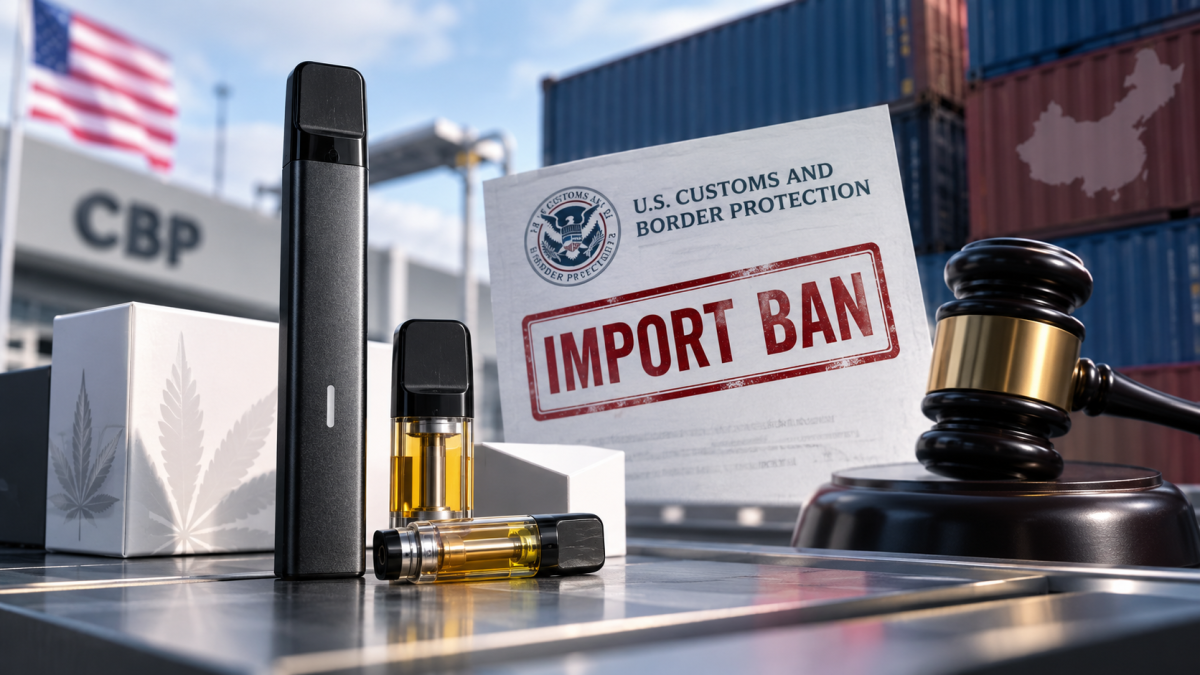
According to the statement, e-cigarette companies are increasingly facing trade investigations and escalating export risks due to the tightening global e-cigarette regulatory policies. The spokesperson emphasized that regulatory authorities are closely monitoring illegal practices such as "fake exports and real imports" by non-compliant companies in the international market, and will name and crack down on such activities in official documents.
Herbal Atomized Product Reclassified: Clearly Included in E-Cigarette Regulations
The State Tobacco Monopoly Administration clarified the nature of the "herbal vaporization" products that have been of concern in the market at a regulatory press conference on e-cigarettes. In response to questions from some consumers and companies about whether herbal vaporization products belong to e-cigarettes, the State Tobacco Monopoly Administration gave a clear classification: "Herbal vaporization belongs to e-cigarettes and is subject to e-cigarette regulation."
This statement sets a clear boundary for the compliant operation of herbal atomization products, completely eliminating the attempts of some companies to evade regulation. At the same time, the press conference also specifically mentioned the need to "prevent the stigmatization of medical devices," pointing out that some herbal atomization companies had previously tried to evade regulation by using the guise of medical device registration. The regulatory authorities emphasized that they will firmly prevent such behavior.
E-Cigarette Production Capacity Management: Resolutely Prevent the Construction of New Projects in Violation of Regulations
In response to the phenomenon of local governments wanting to attract investment by building e-cigarette related production companies, the State Tobacco Monopoly Administration has stated: "We will firmly prevent the construction of new e-cigarette projects in violation of regulations and implement strict overall quantity management."
The spokesperson further explained the background of this decision: as awareness of the harm of e-cigarettes continues to increase, regulatory policies on e-cigarettes worldwide are becoming stricter. Many countries have already taken measures such as banning disposable e-cigarettes, strengthening import and domestic enforcement of e-cigarettes, and so on.
Furthermore, the spokesperson emphasized that the current production capacity of e-cigarettes has become severely excessive. He stressed that local governments and businesses must strictly adhere to national regulations and avoid blind expansion to prevent industry overcapacity. This suggests that investment and production in the e-cigarette industry will face stricter controls in the future.
Crackdown on Violations: Allegations about Shenzhen e-liquid Companies Confirm Regulatory Determination
During the electronic cigarette regulation press conference held by the State Tobacco Monopoly Administration, some recent typical cases of violations were mentioned. Among them, the spokesperson pointed out that "two aerosol companies in Guangdong established businesses outside of their permitted addresses without authorization, illegally using nicotine to produce aerosols.
This further confirms the regulatory authorities' continued attention and determination to crack down on various types of violations. Whether it is illegal production, sales, or attempts to evade regulation through various means, they will face severe legal sanctions.
The e-cigarette regulation press conference held by the State Tobacco Monopoly Administration on the eve of World No Tobacco Day is of great significance. 2Firsts also noted that the overall message of the conference indicates that China's e-cigarette regulation is moving towards standardization and transparency. From clearly defining herbal vapor products, to strict control of production capacity, to cracking down on illegal activities, it reflects the regulatory authorities' firm determination for the healthy and orderly development of the e-cigarette industry. These series of measures will help promote the Chinese e-cigarette market towards a more mature and sustainable development stage.
Welcome to the 2Firsts video channel, where we explore the future trends of the global tobacco industry together and participate in more interactions.

We welcome news tips, article submissions, interview requests, or comments on this piece.
Please contact us at info@2firsts.com, or reach out to Alan Zhao, CEO of 2Firsts, on LinkedIn
Notice
1. This article is intended solely for professional research purposes related to industry, technology, and policy. Any references to brands or products are made purely for objective description and do not constitute any form of endorsement, recommendation, or promotion by 2Firsts.
2. The use of nicotine-containing products — including, but not limited to, cigarettes, e-cigarettes, nicotine pouchand heated tobacco products — carries significant health risks. Users are responsible for complying with all applicable laws and regulations in their respective jurisdictions.
3. This article is not intended to serve as the basis for any investment decisions or financial advice. 2Firsts assumes no direct or indirect liability for any inaccuracies or errors in the content.
4. Access to this article is strictly prohibited for individuals below the legal age in their jurisdiction.
Copyright
This article is either an original work created by 2Firsts or a reproduction from third-party sources with proper attribution. All copyrights and usage rights belong to 2Firsts or the original content provider. Unauthorized reproduction, distribution, or any other form of unauthorized use by any individual or organization is strictly prohibited. Violators will be held legally accountable.
For copyright-related inquiries, please contact: info@2firsts.com
AI Assistance Disclaimer
This article may have been enhanced using AI tools to improve translation and editorial efficiency. However, due to technical limitations, inaccuracies may occur. Readers are encouraged to refer to the cited sources for the most accurate information.
We welcome any corrections or feedback. Please contact us at: info@2firsts.com