Swiss Authorities Seize Over 2,000 E-Cigarette Products in Raid

Jan.27
Swiss Authorities Seize Over 2,000 E-Cigarette Products in Raid
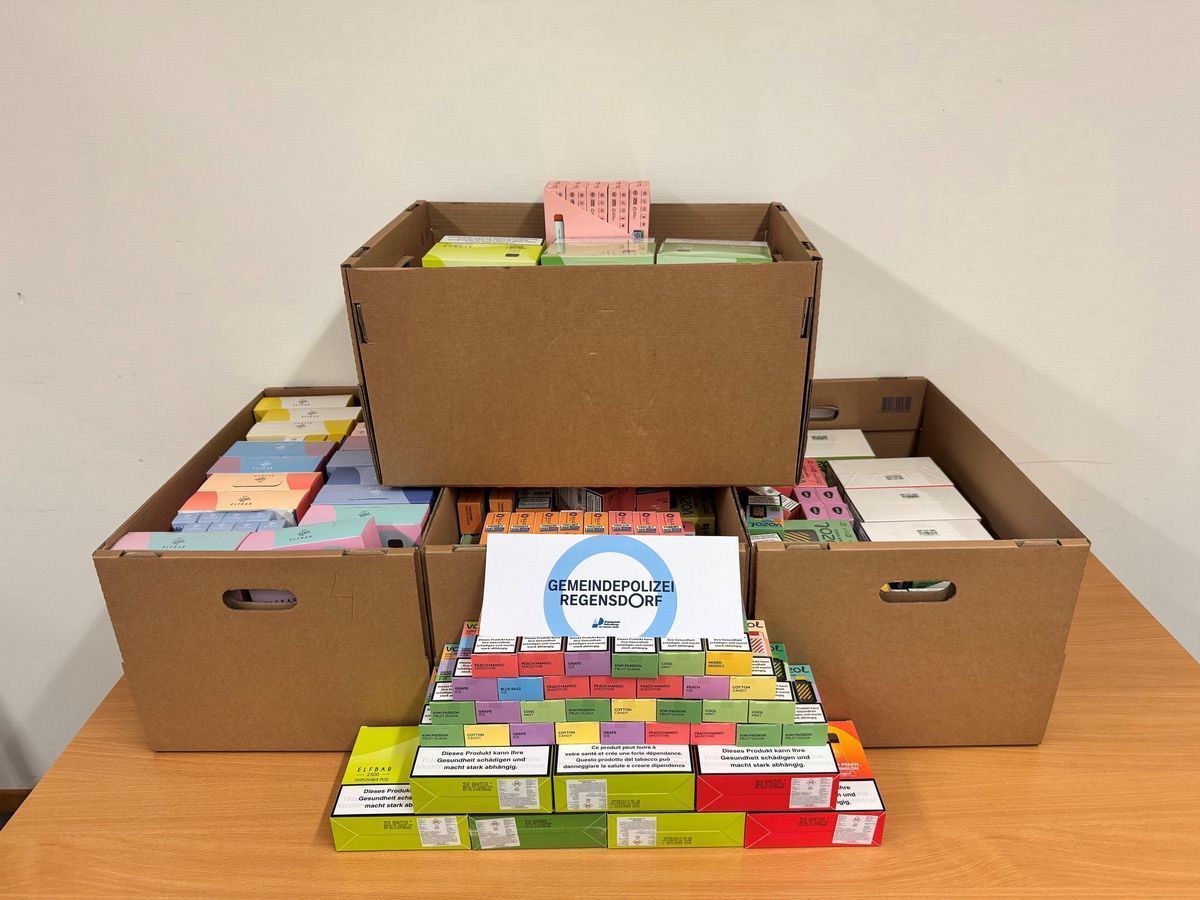
Swiss police confiscate 96kg of e-cigarette products worth over $22,000 in a store for violating tobacco laws.

According to a report from Zürcher Unterland on January 22, the police in the Swiss town of Regensdorf seized 96 kilograms of e-cigarette products during a commercial inspection, totaling over 1100 items with an estimated value of approximately 20,000 Swiss Francs (equivalent to 22,068.74 US dollars).


In this operation, a store that sells hookah, shisha tobacco, and e-cigarettes was found to be in violation of tobacco product regulations and was inspected by authorities. The police found that the e-liquids in the e-cigarettes and disposable pods at the store exceeded the legal standard, with some even exceeding the limit by several times. The owner of the store has been charged by the police.


We welcome news tips, article submissions, interview requests, or comments on this piece.

Please contact us at info@2firsts.com, or reach out to Alan Zhao, CEO of 2Firsts, on LinkedIn


Notice

1.  This article is intended solely for professional research purposes related to industry, technology, and policy. Any references to brands or products are made purely for objective description and do not constitute any form of endorsement, recommendation, or promotion by 2Firsts.

2.  The use of nicotine-containing products — including, but not limited to, cigarettes, e-cigarettes, nicotine pouchand heated tobacco products — carries significant health risks. Users are responsible for complying with all applicable laws and regulations in their respective jurisdictions.

3.  This article is not intended to serve as the basis for any investment decisions or financial advice. 2Firsts assumes no direct or indirect liability for any inaccuracies or errors in the content.

4.  Access to this article is strictly prohibited for individuals below the legal age in their jurisdiction.


Copyright


This article is either an original work created by 2Firsts or a reproduction from third-party sources with proper attribution. All copyrights and usage rights belong to 2Firsts or the original content provider. Unauthorized reproduction, distribution, or any other form of unauthorized use by any individual or organization is strictly prohibited. Violators will be held legally accountable.

For copyright-related inquiries, please contact: info@2firsts.com


AI Assistance Disclaimer


This article may have been enhanced using AI tools to improve translation and editorial efficiency. However, due to technical limitations, inaccuracies may occur. Readers are encouraged to refer to the cited sources for the most accurate information.

We welcome any corrections or feedback. Please contact us at: info@2firsts.com

Special Report| Vuse Gains as U.S. Cracks Down on Illegal Vapes, But a $590 Million China Export Shadow Looms
The payoff is here: BAT’s Vuse has seized a rare regulatory vacuum to reverse its U.S. slide, capitalizing on a crackdown that seemingly compressed the illicit market to 54%. But the victory is fragile. A record $590 million export shock in October signals the gray market is striking back—pitting a fleeting compliance dividend against a massive inventory wall.
BAT
Dec.09
Wisconsin Lawmakers Revive Bill to Raise Legal Age for Tobacco and Vaping Purchases to 21
Wisconsin Senate Bill 524 (SB 524) has been reintroduced to raise the legal purchasing age for tobacco and electronic nicotine products from 18 to 21, aiming to eliminate the gap between state law and the federal “Tobacco 21” standard. Some retailers in Madison have already voluntarily adopted the 21-year age limit, while the American Lung Association is urging swift legislative action.
Dec.04 by 2FIRSTS.ai
Multiple E-Cigarette Companies Donate to Support Hong Kong Tai Po Fire Relief (List Updating)
Following the fire at Hong Kong’s Tai Po Kwong Fuk Estate, several e-cigarette companies have announced donations for relief and recovery. Current contributions include SMOORE (HKD 5 million), ZINWI Bio (RMB 200,000), Heaven Gifts & GEEKVAPE (HKD 3 million), ALD (RMB 1 million), and OXVA (HKD 500,000). The list is being updated.
Dec.02 by 2FIRSTS.ai
Sweden on Track to Become Europe’s First Smoke-Free Nation as Snus and Nicotine Pouches Support Declining Smoking Rates
According to Gulf News, Sweden is nearing the World Health Organization’s smoke-free threshold, with daily smoking falling below 5%. Two decades of public health efforts and the growing use of lower-risk alternatives such as Snus and tobacco-free nicotine pouches have contributed to this shift, alongside declines in tobacco-related deaths and lung cancer cases.
Dec.04 by 2FIRSTS.ai
2Firsts Special Report|China’s Nicotine Pouch Manufacturing Goes Global: A Supply Chain Reshaped and Redirected
China’s nicotine pouch manufacturing expanded rapidly in 2024 but cooled sharply in 2025. Meanwhile, global demand continued to grow strongly, with multinational tobacco companies increasing investment, prompting some Chinese manufacturers to accelerate the shift of production to Southeast Asia and Europe.
Nov.21
5th Circuit Reviews FDA’s Compliance on Small-Business Impact of Vape Rule
A Fifth Circuit panel expressed doubts about whether the U.S. Food and Drug Administration complied with the Regulatory Flexibility Act when issuing its 2021 final rule on premarket tobacco product applications. Vape companies argued the FDA relied on outdated and inaccurate economic data, while the government said the challenged requirements stem from the Tobacco Control Act.
Dec.03 by 2FIRSTS.ai