Tajikistan Signals Plan to Ban Use, Production and Circulation of E-Cigarettes

Dec.16.2025
Tajikistan Signals Plan to Ban Use, Production and Circulation of E-Cigarettes
According to Kazinform, Tajikistan addressed the issue of electronic cigarettes during the fourth session of the Majlisi Milli, stating a position to prohibit the use, production, and circulation of e-cigarettes. Chairman Rustam Emomali emphasized that the position aims to protect public health and prevent negative impacts on youth and adolescents.

Key Points


  • Tajikistan addressed e-cigarette regulation at the fourth session of the Majlisi Milli;
  • Chairman Rustam Emomali stated a position supporting a ban on e-cigarettes;
  • The statement covers the use, production, and circulation of e-cigarettes;
  • Medical experts cited risks of severe diseases linked to excessive e-cigarette use;
  • The report notes that Mexico has previously introduced similar restrictions.


2Firsts, December 16, 2025 – According to Kazinform, Tajikistan addressed the issue of electronic cigarettes during the fourth session of the Majlisi Milli, stating a position in support of prohibiting their use, production, and circulation.


Chairman Rustam Emomali said the position is aimed at protecting public health and preventing the negative effects of e-cigarette (vape) use, particularly among youth and adolescents.


The report notes that the position is based on conclusions from medical specialists, who warn that excessive use of electronic cigarettes may lead to serious illnesses, including respiratory diseases, cardiovascular conditions, and cancer.


Growing concern over the health impact of vaping was also highlighted. According to the World Health Organization, e-cigarette use increasingly affects younger populations.


The report further notes that Tajikistan is not the only country addressing the issue, citing Mexico as having previously introduced similar restrictions.


Photo source: Kazinform


We welcome news tips, article submissions, interview requests, or comments on this piece.

Please contact us at info@2firsts.com, or reach out to Alan Zhao, CEO of 2Firsts, on LinkedIn


Notice

1.  This article is intended solely for professional research purposes related to industry, technology, and policy. Any references to brands or products are made purely for objective description and do not constitute any form of endorsement, recommendation, or promotion by 2Firsts.

2.  The use of nicotine-containing products — including, but not limited to, cigarettes, e-cigarettes, nicotine pouchand heated tobacco products — carries significant health risks. Users are responsible for complying with all applicable laws and regulations in their respective jurisdictions.

3.  This article is not intended to serve as the basis for any investment decisions or financial advice. 2Firsts assumes no direct or indirect liability for any inaccuracies or errors in the content.

4.  Access to this article is strictly prohibited for individuals below the legal age in their jurisdiction.


Copyright


This article is either an original work created by 2Firsts or a reproduction from third-party sources with proper attribution. All copyrights and usage rights belong to 2Firsts or the original content provider. Unauthorized reproduction, distribution, or any other form of unauthorized use by any individual or organization is strictly prohibited. Violators will be held legally accountable.

For copyright-related inquiries, please contact: info@2firsts.com


AI Assistance Disclaimer


This article may have been enhanced using AI tools to improve translation and editorial efficiency. However, due to technical limitations, inaccuracies may occur. Readers are encouraged to refer to the cited sources for the most accurate information.

We welcome any corrections or feedback. Please contact us at: info@2firsts.com

Malaysia Reviews Possible Refund of $92 Million in Vape Taxes After Court Rules 2023 Nicotine Exemption Unlawful
Malaysia's Ministry of Finance said in a written parliamentary reply on November 17, 2026, that it was examining whether a court ruling concerning the country's 2023 liquid-nicotine exemption affected the legal basis for vape excise duties already collected. Royal Malaysian Customs Department records show that the government has collected RM377.08 million (approximately $92 million) in vape-related excise duties since May 2023, with the proceeds transferred to the federal Consolidated Fund. In May, the Kuala Lumpur High Court ruled that the 2023 decision to exempt liquid and gel nicotine used in vaping products from the Poisons List was unlawful. The government withdrew its appeal in August but has not decided whether the taxes should be refunded. The Finance Ministry is also seeking the Health Ministry's position on future vaping regulation.
Regulations
Nov.19
U.S. Rep. Krishnamoorthi Questions FDA Over Planned PMTA Rewrite, Seeks Communications With Altria and Reynolds
U.S. Rep. Raja Krishnamoorthi on Oct. 6 questioned the FDA over its plan to reassess and potentially replace the 2021 PMTA regulatory framework, asking the agency to identify provisions it may change or eliminate, state whether current scientific evidentiary standards will be maintained, and disclose communications with Altria, Reynolds and other parties challenging the rule. Krishnamoorthi led a congressional investigation into JUUL and youth vaping in 2019 and has since remained active on e-cigarette regulation and enforcement.
Regulations
Oct.08
Italy Proposes Earlier Vape and HTP Tax Hikes, New Rules for E-Liquid Pricing, Exclusive Deals and Distribution
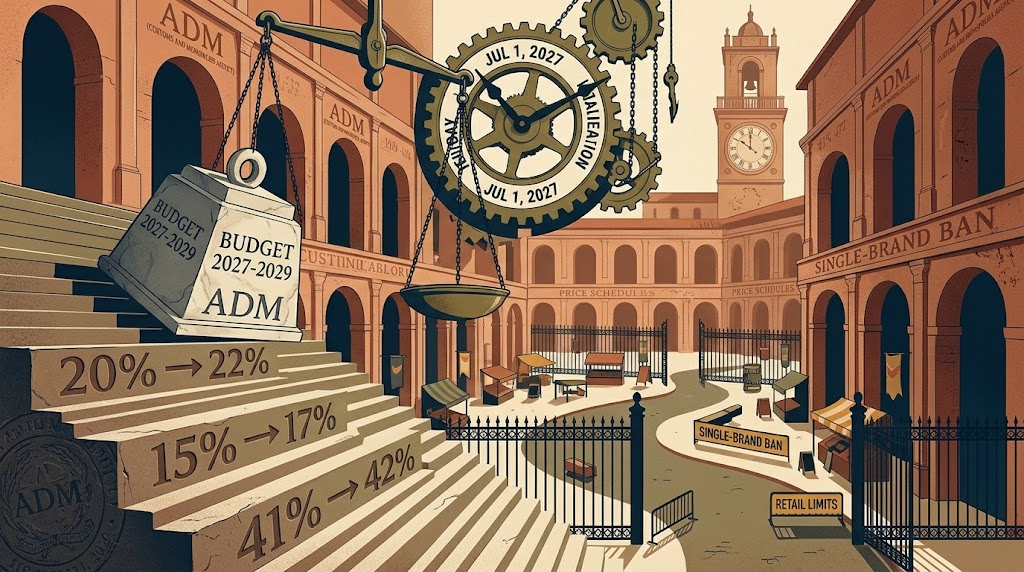
Italy's proposed 2027–2029 budget would bring forward scheduled tax increases for e-cigarette liquids and heated tobacco products from January 1, 2028, to July 1, 2027. The consumption tax coefficient for nicotine-containing e-liquids would rise from 20% to 22%, that for nicotine-free liquids and applicable flavorings from 15% to 17%, and the heated-tobacco coefficient from 41% to 42%. The bill would also introduce official retail price schedules for e-liquids, restrict exclusive agreements between retailers and suppliers, and limit single-brand-dominated displays, sales incentives and bundled offers. Importing, authorized warehousing and retailer sourcing arrangements would also change. The proposals remain subject to parliamentary approval and subsequent implementing regulations.
Regulations
Nov.04
German Tobacco Tax Revenue Falls 10.8% Through August as Tax-Paid Cigarette Volume Drops 12.6%
Germany collected €9.789 billion in total tobacco tax revenue from January through August 2026, down 10.8% from a year earlier, according to the Federal Ministry of Finance. Germany's tobacco tax base covers not only cigarettes and fine-cut tobacco but also heated tobacco and vaping liquids taxed as tobacco substitutes. The German Association of the Tobacco Industry and Novel Products, or BVTE, citing federal statistical data, said tax-paid cigarette volume fell 12.6% to 40.6 billion sticks. BVTE is using the latest figures to argue against further tax increases planned from 2027 through 2030, while Germany's parliament is scheduled to hold a first reading of the bill on September 24.
Sep.23
South Korea's Tobacco Plan Excludes 6-Methyl Nicotine as Customs Tightens Import Controls and Analog Liquid Imports Fall 83%
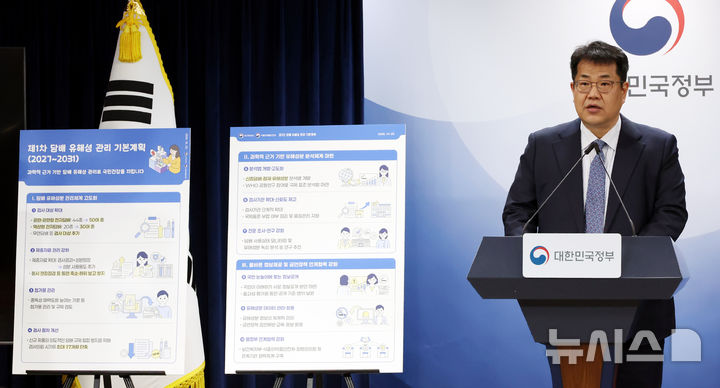
South Korea's government unveiled its first Tobacco Harm Management Basic Plan for 2027–2031 on October 29, 2026, proposing broader testing of vaping and heated tobacco products while excluding nicotine analogs such as 6-methyl nicotine. Synthetic nicotine came under tobacco regulation on April 24, and a June investigation found 6-methyl nicotine in 12 liquid inhalation products marketed as nicotine-free. Customs data released in September showed that imports of nicotine analog solutions fell 83.3%, from 12 metric tons in January–April to 2 metric tons in May–August. By September 20, imports had reached approximately 15 metric tons for the year, with 99.99% originating from China. Customs authorities have tightened pre-clearance testing and supply-chain documentation requirements, while the MFDS expects to complete its assessment of nicotine analog hazards by the end of 2026.
Regulations
Nov.04
Russia's State Duma Passes Tobacco and Nicotine Ingredient Disclosure Bill, Targeting 2027 End to Trade-Secret Protection for Certain Harmful Ingredient Data
Russia's State Duma passed a government-sponsored amendment on November 11, 2026, by 414 votes to none, seeking to prevent businesses from classifying information on the presence and number of types of certain harmful ingredients in tobacco and nicotine-containing products as trade secrets. The measure covers ingredients capable of increasing nicotine dependence or exhibiting toxic, carcinogenic, mutagenic or reproductive toxicity, including substances that acquire such properties during heating or smoldering. Bill No. 1286415-8 would amend Article 5 of Federal Law No. 98-FZ on Commercial Secrets and is scheduled to take effect on January 1, 2027. The bill has cleared all three readings in the State Duma but has not completed the remaining legislative procedures.
Regulations
Nov.12 by 2Firsts Perspectives