Teens Are Four Times More Likely to Smoke When Parents Do

MarketInnovation
Jul.21.2022
Top medical experts have warned that teens whose parents or primary caregivers smoke, are four times more likely to take up smoking than than their peers whose parents do not.

UK government campaign titled “Better Health Smoke Free” aims to educate adult smokers about how their habit can influence younger people to take up smoking.
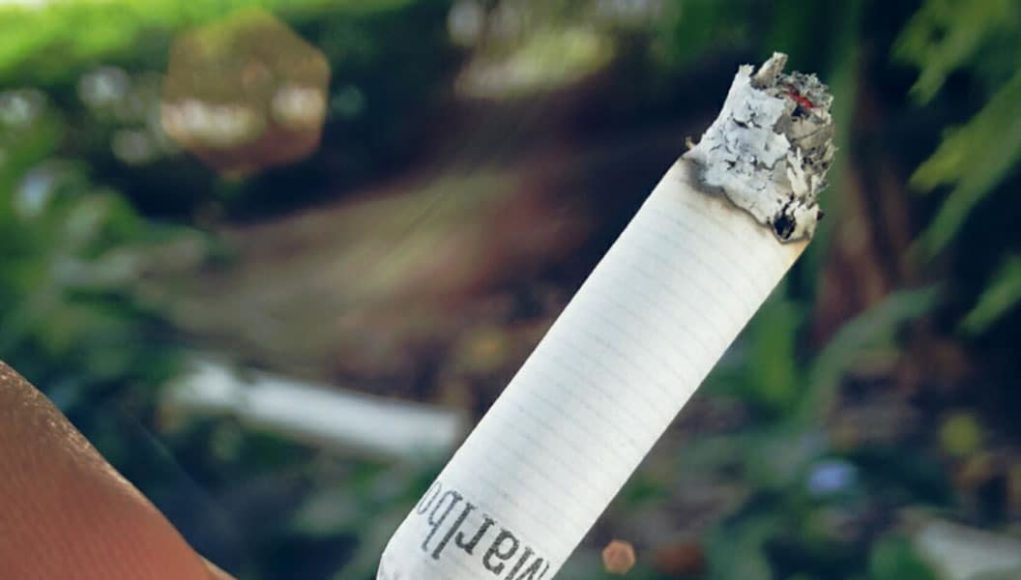
Teens Are Four Times More Likely to Smoke When Parents Do

A new campaign released by the UK government titled “Better Health Smoke Free” aims to educate on how adult smokers can influence younger people to take up the habit. Featuring a number of experts on the topic, the Better Health Smoke Free campaign explains that research has shown that teens whose primary caregiver smoked were more than twice as likely to have tried cigarettes (26% vs 11% ) and four times as likely to be a regular smoker (4.9% vs 1.2%).


In a film released last year, the NHS and behavioural health experts discussed the link between smoking parents and the subsequent likelihood of their children to smoke. The speakers included GP Dr Nighat Arif, child psychologist Dr Bettina Hohnen, and smoking cessation experts Professor Nick Hopkinson and Dr Anthony Laverty of Imperial College London, who urged parents to act as positive role models by quitting smoking.


Parliamentary Under Secretary of State and Minister for Vaccines and Public Health, Maggie Throup MP, added that now a particularly good time to give up smoking is the new year. “We know that many people make a quit attempt in January, and while there are so many good reasons to stop smoking for yourself, we hope that this new campaign – by highlighting the inter-generational smoking link with parents influencing their children – will be the added motivation many need to ditch the cigarettes for good this year,” she said.


“With so much help and support available for parents, carers and anyone looking to quit – including the NHS Quit Smoking app, support on Facebook, daily emails and texts, and an online Personal Quit Plan – you won’t be alone in your New Year’s resolution.”


Pregnant women should be offered financial incentives


In other news, the Royal College of Physicians (RCP) said that pregnant women who are unable to quit smoking should be offered financial incentives to help them achieve the goal. The RCP said that at any point of contact with the NHS, smokers should be provided with “opt-out smoking cessation services.” Moreover, said the group, bearing in mind that most smokers are often from “lower socio-economic groups”, pregnant women should be given financial incentives to motivate them in achieving the goal.


These suggestions were put forward as part of a report compiled by the RCP, addressing what can be done to achieve the government’s “Smoke Free 2030” target. Sadly recent data has indicated that as it stands the goal will not actually be achieved until 2050.


“The ability of the UK and other countries to rise to major public health challenges is beyond doubt; the Covid-19 pandemic, by far the biggest new challenge to UK and global health in decades, has attracted a public health and economic response of a scale unique in the modern era,” read the report. “Yet in 2020, when Covid-19 killed around 80,000 UK citizens, tobacco smoking killed 94,000.”


The content excerpted or reproduced in this article comes from a third-party, and the copyright belongs to the original media and author. If any infringement is found, please contact us to delete it. Any entity or individual wishing to forward the information, please contact the author and refrain from forwarding directly from here.

South Korea’s National Assembly Passes Law Classifying E-Cigarettes as Tobacco Products with Full Equivalent Regulation
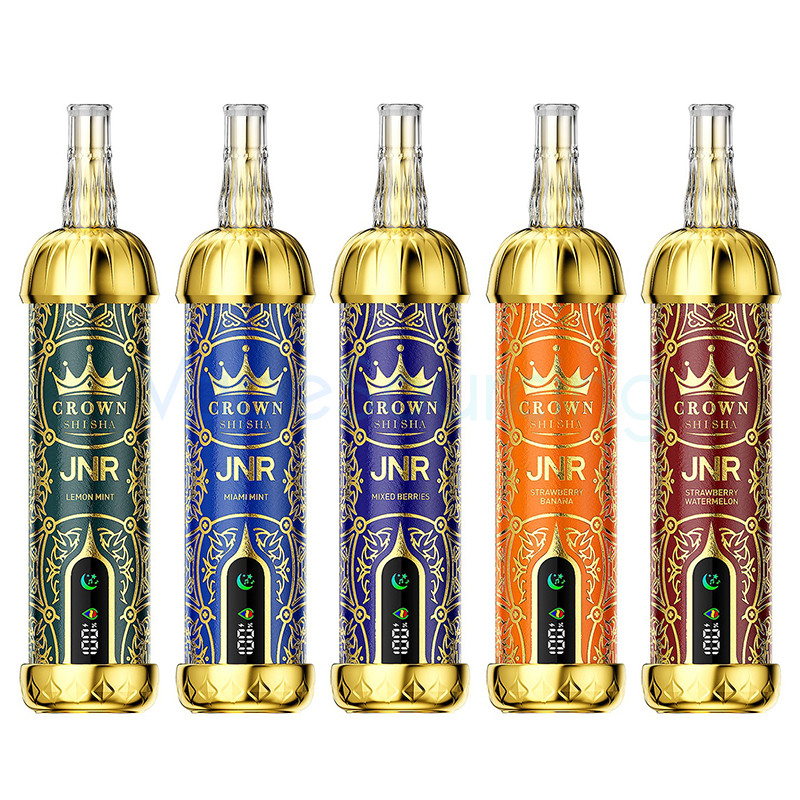
South Korea’s National Assembly recently passed a comprehensive package of 79 bills that, among other measures, formally classifies liquid vapes — e-cigarette products using nicotine-containing e-liquids — as tobacco products. These products will now be subject to the same taxation, sales restrictions and advertising controls as traditional cigarettes, and the vaping industry in South Korea is expected to face significant adjustments in compliance costs, market access and business strategy.
Dec.03
South Korea’s President Raises Safety Concerns Over Nicotine Alternatives at Cabinet Meeting
South Korea’s Cabinet has approved an amendment to the Tobacco Business Act that legally classifies liquid e-cigarettes as tobacco products. Under the revision, any product containing tobacco or nicotine will fall under tobacco regulation, explicitly including synthetic nicotine vapes. The move addresses long-standing regulatory and taxation gaps.
Dec.16 by 2FIRSTS.ai
CBSA discloses seizure of 212,000 nicotine pouches at Pigeon River port of entry
The Canada Border Services Agency said officers inspecting an incoming vehicle at the Pigeon River port of entry in June found 212,000 nicotine pouches and seized more than 29,000 Canadian dollars (about 21,170 U.S. dollars) in currency and cheques. A CBSA spokesperson disclosed the seizure this week in a Newswatch interview about enforcement operations over the past year.
Dec.30 by 2FIRSTS.ai
UK Retailers Urge Government to Include Age-Verification Tech in Tobacco and Vapes Bill
UK convenience retailers have written to several government ministers urging the adoption of age-verification technology in the Tobacco and Vapes Bill. The letter, led by Atul Sodha of Londis, Harefield, and co-signed by 29 other shop owners, calls for a “triple lock” approach combining manufacturer tech, retailer vigilance, and user-level verification to curb youth access.
Nov.28 by 2FIRSTS.ai
Philippines Probe Agency Seizes 800 Smuggled Vape Products in Manila, Stores Face Multiple Charges
The National Bureau of Investigation (NBI) recently seized around PHP 250,000 (approximately USD 4,250) worth of smuggled and unregistered vape devices and liquids—about 800 items in total—from two stores in Manila. Authorities said the devices could be modified to discreetly consume cannabinoids and other illegal drugs, and that those involved will face charges under the Philippines’ Vaporized Nicotine and Non-Nicotine Products Regulation Act and the Consumer Act.
Dec.02 by 2FIRSTS.ai
10,800 Vape Cartridges Worth USD 175,000 Confiscated in Maldives
The Maldives Customs Service has confiscated the largest single shipment of vapes since the national import ban took effect in November 2024. Officials searched a sea freight shipment on December 4 and seized 10,800 vape cartridges valued at approximately MVR 2.7 million (USD 175,000).
Dec.11 by 2FIRSTS.ai