Thai Research describes e-cigarettes as a “first gateway” for ages 15–20, linked to appearance and flavors

Jan.13
Thai Research describes e-cigarettes as a “first gateway” for ages 15–20, linked to appearance and flavors
A Thai report says Minister attached to the Prime Minister’s Office Santi Piyatat is advancing efforts toward a vape-free society. On Jan. 12, a seminar at the Thai Health Promotion Foundation’s learning center presented a study covering six regions of Thailand on spending related to cigarettes and e-cigarettes and the behavior of different smoker groups.

Key Takeaways


• Date and venue: Jan. 12, 2026, Room 201, ThaiHealth Learning Center

• Key figures: Minister Santi Piyatat; opening chaired by his secretary Dr. Porapat Rodphothong Boonthanom

• Study scope: six regions of Thailand; spending and behavior related to cigarettes and e-cigarettes

• Findings: cigarettes down, e-cigarettes up, especially among youth and women; “first gateway” for ages 15–20

• Data points: 76.4% never calculated total spending losses; “present bias” and “over 70% never calculated spending” also cited

• Policy directions: behavioral-economics “nudges,” online market control, and tax measures


2Firsts, January 13, 2026 – According to Share2Trade, a seminar titled “A study of spending on cigarettes and e-cigarettes and the behavior of different smoker groups in Thailand using an economic model” was held on Jan. 12 at Room 201 of the Thai Health Promotion Foundation (ThaiHealth) Learning Center. The report links the event to efforts led by Minister attached to the Prime Minister’s Office Santi Piyatat, with the opening chaired by his secretary Dr. Porapat Rodphothong Boonthanom.


The seminar covered all six regions of Thailand and focused on health and economic impacts linked to cigarette and e-cigarette use. ThaiHealth deputy manager Dr. Pairot Saonualm and researchers from Thammasat University’s Faculty of Economics presented findings.


Porapat said the government is treating tobacco control as a serious issue, particularly as e-cigarettes spread rapidly among youth and women. The study described e-cigarettes as a “first gateway” for ages 15–20, linked to appearance and flavors, and said “thinking traps” lead users to wrongly believe e-cigarettes are not dangerous. The report cited that 76.4% never calculated total spending losses from smoking and referenced “present bias,” prioritizing short-term pleasure over health and future savings. It also referenced that more than 70% had never calculated smoking-related spending.


Policy directions raised at the seminar included using behavioral-economics “nudge” design to help smokers recognize health and cost harms, alongside proposals on online market controls and tax measures, aimed at strengthening public health policy and moving toward a vape-free Thai society.


Image source: Share2Trade


We welcome news tips, article submissions, interview requests, or comments on this piece.

Please contact us at info@2firsts.com, or reach out to Alan Zhao, CEO of 2Firsts, on LinkedIn


Notice

1.  This article is intended solely for professional research purposes related to industry, technology, and policy. Any references to brands or products are made purely for objective description and do not constitute any form of endorsement, recommendation, or promotion by 2Firsts.

2.  The use of nicotine-containing products — including, but not limited to, cigarettes, e-cigarettes, nicotine pouchand heated tobacco products — carries significant health risks. Users are responsible for complying with all applicable laws and regulations in their respective jurisdictions.

3.  This article is not intended to serve as the basis for any investment decisions or financial advice. 2Firsts assumes no direct or indirect liability for any inaccuracies or errors in the content.

4.  Access to this article is strictly prohibited for individuals below the legal age in their jurisdiction.


Copyright


This article is either an original work created by 2Firsts or a reproduction from third-party sources with proper attribution. All copyrights and usage rights belong to 2Firsts or the original content provider. Unauthorized reproduction, distribution, or any other form of unauthorized use by any individual or organization is strictly prohibited. Violators will be held legally accountable.

For copyright-related inquiries, please contact: info@2firsts.com


AI Assistance Disclaimer


This article may have been enhanced using AI tools to improve translation and editorial efficiency. However, due to technical limitations, inaccuracies may occur. Readers are encouraged to refer to the cited sources for the most accurate information.

We welcome any corrections or feedback. Please contact us at: info@2firsts.com

German Tobacco Tax Revenue Falls 10.8% Through August as Tax-Paid Cigarette Volume Drops 12.6%
Germany collected €9.789 billion in total tobacco tax revenue from January through August 2026, down 10.8% from a year earlier, according to the Federal Ministry of Finance. Germany's tobacco tax base covers not only cigarettes and fine-cut tobacco but also heated tobacco and vaping liquids taxed as tobacco substitutes. The German Association of the Tobacco Industry and Novel Products, or BVTE, citing federal statistical data, said tax-paid cigarette volume fell 12.6% to 40.6 billion sticks. BVTE is using the latest figures to argue against further tax increases planned from 2027 through 2030, while Germany's parliament is scheduled to hold a first reading of the bill on September 24.
Sep.23
South Korea's Tobacco Plan Excludes 6-Methyl Nicotine as Customs Tightens Import Controls and Analog Liquid Imports Fall 83%
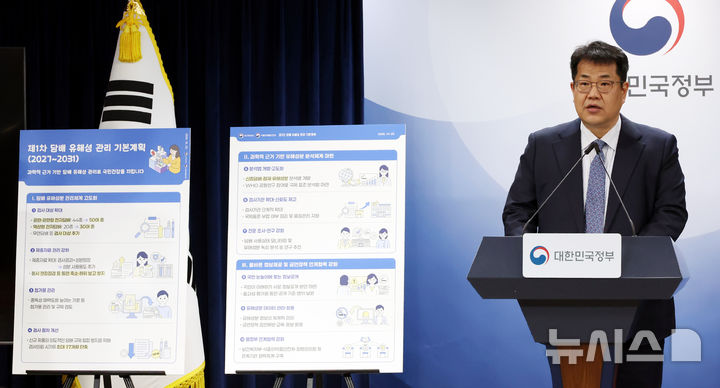
South Korea's government unveiled its first Tobacco Harm Management Basic Plan for 2027–2031 on October 29, 2026, proposing broader testing of vaping and heated tobacco products while excluding nicotine analogs such as 6-methyl nicotine. Synthetic nicotine came under tobacco regulation on April 24, and a June investigation found 6-methyl nicotine in 12 liquid inhalation products marketed as nicotine-free. Customs data released in September showed that imports of nicotine analog solutions fell 83.3%, from 12 metric tons in January–April to 2 metric tons in May–August. By September 20, imports had reached approximately 15 metric tons for the year, with 99.99% originating from China. Customs authorities have tightened pre-clearance testing and supply-chain documentation requirements, while the MFDS expects to complete its assessment of nicotine analog hazards by the end of 2026.
Regulations
Nov.04
Ukraine Raises Excise Stamp Fees for Tobacco, Heated Tobacco and Vape Liquids by 30.5% as Parliament Backs E-Excise Delay to 2027
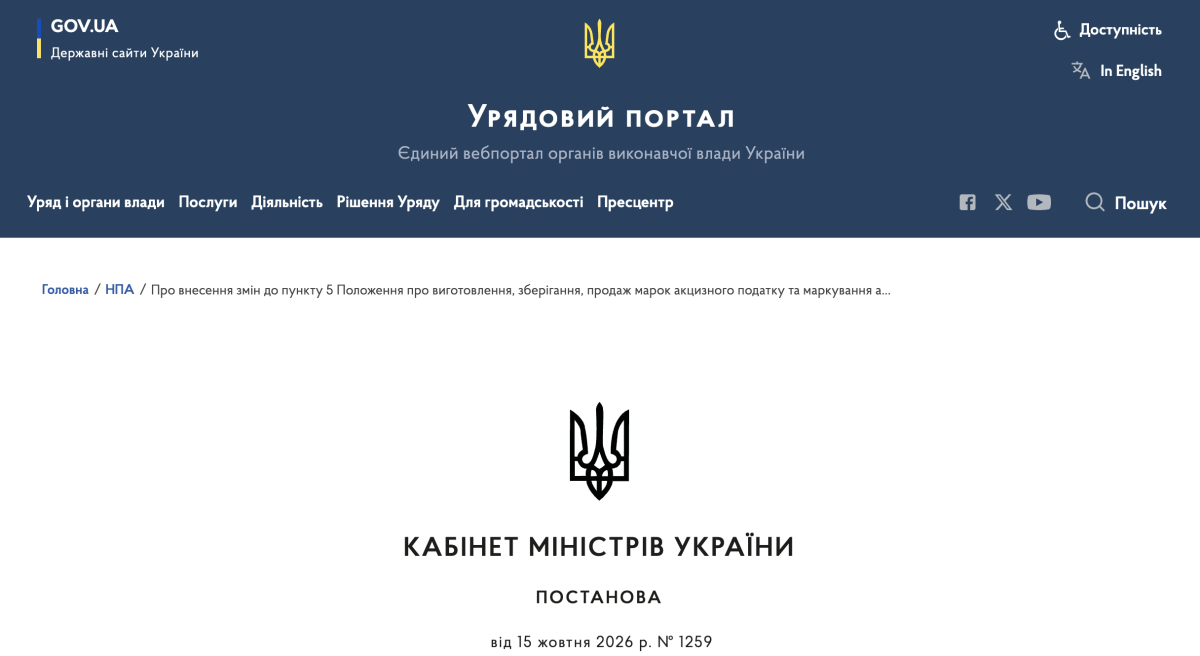
Ukraine's Cabinet of Ministers adopted Resolution No. 1259 on October 15, 2026, increasing excise stamp production fees for tobacco products and e-cigarette liquids by approximately 30.5%, from UAH 0.1643 to UAH 0.2144 per stamp. Fees for alcoholic beverages rose by about 30.2%. Separately, Ukraine's parliament passed Bill No. 15532 on October 13, proposing to postpone the full implementation of electronic excise stamps and traceability for alcohol, tobacco and e-cigarette liquids from November 1, 2026, to July 1, 2027. Parliament cited additional testing, configuration and integration requirements. The bill was sent to the president for signature on October 19.
Regulations
Oct.21
Japan Survey Finds 49.5% Would Cut Tobacco Use if Prices Rise, 64.6% Show Interest in Nicotine-Free Alternatives
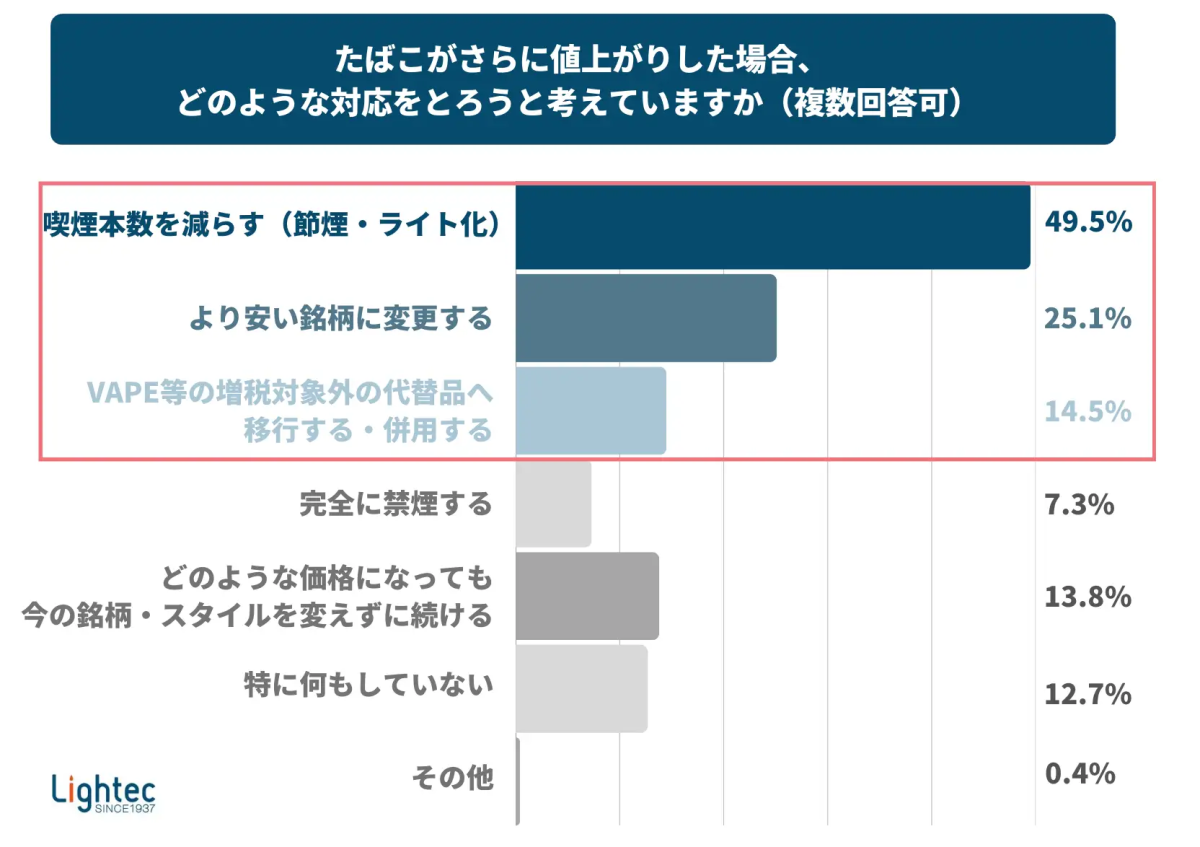
A September online survey commissioned by Japanese smoking-accessories company Lightec found that 49.5% of respondents would consider reducing tobacco use if prices rose further, while 25.1% would consider switching to cheaper brands and 14.5% would consider using or combining alternatives such as vapes and nicotine-free herbal sticks. Another 64.6% expressed some level of interest in such alternatives. The survey covered 1,088 respondents aged 20 to 70 and was conducted by a company that sells NICOLESS nicotine-free vaping and herbal-stick products, meaning its findings should not be treated as representative of Japan's smoking population.
DATA
Oct.12
On-Site Report | After FDA Announces Review of PMTA Framework, CTP Director Details Reform Priorities
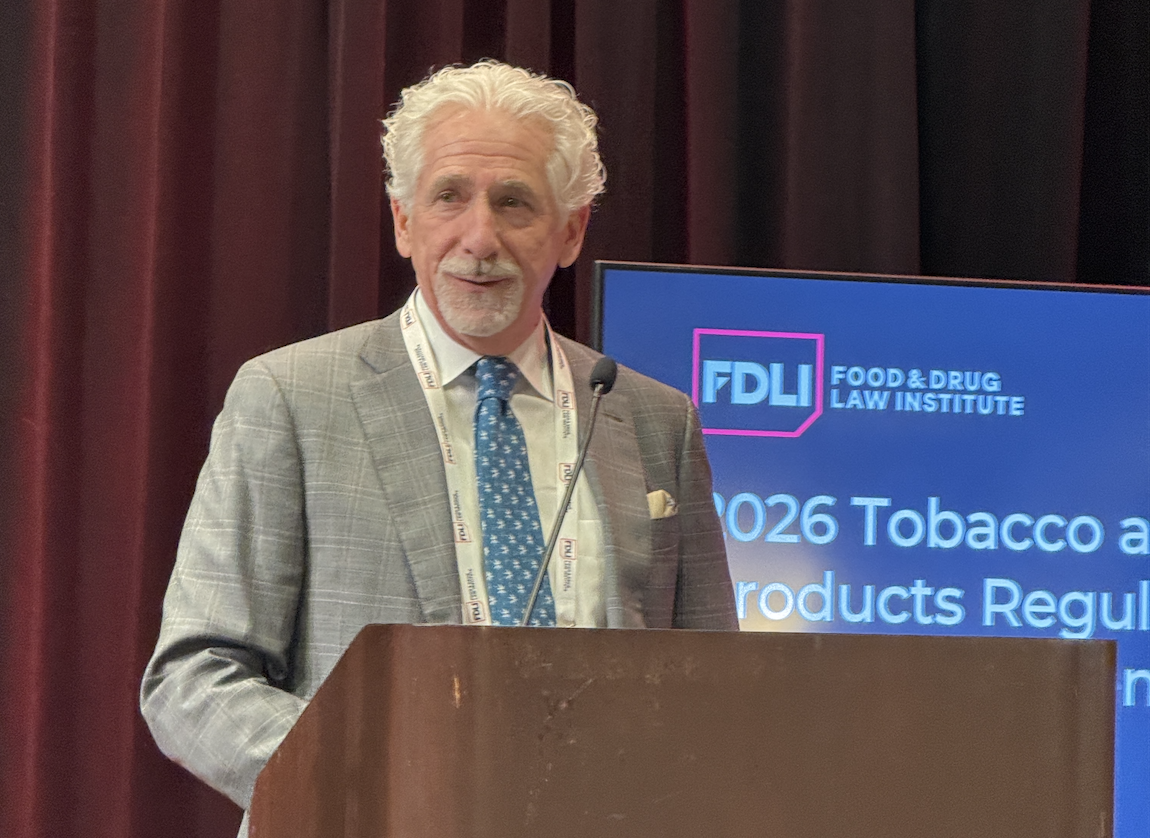
FDA CTP Director Bret Koplow used his FDLI keynote in Washington to outline how the agency is rethinking the PMTA framework. He discussed category-specific review, nicotine pouch and sPMTA pilots, AI-assisted review, a 70% reduction in pending applications, and a major staffing constraint: CTP currently has only nine scientific review teams. He also reaffirmed tobacco harm reduction while stressing youth protection, flavored products, risk communication, and the challenge of unauthorized e-cigarettes.
Regulations
Oct.06
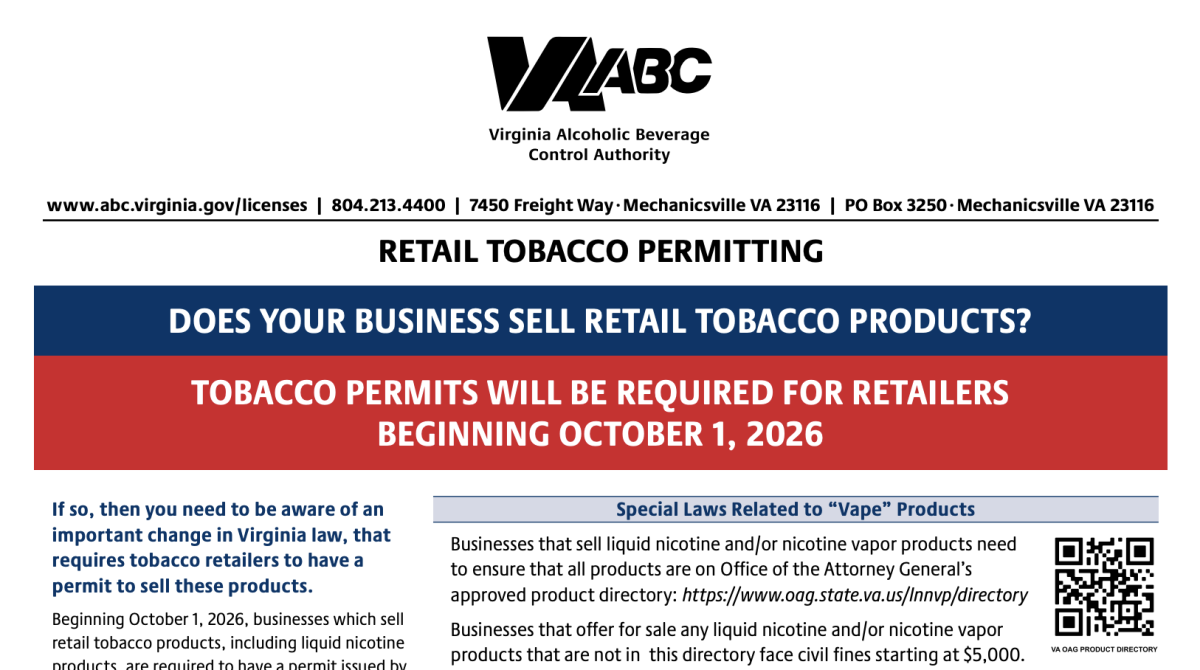
Virginia Tobacco Retail Permit Takes Effect October 1, Covering Vapes as More Than 3,000 Businesses Apply in September
Virginia's new retail tobacco permit system took effect October 1, requiring sellers of vapes, nicotine products and related devices and accessories to obtain a Retail Tobacco Permit for each business location. Virginia ABC said more than 3,000 businesses applied in September alone, creating a processing backlog. Qualifying applicants that filed before October 1 may temporarily operate under a Letter of Authorization. The new store-level permit also sits alongside Virginia's existing vape product directory, where sales of unlisted liquid nicotine or nicotine vapor products can trigger civil penalties starting at $5,000.
Regulations
Oct.03