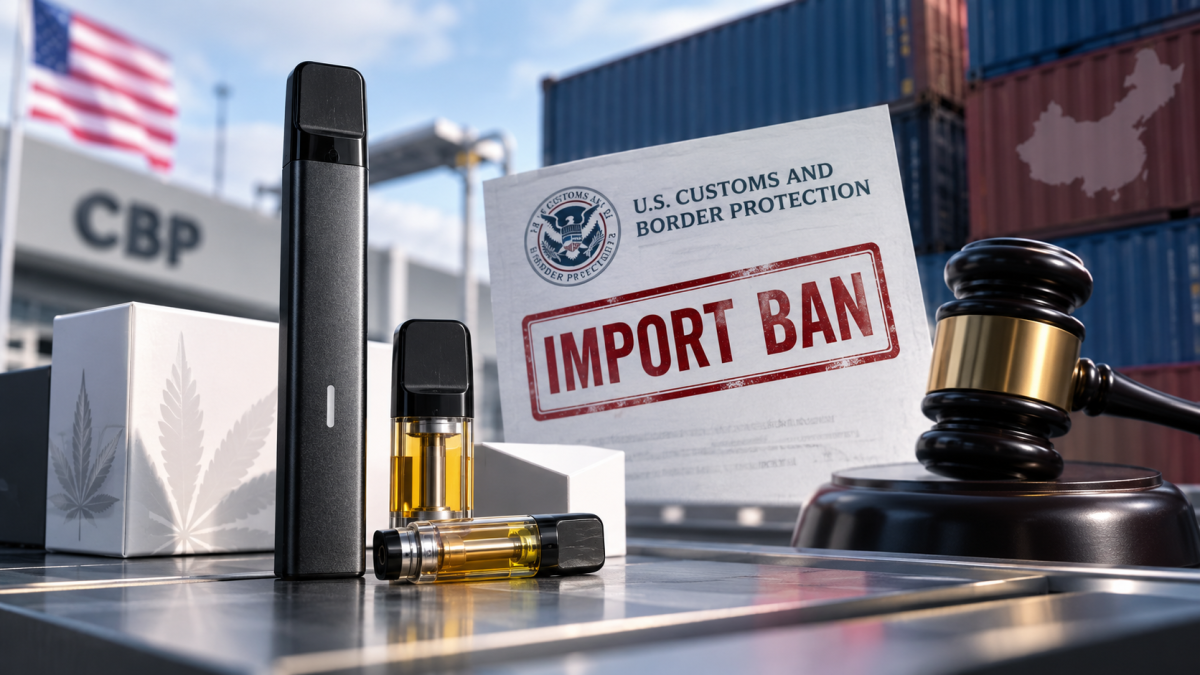
According to law enforcement officials, the proposed ban on menthol cigarettes by the United States Food and Drug Administration (FDA) could have unforeseen consequences.
In addition to other issues, this ban may contribute to the growth of the illicit cigarette market.
In 2020, 37% of the $20.3 billion worth of cigarettes sold in the United States were mint-flavored. Colonel Neil Franklin, a former executive director of the Law Enforcement Action Partnership, stated in a release titled "Mint Shouldn't Be a Crime" that transitioning from a regulated market to an illegal one could lead to an illegal market worth approximately $30 billion.
Charles Giblin, head of public safety and security, stated that "despite good intentions... the ban would have unintended consequences as cross-border smuggling would fill the void.
Others highlighted the racist impact of the ban, as over 80% of African Americans prefer mint-flavored cigarettes when smoking.
The ban is ineffective. In the war on drugs, the number of black and brown inmates far exceeds that of the entire period of slavery.
John Dixon III, former police chief of Petersburg, Virginia and former chairman of the National Association of Black Law Enforcement Officers, stated that approximately 90% of those stopped and frisked are black.
We are not advocating for people to smoke, but we do not want to see situations like Eric Garner's occur again. Garner was killed when approached by New York police officers for allegedly selling a single cigarette," said Charles Billups, founding member of the National Coalition of Justice Practitioners, retired law enforcement officer, and chairman of the New York State Guardianship Committee.
Franklin further stated, "An illegal market poses an even greater problem for black communities. Law enforcement will have no choice but to actively enforce smuggling and smoking bans... To identify smugglers, police will engage in 'creative interaction' with citizens who have committed minor offenses such as jaywalking, loitering, trespassing, and violating traffic rules - using these offenses as leverage to gather information on their tobacco sources. This strategy is similar to the one we use to search for firearms and drugs.
Members of the public may submit written feedback via the FDA website until August 2nd.
Source: Tobacco Reporter
Disclaimer
This article is provided solely for professional research, industry discussion, and informational purposes. Any references to brands, companies, products, technologies, or policies are made for factual reporting and analytical purposes only, and do not constitute endorsement, recommendation, promotion, or advertising by 2Firsts.
Nicotine-containing products, including but not limited to cigarettes, e-cigarettes, heated tobacco products, and nicotine pouches, carry significant health risks. Readers are responsible for complying with all applicable laws and regulations in their respective jurisdictions, including age restrictions and access limitations.
The information contained in this article should not be regarded as investment, legal, medical, regulatory, or commercial advice. While 2Firsts strives to ensure the accuracy and reliability of its content, it does not assume liability for any direct or indirect loss arising from errors, omissions, inaccuracies, or reliance on the information contained herein.
This article is not intended for individuals below the legal age for accessing tobacco or nicotine-related information in their jurisdiction.
Copyright Notice
This article is either original content produced by 2Firsts or content reproduced, translated, summarized, or adapted from third-party sources with attribution where applicable. The intellectual property rights of the original content remain with 2Firsts or the respective original rights holders.
No individual or organization may copy, reproduce, distribute, republish, modify, translate, or otherwise use this content without prior authorization. Any unauthorized use may result in legal action.
For copyright-related inquiries, corrections, or removal requests, please contact: info@2firsts.com.
AI-Assisted Translation and Editing Notice
Portions of this article may have been translated, edited, or reviewed with the assistance of artificial intelligence tools to improve efficiency and readability. Due to the limitations of AI-assisted translation and editing, discrepancies, omissions, or inaccuracies may exist when compared with the original source.
Where applicable, readers are advised to refer to the original source for the most complete and accurate information. If you identify any errors or believe that any content infringes upon your rights, please contact us at info@2firsts.com, and we will review and address the matter promptly.